Back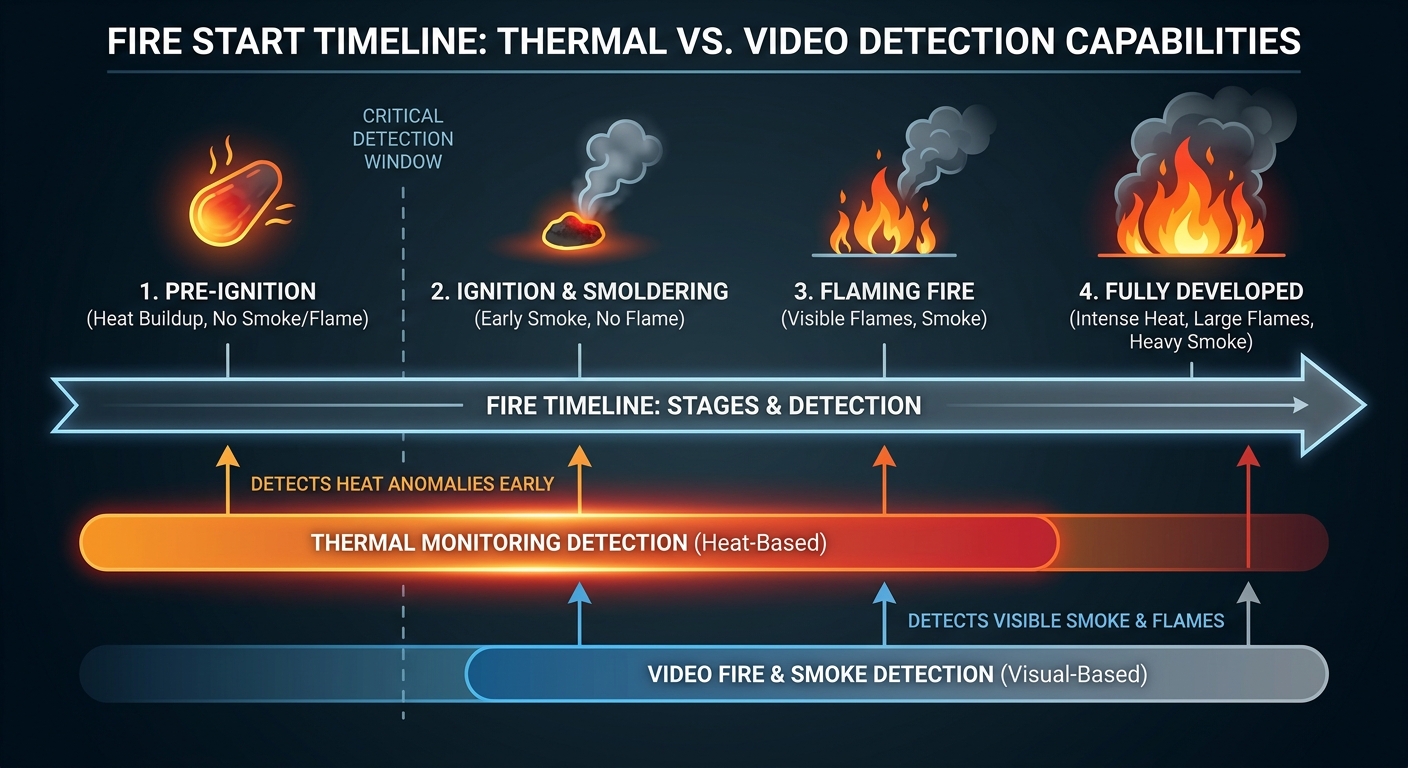
2026-09-29/Drew Hanover
NFPA 72 Now Recognizes Thermal Image Fire Detectors: What Insurers and Manufacturers Need to Know
For the first time, the U.S. fire alarm code has a name for a thermal camera that detects fire.
The 2025 edition of NFPA 72, the National Fire Alarm and Signaling Code, added a new device: the thermal image fire detector. It also added a section with design, installation, and testing rules for it.
That sounds like a small definition change. It is not. Thermal imaging has spent years in the "maintenance tool" bucket. Now there is a code path for it inside the fire alarm system, and in September 2026 the first cameras were listed to the matching UL standard.
This guide explains what changed, what did not, and what it means from two points of view: the insurer pricing the risk and the manufacturer running the plant. We also explain where AVIAN fits.
This article is general information, not legal or engineering advice. Your authority having jurisdiction (AHJ), your fire protection engineer, and your insurer make the final calls for your site.
What Changed in NFPA 72
The 2025 edition was issued in 2024 and took effect on September 18, 2024. Three pieces matter for thermal cameras.
1. A new definition (3.3.79.26). A thermal image fire detector is "an initiating device that senses overheated combustible material by imaging in the long-wave infrared wavelengths (i.e., far infrared) using a focal plane array." In plain English: a thermal camera that can start a fire alarm signal. The definition of "detector" itself was also broadened to include sensors that respond to light and sound, to make room for new detection methods.
2. A new section on design and installation (17.12). The technical committee explained why it was needed. Thermal imagers are technically radiant energy detectors, but the existing radiant energy rules were written for traditional non-imaging flame and spark detectors. New products look for overheated areas across a whole field of view, so they needed their own rules.
3. A new testing requirement (14.4.3.4). If thermal image fire detectors are installed, they must be inspected, tested, and maintained according to the manufacturer's published instructions.
It is worth being clear about what this is not. It is different from video image flame detection, which has been in the code for years and uses cameras to recognize visible flame or smoke. Thermal image fire detection looks for the heat signature of a developing event, often before visible smoke or flame exists.
The Section 17.12 Rules in Plain English
Section 17.12 is short. Most of its weight comes from a few requirements. The table below summarizes them based on the committee's first revision text and published summaries from Consulting-Specifying Engineer. Check the published edition for exact wording.
| Requirement | What it means in practice |
|---|---|
| Listed for fire detection, including hardware and software | A thermal camera with temperature alarms is not automatically a fire alarm device. The whole system needs a listing. |
| Performance-based design (Section 17.3) | There is no simple spacing table. An engineer designs coverage around the hazard and documents the objectives. |
| Clear line of sight to the protected hazard | The detector must see the thing that can burn. Obstructions, racking, and enclosures matter. |
| No pan-tilt mounts unless listed for movement | Detection is expected from a fixed view, not a camera that sweeps away from the hazard. |
| Outputs to other systems only through manufacturer-provided connections | Signals can feed PLCs or other systems, but only through outputs designed for that purpose. |
| Controls and software protected from unauthorized changes | Alarm settings cannot be casually edited. Configuration must be locked down. |
| Any software or setting change retested under Chapter 14 | Changing a zone or threshold is a fire alarm change. It needs testing and records. |
| Supervisory signal if the lens is blocked or dirty | The system must tell you when it can no longer see. This matters in dusty plants. |
| Able to alarm on temperature rate of rise in the field of view | The detector must catch fast-developing heat, not only a fixed temperature threshold. |
Two things stand out.
First, the code treats a thermal fire detector as a system, not just a camera. Software, settings, outputs, and supervision are all in scope.
Second, the code assumes the view can degrade. Dirt, dust, and blocked lenses are named failure modes. Anyone who has run a camera in a sawmill or recycling plant knows why.
The Listing Path Now Exists
A code section is only usable if products can be listed to it. That gap has closed.
UL 2684, Video and Thermal Image Detectors for Fire Alarm Systems, covers imaging detectors used as part of fire alarm systems under NFPA 72. Its scope includes detecting heat at infrared wavelengths with a focal plane array, for indoor use and, for thermal detectors, outdoor use. Its current edition was ANSI approved in August 2025.
On September 22, 2026, Teledyne FLIR announced that its A40, A50, and A70 cameras were the first thermal imagers listed to UL 2684.
There is also a property-insurance route. FM Approvals tests radiant energy fire detectors to FM 3260, and some thermal camera systems, such as the MOBOTIX M73 thermal FM bundle, now carry that approval.
The practical result: a facility can now choose a thermal camera that is designed, listed, and tested as a fire alarm initiating device. That was hard to do before.
What Did Not Change
It is easy to overread this update. Here is what stays the same.
- Nothing requires you to install thermal cameras. The 2025 edition sets rules for thermal image fire detectors when they are used. It does not mandate them.
- Your jurisdiction decides which edition applies. States and cities adopt NFPA 72 on their own schedule. Many sites still operate under older editions.
- Sprinklers, smoke detection, and suppression stay. A thermal detector covers only what it can see. It does not replace code-required protection elsewhere.
- Not every thermal camera qualifies. A radiometric camera with alarm thresholds is not a listed thermal image fire detector unless the complete system is listed for that purpose.
- The code keeps moving. The committee is working on the
For Insurers
For underwriters, brokers, and risk engineers, the change gives thermal monitoring a vocabulary it did not have before.
Until now, a facility that said "we have thermal cameras" could mean almost anything. A handheld used once a quarter. A fixed camera that emails a supervisor. A fully engineered detection system tied to shutdowns. The underwriting file rarely made the difference clear.
NFPA 72 and UL 2684 now let you sort thermal systems into clear roles.
Three roles thermal cameras can play
- Listed fire detection. A thermal image fire detector, listed to UL 2684 or approved to FM 3260, designed under Section 17.12 and connected to the fire alarm system. It carries code standing, supervision, and a Chapter 14 testing record.
- Supplemental early warning and condition monitoring. A fixed thermal monitoring system that watches equipment and material, alerts operations and maintenance, and often triggers PLC actions. It is not part of the fire alarm system. Its value is prevention: catching the hot bearing, loose connection, or smoldering load before it becomes a fire.
- Both. Listed detection where code or policy requires it, plus supplemental monitoring on the assets most likely to start the fire.
Each role deserves credit for different reasons. Listed detection reduces the severity of a fire that has started by alarming earlier. Supplemental monitoring reduces frequency by stopping ignition sources. Many industrial losses begin as heat long before smoke. That is why the second role matters, even without a listing.
What to ask during a risk review
- Is the thermal system part of the fire alarm system, or a supplemental layer?
- If listed, to which standard: UL 2684, FM 3260, or something else?
- Who designed the coverage, and is there a written performance-based design?
- Which hazards are in direct line of sight, and which are not?
- How does the system report a blocked, dirty, or offline camera?
- Who can change alarm settings, and is every change logged and tested?
- Where do alarms go, and how fast does someone respond?
- Can the site show real event history and corrective actions from the last 12 months?
Where to be careful
Do not treat a thermal camera as blanket protection. It sees surfaces in its view, not everything in the building. Ask for a coverage map with blind spots marked.
Do not assume a supplemental system is weak because it is not listed. A well-run monitoring program with logged alerts, response times, and closed corrective actions can tell you more about daily risk than a detector that has never alarmed.
And do not assume a listed system is well maintained. Section 14.4.3.4 ties testing to the manufacturer's instructions. Ask for those test records.
For a deeper look at the documentation side, see our guide on whether thermal monitoring can lower industrial insurance premiums and our page on thermal monitoring for insurance risk reviews.
For Manufacturers
If you run a sawmill, recycling plant, pellet mill, food plant, or any heavy industrial site, the first question is simple: does this force me to do anything?
Usually not. The code does not require thermal detection. But it changes three conversations you are likely to have soon.
1. Your insurer and AHJ now have a reference point
Expect more specific questions at renewal and during plan review. "What role does your thermal system play?" is now a fair question with a defined answer. Have one ready.
2. You need to decide what job the camera is doing
Before buying anything, decide which of these you need:
- Code-required or insurer-required fire detection for a specific hazard. That points to a listed thermal image fire detector, a fire protection engineer, and your fire alarm contractor.
- Fire prevention and uptime on conveyors, motors, bearings, panels, dust systems, and material piles. That points to a thermal monitoring system that learns normal behavior, alerts your team, and integrates with your controls.
- Both, which is common in high-risk plants.
Mixing these up is expensive. A listed detector is designed to alarm when fire risk is present. It is not usually built to trend a motor for three weeks and tell maintenance which bearing to change. A monitoring system does that well, but it is not a substitute for code-required detection.
3. The operating burden is real
If you install listed thermal image fire detectors, plan for what Section 17.12 implies:
- Engineering. Performance-based design means someone has to document objectives, hazards, and coverage.
- Fixed, clean views. Plan mounts, guards, and lens cleaning. In dusty areas, the supervisory signal for a dirty lens will tell you how often.
- Change control. Adjusting a zone is now a fire alarm change. Budget time for retesting and records.
- Ownership. Your fire alarm contractor, controls team, and maintenance team all touch this system. Decide who owns what.
None of this is a reason to avoid the technology. It is a reason to scope it correctly.
Where thermal prevention still pays off
Most plant fires do not start in open space. They start at equipment: a dragging roller, an overloaded motor, a hot electrical connection, a dust duct carrying embers. The same heat that signals fire risk also signals a coming failure.
That is why many manufacturers get more value from continuous thermal monitoring on critical assets than from detection alone. It prevents fires and downtime from the same data. See what condition-based monitoring with thermal imaging looks like in practice.
What This Means for AVIAN Customers
We have been saying for years that heat is the first warning. NFPA 72 now agrees that heat seen through a thermal imager is a legitimate fire signal. That is good for the whole category.
Here is where AVIAN stands.
AVIAN is an early-warning and condition-monitoring layer. The AVIAN T100 is not sold as a UL 2684 listed fire alarm initiating device. It runs in front of your code-required fire alarm, sprinkler, and suppression systems. It does not replace them. If your AHJ or insurer requires listed thermal image fire detection for a hazard, use a listed detector for that role.
The engineering principles in 17.12 are already how we deploy. The code's requirements describe what a reliable thermal system needs. AVIAN was built around the same ideas for prevention.
| NFPA 72 17.12 principle | How AVIAN approaches it |
|---|---|
| Clear line of sight to the hazard | Coverage is planned asset by asset, with fixed T100 mounts aimed at the conveyors, motors, panels, and piles that matter. |
| Know when the view is lost | Tamper detection alerts when a camera is blocked, misaligned, or offline. |
| Catch developing heat, not just a fixed limit | The T100 learns each asset's normal temperature and flags drift as it starts, filtered by visual context to cut nuisance alarms. |
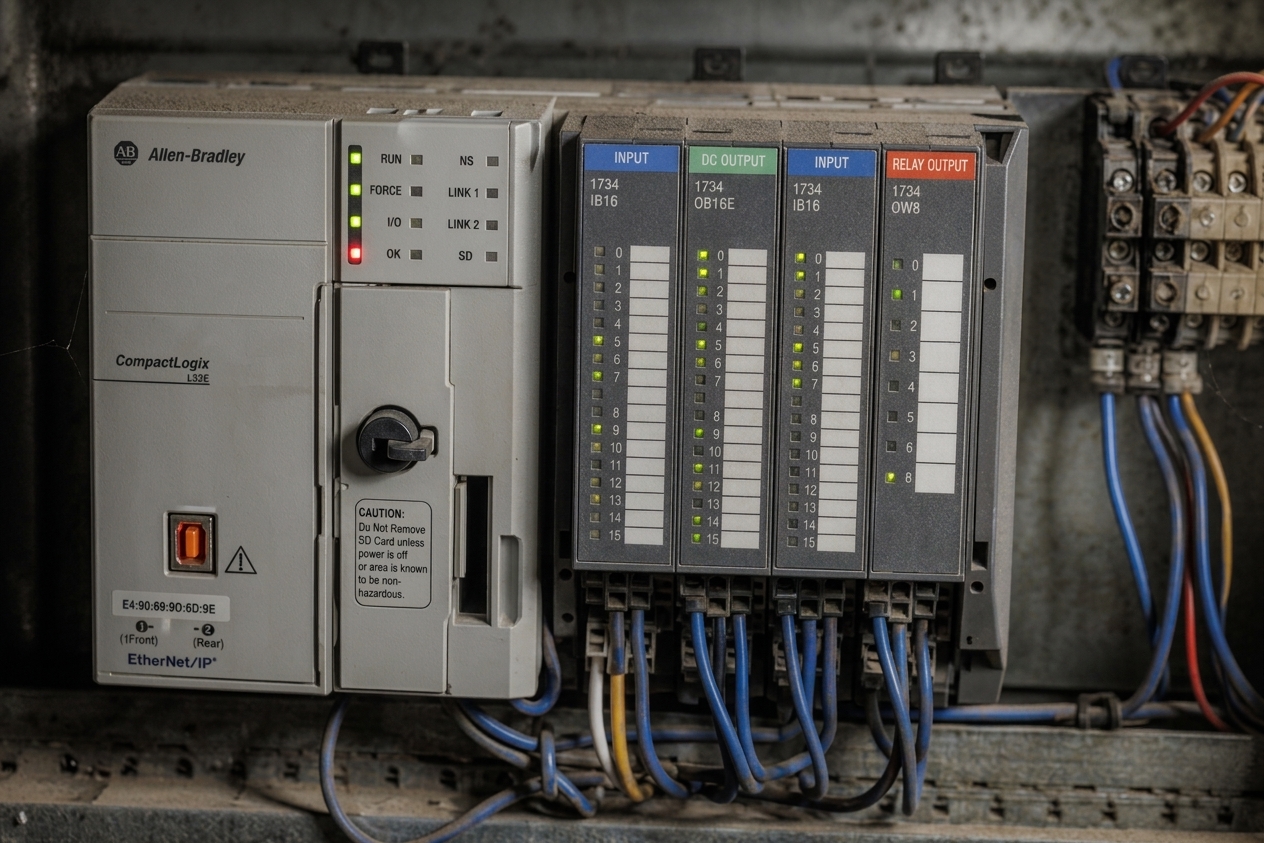
| Controlled outputs to other systems | Alarm states are exposed through Modbus TCP, MQTT, and ODVA conformant EtherNet/IP for PLC workflows. |
| Protected configuration and records | Access is controlled under our SOC 2 Type II program, and every alert, acknowledgement, and response time is logged. |
That alignment does not make AVIAN a listed fire detector. It does mean the evidence insurers and AHJs now look for, such as coverage, supervision, controlled changes, and response records, is already part of an AVIAN deployment.
The layered approach is now easier to explain. Many AVIAN customers will end up with a simple split:
- Listed detection where code or policy requires it.
- AVIAN on the equipment and material most likely to start a fire, where abnormal heat appears hours or days before an alarm-worthy event.
- One response workflow that routes heat alerts to the people and PLCs that can act.
For insurers, that split is easy to document. For plant teams, it means one system pays for itself through avoided downtime while also lowering fire risk.
The Bottom Line
NFPA 72 2025 did not make thermal cameras mandatory. It made them legitimate fire alarm devices, with rules to match: listing, engineered design, line of sight, supervision, locked configuration, and documented testing.
For insurers, the useful question is now specific: what role does this thermal system play, and what evidence backs it?
For manufacturers, the useful question is: what job do we need the camera to do? Code detection, prevention and uptime, or both?
Answer those two questions honestly and the rest of the decision gets easier.
If you want help mapping which areas of your facility need listed detection and which need continuous thermal monitoring, talk to the AVIAN team. We can help you build a coverage plan your insurer can review.
Drew Hanover
CTO & Co-Founder
Get new AVIAN insights in your inbox
We'll send practical notes on industrial fire prevention, thermal monitoring, and customer learnings. No noise.