Back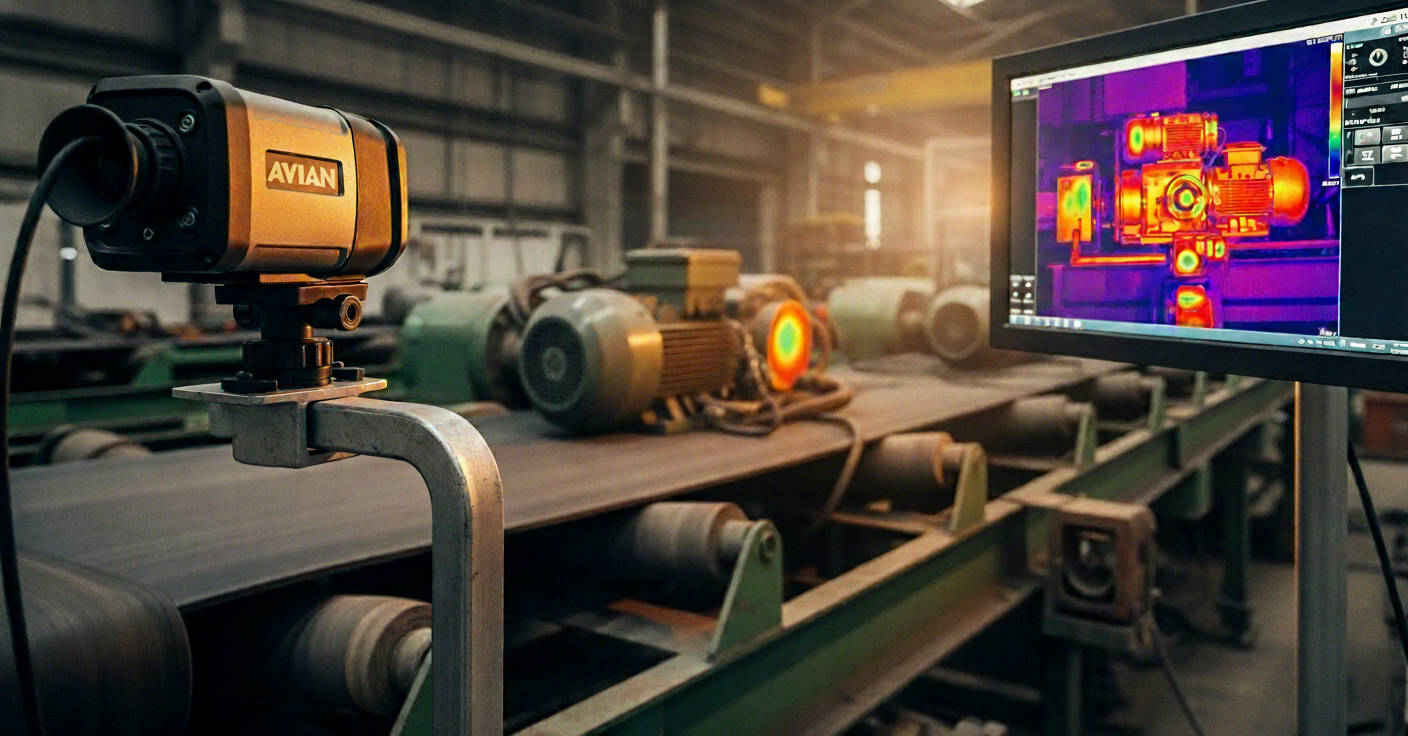
2026-04-22/Drew Hanover
What Condition-Based Monitoring With Thermal Imaging Means in Practice
Most industrial equipment fails the same way. It runs hot before it stops.
Bearings warm up days before they seize. Motors get hot under load before they trip. Electrical connections heat up long before they arc. The signal is there. It just lives in places nobody is watching every minute.
Condition-based monitoring is the discipline of watching that signal continuously and only acting when the data says you need to. Thermal imaging is one of the cleanest ways to do it.
This post explains what condition-based monitoring is, what changes when you do it with thermal cameras instead of handheld inspections, and where it fits next to the maintenance programs you already run. If you are building the business case, read the companion guide on the benefits of condition monitoring.
The Short Definition
Condition-based monitoring (CBM) is a maintenance strategy where you measure what equipment is actually doing and intervene only when the measurements move outside of normal.
You do not service a bearing because the calendar says it is time. You service it because the temperature, vibration, lubrication, or another measured signal says it has started to drift.
CBM is the operational core of what people call predictive maintenance. The two terms get used loosely. The cleaner way to think about it:
- Condition-based monitoring is the act of measuring and detecting drift.
- Predictive maintenance is the planning discipline that uses CBM data to decide when and how to intervene.
You cannot have predictive maintenance without condition-based monitoring underneath it.
The international reference for this is ISO 17359, which lays out the general framework for measuring equipment condition and acting on it. The standard does not prescribe a sensor. That is up to you.
Why Heat Is the Sensor That Catches the Most
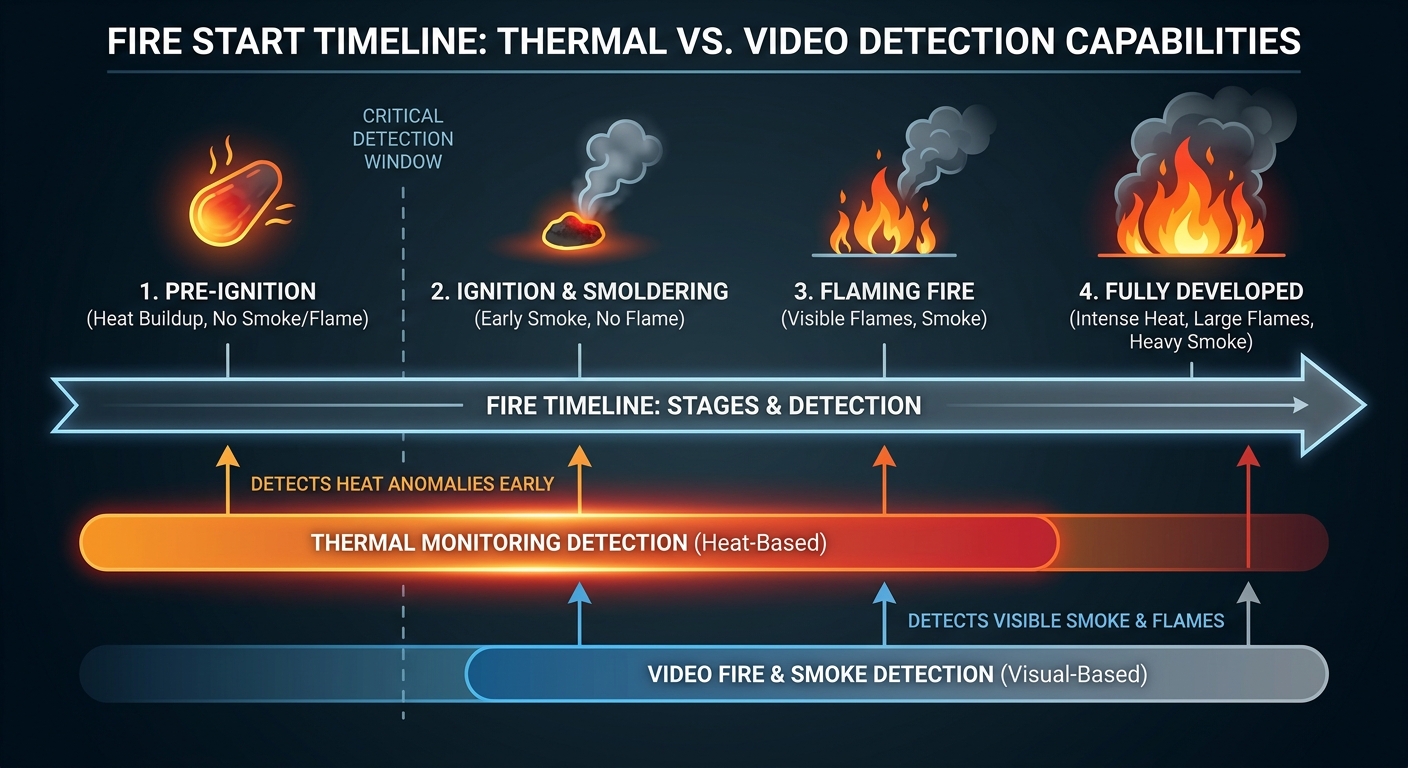
Most failure modes in heavy industry produce heat before they produce anything else.
A bearing that is starting to fail generates friction. Friction is heat. The bearing housing warms up before any change in vibration is large enough to detect on a sensor and well before any change in sound is audible to a person.
A motor running close to overload draws more current. The windings warm. The frame warms. None of it is visible to a walk-by inspection.
A loose electrical connection has measurable resistance. The resistance dissipates as heat. Long before the connection arcs or trips a breaker, the lug is running 20, 40, or 80 degrees above the others on the same panel.
A belt that is slipping generates friction at the pulley. A roller that is dragging generates friction against the load. A cutter head that is loading abnormally generates heat in the bearing housing.
Heat is the common output. That is why a thermal camera, properly placed, can act as the condition-based sensor for an entire zone of equipment instead of a single machine.
Where Thermal CBM Beats the Alternatives
There are four common ways to run a maintenance program. They each handle the failure curve differently.
Reactive. You wait for the equipment to fail and then fix it. Cheapest until something expensive breaks at the worst possible time.
Preventive. You service equipment on a fixed schedule whether it needs it or not. Better than reactive, but you spend money on parts and labor that may not be needed, and you still miss failures that develop between intervals.
Predictive (data-driven). You use measurements from the equipment to forecast when it will fail and plan around that forecast.
Condition-based. You measure continuously and intervene the moment a measurement moves outside of normal. This is the version that gives the smallest gap between a problem starting and somebody knowing about it.
Thermal imaging maps cleanly onto condition-based work because the measurement (surface temperature) is fast, non-contact, and covers many assets per camera. You do not have to instrument each asset individually the way you do with vibration or oil-analysis sensors. A single AVIAN T100 industrial thermal camera can watch a row of motors, a transfer station, a panel cabinet, or a section of conveyor and treat each visible component as its own monitored asset.
We covered the trade-off with vibration in a separate post: Thermal Imaging vs. Vibration Sensors. Vibration is excellent for diagnosing specific mechanical faults in rotating equipment. Thermal is the broader sensor for a mixed asset base where some assets rotate, some carry current, and some carry combustible material.
What Continuous Changes vs. Handheld
A lot of facilities already use thermal cameras for maintenance. They do it as a route. A technician walks the plant once a month with a FLIR handheld and shoots spot temperatures on bearings, panels, and motors.
That program finds problems. It also misses them.
A handheld walkdown is a snapshot. If a bearing starts running hot the day after the route, you find out about it next month. If it fails before the next round, you find out about it when the line stops or the smoke alarm goes off. We wrote about this gap in detail in Why Spot Monitoring Is Not Enough.
Continuous thermal monitoring removes the route. Cameras sit on every asset of interest, take measurements many times per second, and learn what normal looks like for each component over time. When a reading drifts, the system alerts the team in seconds, not on the next inspection.
This is the operational difference between thermal imaging as an inspection tool and thermal imaging as condition-based monitoring. Same sensor. Different program.
A small example. At the Quincy mill operated by Sierra Pacific Industries, an AVIAN system flagged an anomaly on a planer bearing on the first day of monitoring. No technician would have been on a route at that hour. The bearing was running 10 degrees above its peers, and the system saw it. SPI scheduled the repair on a planned shutdown. That is what CBM looks like in production.
What Failure Modes Thermal CBM Actually Catches
Across industrial sites running continuous thermal monitoring, the catches fall into a small number of patterns. These are the ones we see most often:
- Bearings, rollers, and idlers running above their normal operating temperature. Friction shows up as heat hours or days before mechanical symptoms.
- Electric motors under abnormal load, with hot windings or hot frames.
- Electrical panels and switchgear with loose connections, overloaded breakers, or aging contactors.
- Belt drives and conveyors with slipping belts, dragging loads, or misaligned pulleys.
- Hydraulic systems with leaking seals or restricted lines.
- Dust collection and process ducting with smoldering material, blocked flow, or hot ember transport.
- Cutter heads, planers, and saws with loaded blades, friction, or knife issues.
- Battery rooms and charging infrastructure with cells trending hotter than the rest of a string.
For an industry-by-industry view, the mining, ports and bulk handling, and sawmill and planer mill pages walk through the specific risks in each environment.
What Thermal CBM Does Not Replace
A few honest caveats.
Thermal imaging measures surface temperature, not internal temperature. A failure that develops inside a sealed casing has to heat the casing enough to be visible. We covered the limits in Infrared Monitoring Basics.
Vibration analysis is still the right tool for spectrum-level fault diagnosis on critical rotating machinery. If you have a vibration monitoring program on your most expensive turbines or compressors, keep it. Thermal complements it; it does not replace it.
Continuous thermal monitoring is also not a certified fire alarm system. It catches heat that often precedes a fire, but the certified detection systems your code requires (NFPA 72, EN 54, VdS) stay in place. Thermal is the early-warning layer that runs in front of them.
What a Real Thermal CBM Deployment Looks Like
Hardware alone does not give you condition-based monitoring. The system around the camera matters more than the camera itself.
A useful thermal CBM deployment has five things working together:
- Camera placement that covers the assets that actually fail. Cutterheads, transfer points, panels, drive motors, and dust ductwork. Not arbitrary wide shots of the building.
- Per-asset baselines so the system knows what each component normally runs at. Adaptive baselines beat fixed thresholds because equipment heat varies with ambient temperature, load, and shift. For more detail, see
- Filtered alerts that suppress nuisance triggers. Forklifts, welding sparks, and hot-work operations should not generate pages. We wrote about how AVIAN handles this in
- Real-time routing to the people who can act, on the device they already have. Phone, SMS, app push, or PLC trigger when the response should be automated.
- Ongoing tuning to refine zones, thresholds, and response logic as the team learns the alerts.
Without those layers, a thermal camera is a dashboard. With them, it is condition-based monitoring.
Where to Start
If you are new to condition-based work, start with the assets that cost you the most when they fail unplanned. For most industrial sites, that is one of:
- A bearing or drive on a high-throughput line where a failure stops production immediately.
- A dust collection or ductwork run that carries combustible material.
- An electrical panel feeding a process you cannot afford to lose power on.
- A battery room or charger bank where a runaway event is a safety problem.
Cover those first. Build the baseline data. Watch the first month of alerts. Expand from there.
The mills and plants that get the most value out of thermal CBM are the ones that use it to retire their walkdown route, not the ones that bolt it on as a second program. The continuous data is what changes the operation.
If you want to see how condition-based monitoring with thermal imaging fits into your operation, reach out to the AVIAN team. We will walk through your asset list and identify where continuous monitoring pays for itself first.
Drew Hanover
CTO & Co-Founder
Get new AVIAN insights in your inbox
We'll send practical notes on industrial fire prevention, thermal monitoring, and customer learnings. No noise.