Back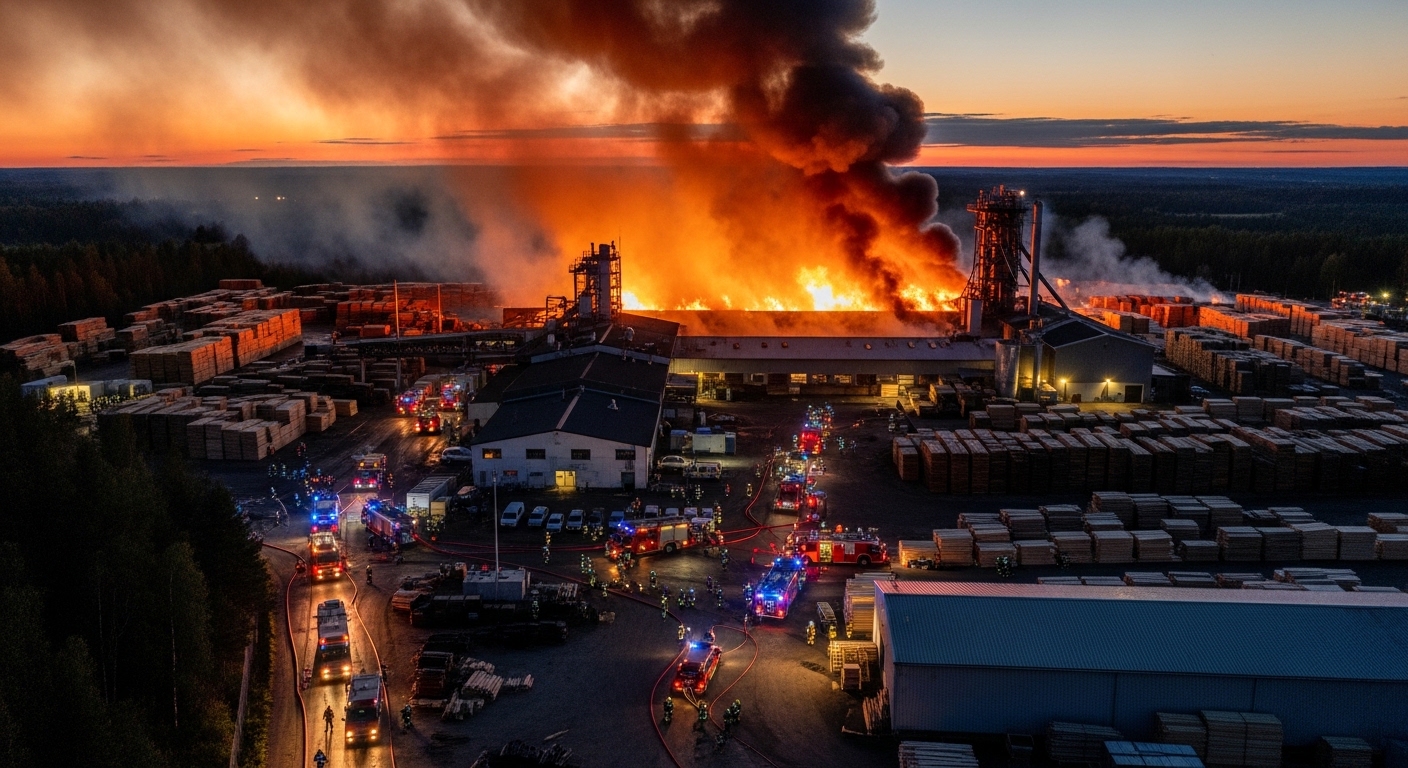
2026-06-18/Drew Hanover
What the Robbins Lumber Explosion Shows About Sawmill Fire Risk
What happened at Robbins Lumber
On May 15, 2026, a fire and explosion at Robbins Lumber in Searsmont, Maine, killed Morrill firefighter Andrew Cross and injured multiple workers and first responders. The incident became one of the clearest recent examples of how fast a sawmill fire can move from a contained response to a mass-casualty event.
Early reports from Bangor Daily News described a fire at the lumber mill after a reported explosion. Later preliminary findings reported by WMTW said investigators believed the fire started near the unloader mechanism at the base of a silo.
Before suppression work could fully contain the smoldering fire, suspended particulate material rapidly ignited inside the silo. The explosion lifted the silo from its concrete base, released more sawdust and particulate material, and the silo toppled as fire spread to nearby buildings.
Those details matter because they point to a common sawmill problem. The hazard was not only visible flame. It was heat, dust, material movement, and a confined system where escalation could happen faster than people on the ground could control it.
The sprinkler detail is the lesson
One preliminary finding stands out. Investigators reported that the fire suppression system near the top of the silo did not activate because the temperature at that elevation did not reach the activation threshold. The fire started lower, near the base of the silo.
That does not mean the system was useless. It means the hazard developed in a place where a single activation point was not enough to see the earliest dangerous condition.
Sawmills are full of these gaps:
- Heat begins at a bearing, motor, unloader, conveyor, or duct section.
- The first dangerous signal is local and thermal, not always visible.
- Dust or shavings can move the event into a silo, duct, collector, or enclosed space.
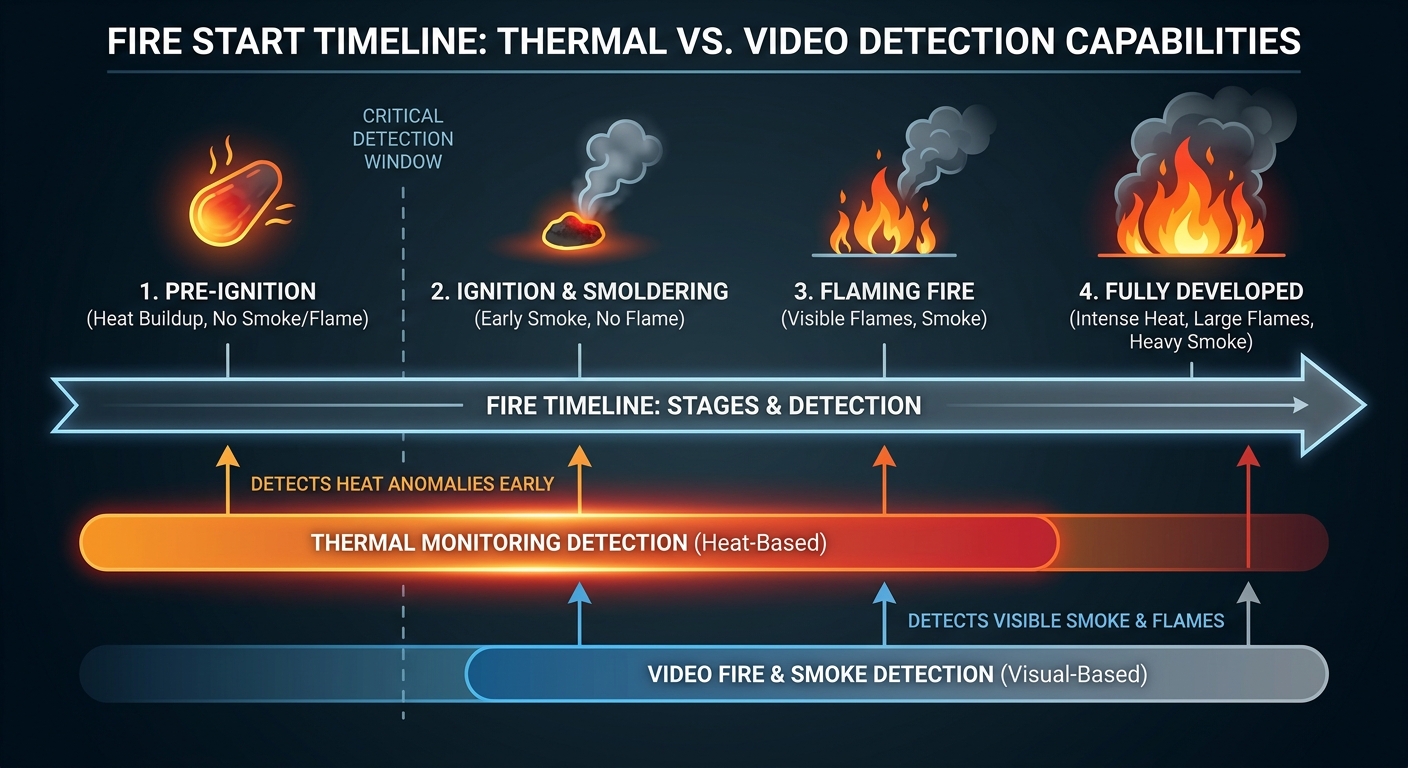
- By the time smoke, flame, or suppression activation is obvious, the response window is already short.
This is why sawmill fire prevention cannot rely only on people smelling smoke, cameras seeing flame, or suppression systems waiting for heat at one location.
Robbins was not an isolated warning
Robbins Lumber had already appeared in our sawmill fire tracking. In November 2024, a fire destroyed a control room above a dry kiln at the same facility. PenBay Pilot reported that the room housed computer equipment, boiler pipes, and controls for airflow and heat. Employees knocked down the initial flames and pulled lumber away before the fire spread.
The 2024 fire and the 2026 explosion were different events. The investigation into the 2026 explosion remains active. But together they show the same operational reality: sawmills have many heat-producing systems sitting next to fuel.
Dry kilns, boilers, bagging areas, silos, conveyors, motors, bearings, ducts, and dust systems do not fail on a convenient schedule. They fail during production, during cleanup, during off-hours, and in areas people do not continuously watch.
That is the pattern behind the sawmill fires we have tracked across North America.
What mills should review now
The Robbins Lumber explosion should prompt every mill team to review where heat can build before anyone sees flame.
Start with the systems that combine heat, dust, and limited visibility:
- Silo bases, unloaders, and transfer mechanisms.
- Dust collectors, ducts, cyclones, and bagging lines.
- Dry kiln control rooms, boiler-adjacent spaces, and airflow controls.
- Conveyor bearings, drives, motors, and low-traffic transfer points.
- Planers, cutterheads, outfeeds, and areas where stuck material can create friction heat.
Then ask a harder question: how would your team know those points were heating up before smoke or flame appeared?
Manual walkdowns help, but they only capture the moment someone is there. Standard CCTV helps after a visible event starts. Sprinklers and fire alarms are essential, but they are response systems. They are not designed to identify every abnormal heat pattern early in the failure curve.
Where thermal monitoring fits
Continuous thermal monitoring is not a replacement for sprinklers, fire alarms, housekeeping, lockout procedures, or dust control. Those systems still matter.
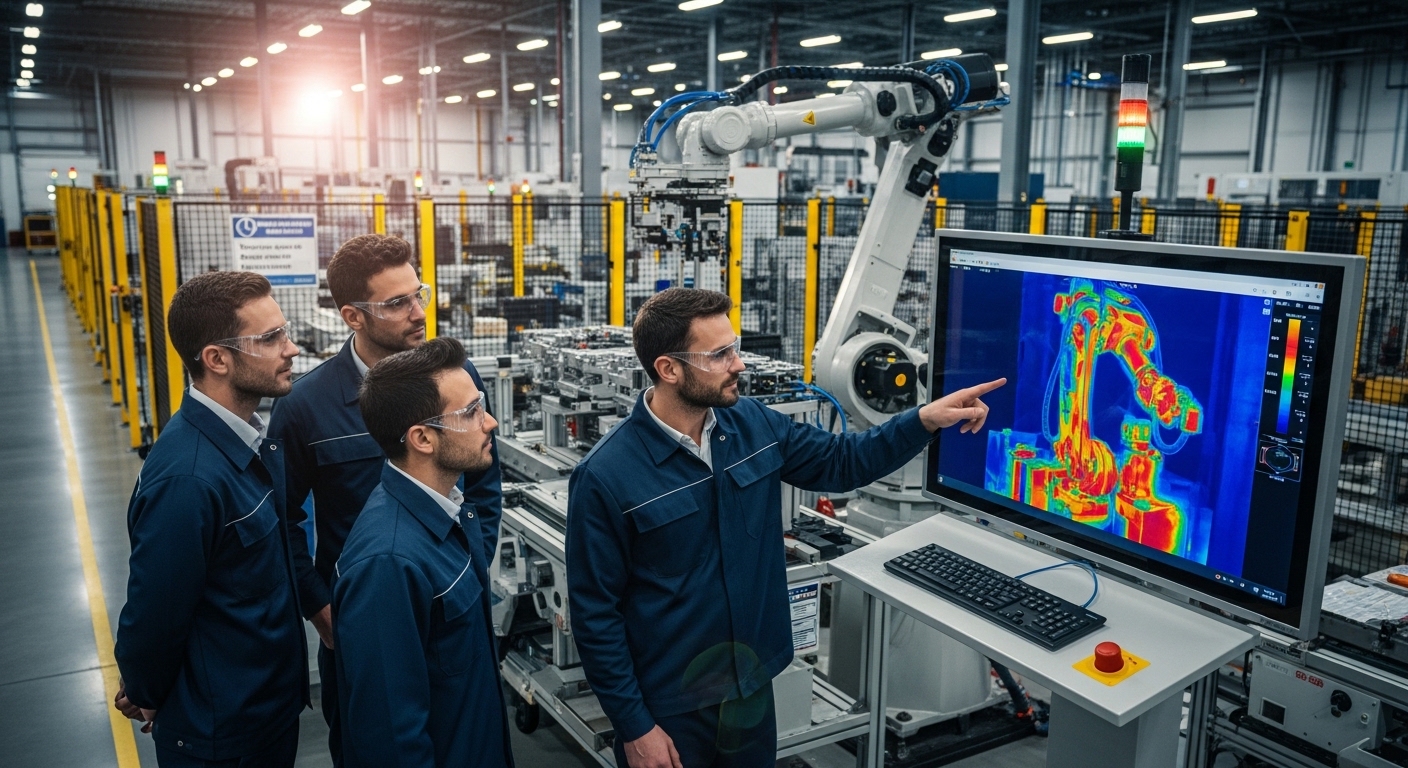
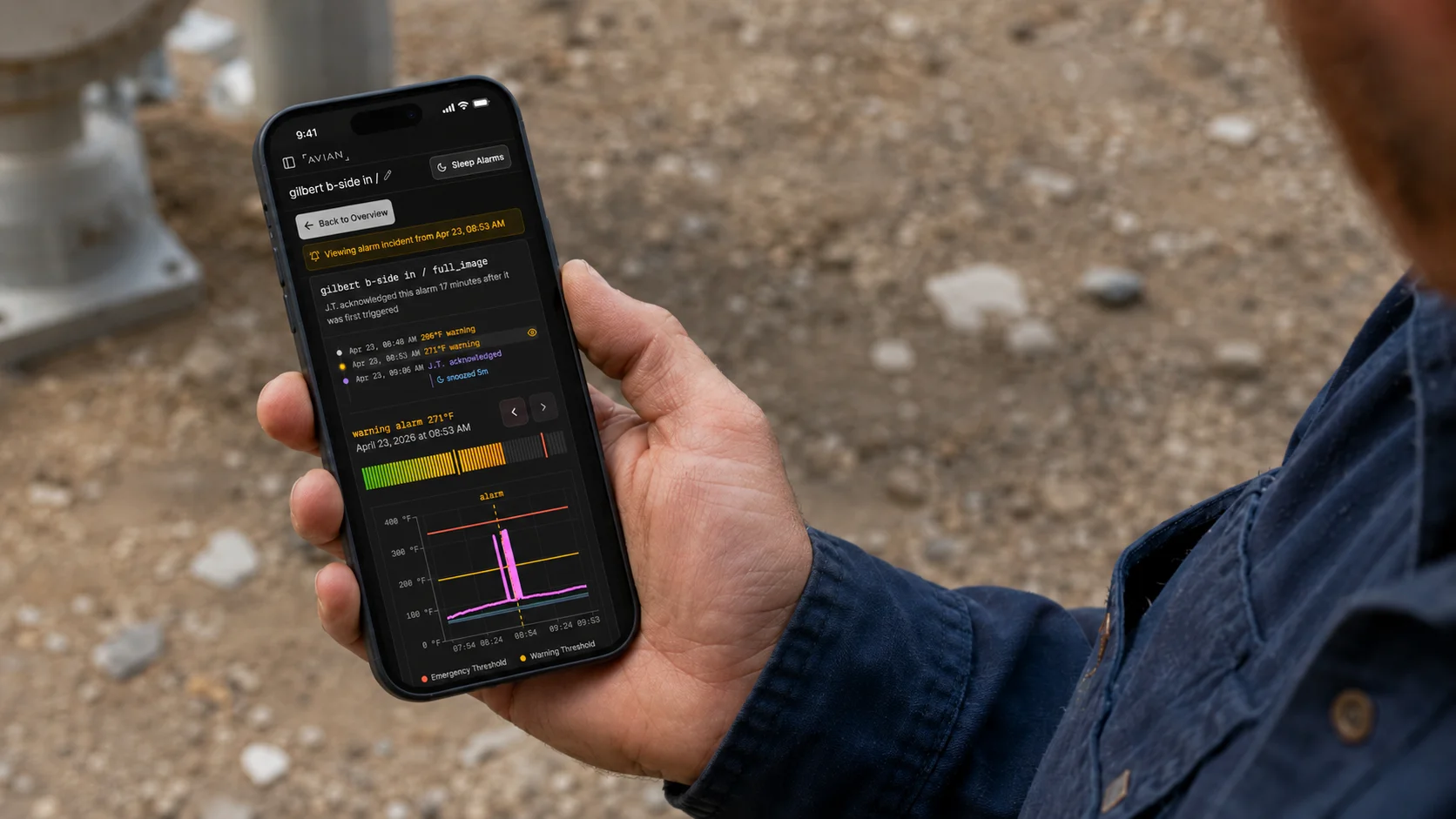
Thermal monitoring adds a different layer. It watches the surface temperature of critical assets and risk zones continuously. A bearing running warmer than its normal pattern, a duct section heating from a smoldering ember, or a motor drifting out of baseline becomes visible before the event becomes a fully developed fire.
For sawmills and planer mills, the highest-value monitoring zones are usually the same places where fires start:
- Planer heads and outfeed sections.
- Conveyor bearings and drives.
- Dust collection paths.
- Silo-adjacent transfer equipment.
- Kiln and boiler-adjacent control areas.
- Low-traffic areas where people do not walk every hour.
The goal is simple. Give operators and maintenance teams enough time to inspect, clean, stop equipment, or isolate a process before the event reaches the point where firefighters are walking into a dust-loaded structure.
Turn the incident into a prevention review
The Robbins Lumber explosion was a tragedy. It should also become a practical checklist for every mill that handles sawdust, shavings, dry lumber, and enclosed dust systems.
Ask these questions this week:
- Which silos, unloaders, conveyors, and dust paths can develop heat at the base or inside the system?
- Which of those points are only checked during rounds?
- Which are covered by suppression but not by earlier temperature monitoring?
- Which assets could be stopped automatically if a thermal threshold is crossed?
- Which areas would put firefighters at the highest risk if the first warning came too late?
If you operate a sawmill or planer mill, start with your highest-risk zones and map where continuous thermal visibility would change response time. Our sawmill and planer mill monitoring page shows the assets AVIAN typically watches first, and our thermal monitoring system explains how the alerting workflow works in practice.
The lesson from Robbins is not that every incident can be prevented. The lesson is that the first useful signal is often heat, and heat is easiest to act on before it becomes smoke, flame, or an explosion.
Get new AVIAN insights in your inbox
We'll send practical notes on industrial fire prevention, thermal monitoring, and customer learnings. No noise.