Back
2026-10-29/Drew Hanover
Pallet fires in 2026: One reported U.S. incident every seven days
We found 42 reported U.S. fires involving pallet operations, pallets, or palletized goods through October 29, 2026. That works out to about one every seven days.
If your main production line burns, customers still need their orders and your employees still need to be paid. Insurance may cover a loss, but it cannot put a replacement machine on the floor tomorrow. The damage can outlast the fire by months.
Some of this year's reports describe businesses destroyed. Others show what happens when sprinklers and an alarm reach a fire in time. Both are worth reading before deciding what to fix at your own plant.
42 reported fires in 2026
Our Google Alerts review found 42 distinct U.S. incidents in the first 302 days of 2026, up from 17 in 2025 and 12 in 2024. Dividing 302 by 42 gives 7.2 days per incident.
That's more incidents in ten months than we found in the two previous years combined. The increase is troubling, although changes in alert coverage and news reporting mean we cannot say how much the actual national fire rate has changed. The list also includes warehouses and other sites where pallets or palletized goods were involved. It is not limited to pallet factories. All 71 incidents are linked below.
What happened at these plants
Two fires at the same business
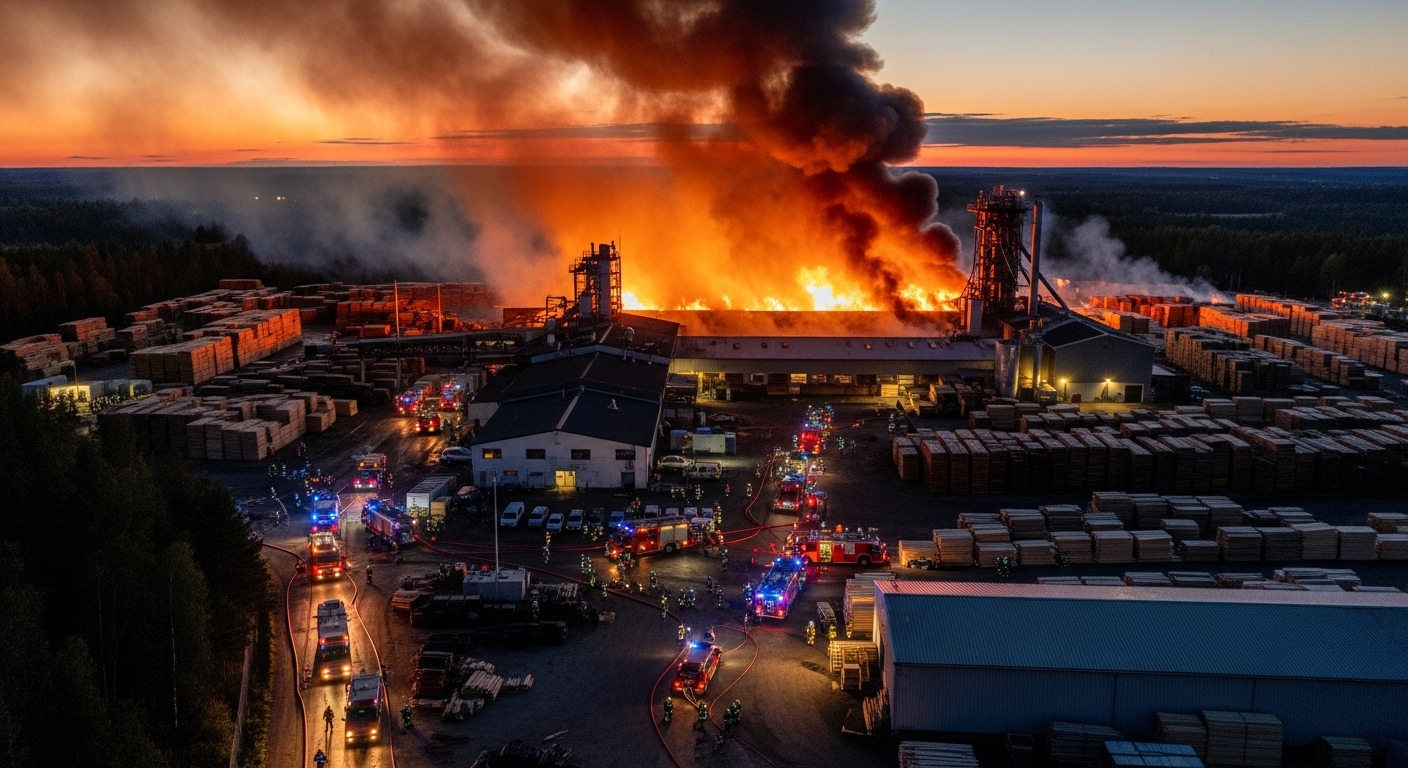
At K&M Pallets in Umatilla, Oregon, pallet storage bins burned in June. A second fire destroyed the business in August. Pallet Express in Rochester, New York, had a five-alarm fire in June and another fire in October. In September, a pallet factory in Milroy, Indiana, was destroyed.
The reports don't establish a common cause. They do show why a small fire needs follow-up even after production resumes. Find out what failed, whether the same fault exists on other equipment, and whether the alarms worked. Record what you changed. A repaired machine alone doesn't answer those questions.
The yard can put the building at risk
In Lubbock, Texas, more than 1,000 pallets burned near a propane tank, structures, and power lines. Moving stock outdoors does not remove the danger to the plant if it is piled against a wall or beside a fuel tank.
Allianz's pallet-storage guidance explains why tall stacks are harder to protect and why distance from buildings matters. Keep those gaps clear when the yard gets busy, too.
At Patz Pallet, the sprinklers worked
At Patz Pallet in Wisconsin, an alarm company reported a fire alarm and water flow. Sprinklers slowed the fire inside while crews fought flames outside. Damage was minimal. Officials estimated that the response saved a couple of million dollars in property and several jobs.
This is what you want from your protection: a fire detected, water flowing, and help on the way while there is still a building to save.
Six things to check at your pallet plant
1. Dust above and behind the machines
A swept floor can hide a much dirtier plant overhead. Check beams, cable trays, machine enclosures, and extraction equipment. Fine wood dust ignites more readily than solid lumber, so buildup near heat or sparks deserves attention.
Give each area a cleaning schedule and someone responsible for it. Use methods and equipment suitable for combustible dust; don't blow deposits into the air with compressed air. Have a specialist check the collection system and its fire and explosion protection. OSHA's combustible-dust guidance covers capture, containment, and safe removal.
2. Equipment that keeps running hot
A bearing that runs warmer, a belt that rubs, or a motor that repeatedly trips needs a maintenance decision. Log the defect, assign the repair, and use qualified personnel and safe isolation procedures. Include electrical connections and dryers in the inspection schedule.
Follow the dust-extraction route as well. Where could a spark or ember enter a collector or bin? Have a specialist assess the need for spark detection, extinguishing, isolation, and explosion protection. HSE identifies extraction systems as a common starting point for woodworking fires. A thermal camera outside a duct cannot see every hazard inside it.
3. Welding, cutting, and grinding
Move the job to a safe area when possible, or choose a method that doesn't create an ignition source. For work that stays in place, use a permit, deal with nearby combustibles and hidden spaces, assign a fire watch, and finish the required checks after the work ends. Contractors need to follow the same rules. FM's hot-work guide is a useful reference.
4. Storage that has crept into the wrong place
Mark the approved storage areas. Keep fire access and water connections clear, remove weeds and loose debris, and secure the yard. Agree stack dimensions, separation, and protection with your fire authority and insurer. The International Fire Code's pallet-facility provisions provide a starting point; check the rules adopted locally and any additional insurer requirements.
5. Sprinklers and alarms awaiting repair
Have a fire-protection contractor confirm that your system still suits the stock, stack heights, and processes you use today. Fix inspection defects. Test whether alarms reach the people who should receive them.
If a system must go out of service, notify the required parties, put temporary safeguards in place, and confirm it is working again afterward. FM's guidance on impaired protection explains the added risk during that gap. Don't let a repair sit on the maintenance list without a plan for the unprotected area.
6. Who answers an alarm after hours
Try the call list. If the first person doesn't answer, who gets called next? Check that both know the site and the response plan. Staff need clear instructions for raising the alarm, evacuating, and calling emergency services. Nobody should improvise by entering smoke or opening a collector suspected of burning.
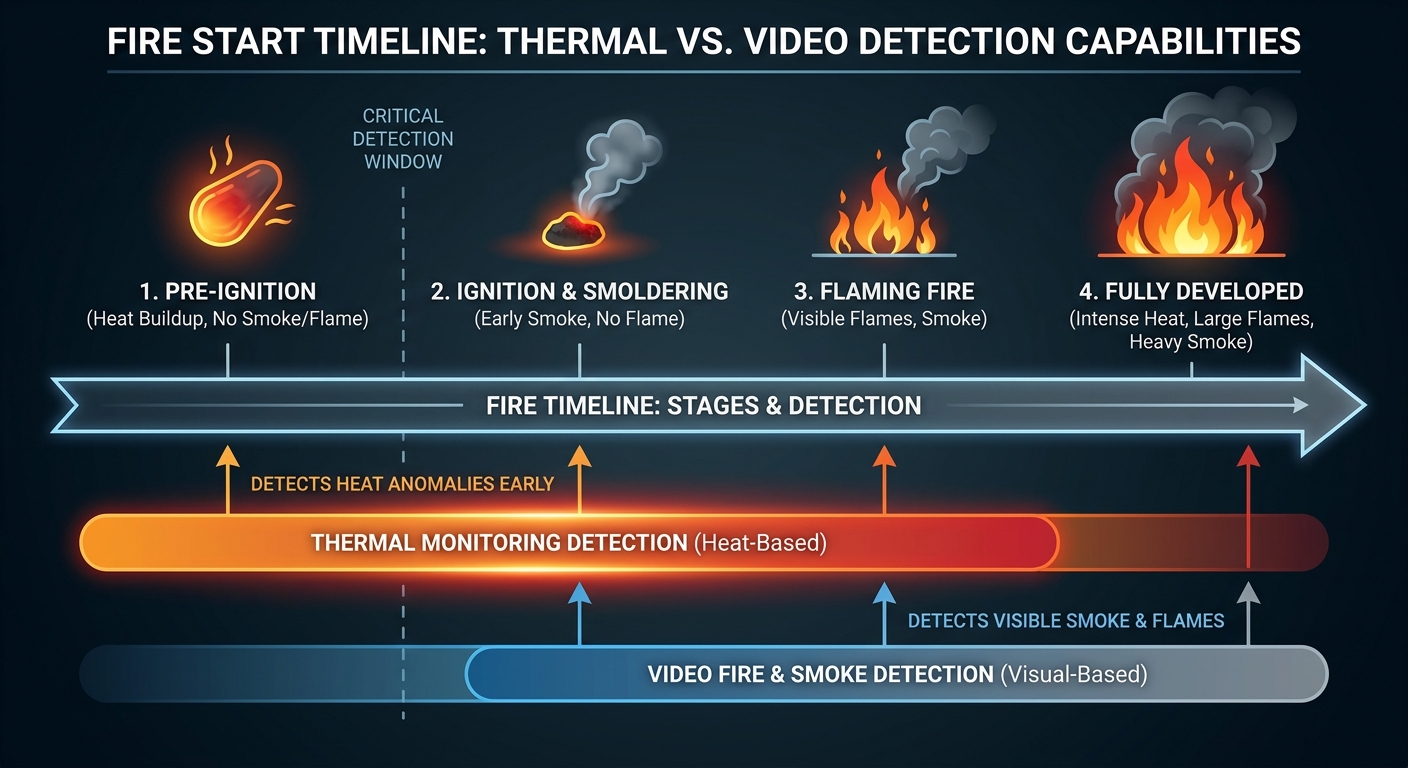
Continuous thermal monitoring can flag abnormal surface heat between inspections. Coverage, clear sightlines, and a working call list determine how useful that warning will be. It belongs alongside suppression and dust protection. Our pallet manufacturing page explains where AVIAN can help.
Insurance: what to expect at renewal
A softer market does not guarantee a cheaper policy
In April 2025, Pallet Enterprise interviewed insurance specialists about rising costs and fewer options for pallet companies. They described insurers leaving the sector, declining renewals, and setting strict conditions for coverage.
The wider market has since offered some relief: Marsh reported a 10% decline in U.S. commercial property rates in Q3 2026. That figure covers a broad mix of businesses. A pallet plant with recent losses or unresolved hazards can have a very different renewal.
Show the underwriter what you've fixed
The insurer wants to understand what could burn and how large the loss could be. Pennsylvania Lumbermens Mutual's submission requirements include loss history, building photographs, operating details, values, and protection information. New submissions also undergo a pre-inspection.
I'd expect a plant with weak protection or recent fire losses to face harder negotiations. That could mean higher premiums, a larger deductible, required improvements, lower available limits, or fewer quotes. Our fire count cannot tell you which of those will happen at your renewal.
Start with your broker well before the policy expires. Bring photographs, a storage plan, maintenance and inspection records, and proof that identified problems have been fixed. If you've had a loss, explain what you changed afterward. Ask which issues would prevent an insurer from quoting and get its improvement priorities in writing.
Before counting on an insurance saving to pay for new equipment, ask whether it will affect your price or terms. A monitoring system does not automatically earn a discount.
Price the recovery, too
Check replacement values for buildings, machinery, and peak inventory with your broker. Work through the time needed to order equipment, rebuild, commission the line, and resume deliveries. Those assumptions matter when setting business income coverage.
The NAIC's business-interruption overview explains how that coverage works after a covered loss. Review your policy's limits, waiting periods, restoration provisions, extra-expense cover, and any extended business income cover. Ask what the policy requires when protective systems are disabled. And before accepting a higher deductible, check that the business has the cash to carry it.
Where to start
Walk the plant with operations and maintenance. Pick the three most serious hazards, put names and dates against the repairs, and check that they get done. Test an after-hours alarm. Book the protection and insurance reviews that need outside help.
For more examples from the wood industry, see our sawmill fire report.
Talk to AVIAN about your pallet plant
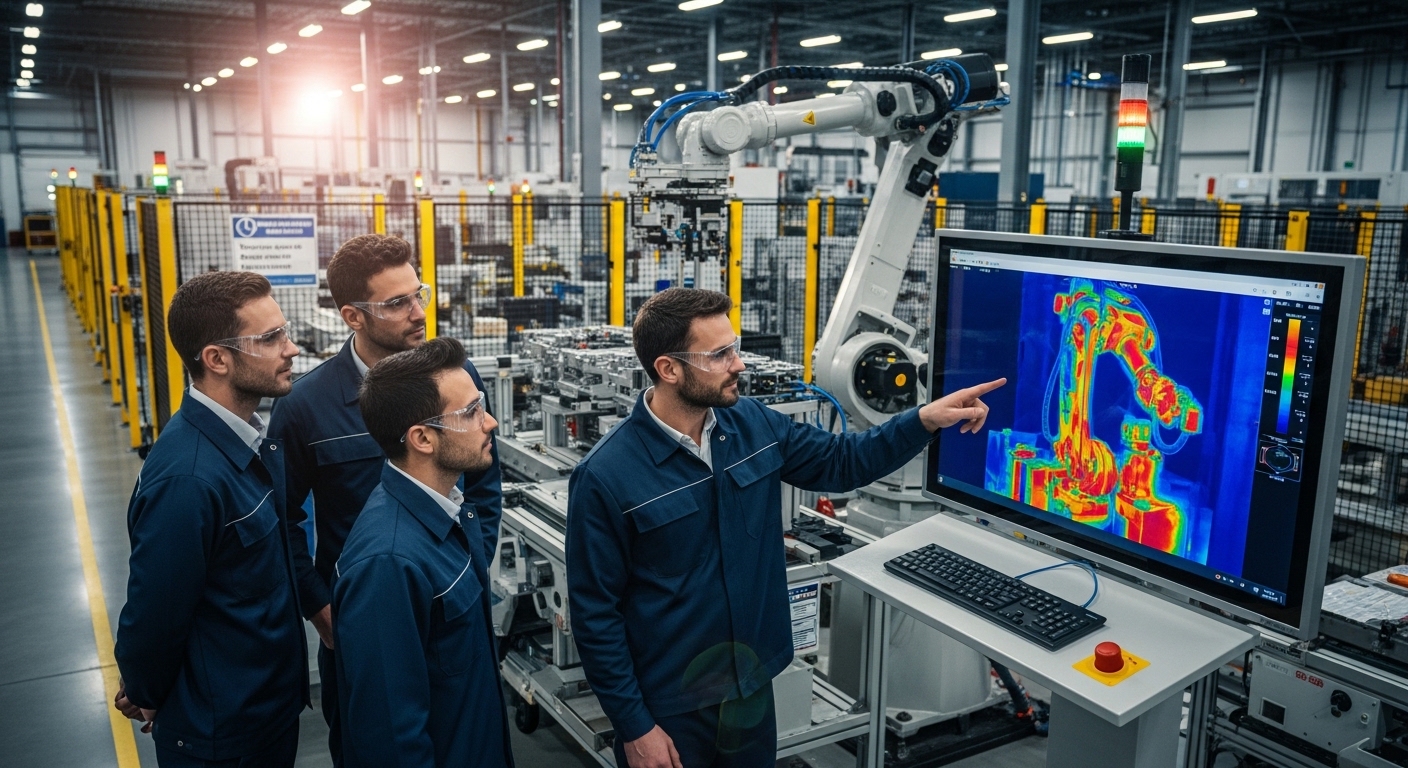
AVIAN's thermal cameras monitor surface temperatures continuously and alert your team to abnormal heat in the areas they can see. That gives maintenance a chance to investigate a hot bearing, motor, or conveyor between scheduled inspections.
We can work through which equipment and storage areas to cover, who should receive alerts, and how to fit monitoring into the protection you already have.
Talk to AVIAN about protecting your pallet facility, or see how monitoring works for pallet manufacturers.
Documented U.S. incidents
Each fire is counted once, even when several outlets covered it. Separate fires at the same site remain separate entries. Dates are fire dates where established; four 2026 entries use the alert date because the full report was unavailable. Some reports describe goods on pallets without confirming that the pallets burned. The two 2024 Fox Lumber fires share an entry because the source gives no individual dates.
2026 pallet fires: January to March
- January 20, Walker Township, Pennsylvania: A four-alarm fire broke out at Treen Box & Pallet.
- January 22, Bristol Township, Pennsylvania: A sprinkler contained a warehouse fire involving wood on pallets; the report's wording is ambiguous about the pallets themselves.
- January 27, Tacoma, Washington: Wooden pallets caught fire behind a grocery store.
- February 5, Burrillville, Rhode Island: Firefighters responded to a fire at Atlas Pallet.
- February 14, Rock Island, Illinois: Fire spread to pallet stacks at a wood pallet facility.
- February 15, Riverside, California: Pallets burned behind a commercial building.
- Alert received March 1, St. Martinville, Louisiana: Firefighters extinguished a large pallet pile.
- March 16, Riverside, California: A fire spread through a pallet yard and adjacent properties.
- March 26, Athens, Tennessee: A fire began in pallets outside a home.
- March 31, Lebanon, Ohio: A building containing pallets burned at U.S. Pallets and Lumber.
2026 pallet fires: April to June
- April 4, Maywood, Illinois: Firefighters responded to a warehouse fire at F & L Pallets.
- April 7, Sacramento, California: Crews responded to a fire at a pallet yard.
- April 7, Ontario, California: Fire spread through palletized goods in a distribution warehouse.
- April 11, Apple Creek, Ohio: A five-alarm fire broke out at Southwood Lumber Pallet.
- April 15, Lubbock, Texas: More than 1,000 pallets burned in a yard fire.
- April 17, Winchester, Indiana: Plastic pallets caught fire at a pallet-building business.
- April 23, Beaver Township, Wisconsin: A fire at Patz Pallet was contained with sprinkler assistance.
- May 18, Westminster, Maryland: Firefighters found a burning pallet of batteries; the report does not establish whether the pallet itself burned.
- May 23, Pomona, California: A fire burned through a pallet yard.
- June 4, Goodland Township, Michigan: A fire engulfed Pallets N More.
- June 7, Rochester, New York: A five-alarm fire damaged Pallet Express.
- June 10, Orange, California: A pallet yard fire drew a multi-agency response.
- Alert received June 19, St. Joseph, Missouri: Firefighters extinguished burning pallets inside an abandoned building.
- June 19, Umatilla, Oregon: Pallet storage bins burned at K&M Pallets.
2026 pallet fires: July to October
- July 2, Avon Lake, Ohio: Pallets caught fire at a waste management facility.
- Alert received July 16, Lodi, California: Pallets caught fire in a store's storage area.
- July 19, Oakland, California: A fire near Interstate 580 appeared to involve a pallet.
- July 24, Carthage, Missouri: Crews responded to a fire at Global Pallet Solutions.
- July 29, Sumter, South Carolina: A recycling facility fire reportedly involved pallets and cardboard.
- August 2, Tucson, Arizona: Firefighters responded to a pallet fire near a building.
- August 16, Eastvale, California: Crews extinguished a pallet yard fire.
- August 19, Umatilla, Oregon: A second fire at K&M Pallets destroyed the business.
- August 19, Muscoy, California: Fire burned through a pallet yard and storage area.
- August 24, Sumter, South Carolina: Pallets caught fire at a business, separate from the July incident.
- Alert received August 27, Hurricane, Utah: Crews responded to a pallet fire at a business.
- September 16, Pine Bluff, Arkansas: Scrap pallet wood burned at a recycling facility.
- September 24, Bossier Parish, Louisiana: Fire damaged the Ark-La-Tex Pallet Sales yard.
- September 29, Milroy, Indiana: A pallet factory was destroyed by fire.
- October 11, Blyn, Washington: A pallet fire spread into surrounding grass.
- October 17, Waltham, Massachusetts: A generator fire extended to pallets at a construction site.
- October 23, Rochester, New York: A second fire at the Pallet Express building followed the June incident.
- October 26, McClure, Pennsylvania: Fire destroyed a building at Hilltop Pallet.
2025
- January 18, Dundalk, Maryland: A recycling center fire involved compressed cardboard described as pallets; the report does not establish whether wooden pallets burned.
- February 24, Jamesville, New York: Fire destroyed a storage building and pallet inventory at B&B Lumber.
- March 16, Dallas, Texas: Pallets holding paper burned at Cham Star Recycling.
- March 28, Stuart, Virginia: Fire destroyed the Stuart site of Gregory Pallet & Lumber.
- April 2, Stockton, California: A recycling center fire involved pallets of batteries; whether the pallets themselves burned is unclear.
- April 9, South Sioux City, Nebraska: Fire broke out at Meyer Enterprises.
- April 15, East St. Louis, Illinois: A large fire burned at Eco Recycling Solutions.
- April 16, Park City, Kansas: Evergreen Recycle caught fire again, following a 2024 fire.
- April 22, Ocean Township, New Jersey: A wildfire was linked to burning wooden pallets.
- June 6, Austin, Texas: An outdoor fire involved pallets and waste at Red Rock Recycling.
- June 14, Portland, Oregon: A pile of pallets and wood debris caught fire at Jopp Wood Recycling.
- July 17, Atlanta, Georgia: Pallet stacks burned near manufacturing and recycling businesses.
- August 10, Gary, Indiana: Fire spread through Collins Pallet Recycling.
- September 2, Flint, Michigan: Fire broke out at D.I. Enterprises.
- September 5, Crofton, Kentucky: A fire damaged Pennyrile Pallets.
- October 27, Portland, Oregon: Another fire involved pallet piles at Jopp Wood Recycling.
- November 13, Middlebury, Indiana: Pallets of recycled rubber caught fire at Entech; whether the pallets themselves burned is unclear.
2024
- May 7, Marion County, Oregon: Fire destroyed a pallet manufacturing shop.
- June 23, Park City, Kansas: Fire involved pallet and wood-waste piles at Evergreen Recycle.
- June 25, Troy, Pennsylvania: Fire damaged Cummings Lumber, a supplier of pallet lumber.
- June 27, Salt Lake City, Utah: Fire involved wooden pallets at Pallet Express.
- July 4, Portland, Oregon: Fire spread from pallet stacks to a building at Mr. Pallets.
- August 28, Houston, Texas: Burning wooden pallets preceded a scrapyard fire.
- October 16, Rogers, Arkansas: A recycling facility fire involved pallets and cardboard.
- November 7, Houston, Texas: A warehouse fire involved a large quantity of pallets.
- November 14, Plover, Wisconsin: Pallets caught fire in a dryer at MPD Pallets.
- December 31, Dallas, Texas: Fire involved pallets of paper at Pioneer Paper Stock; whether the pallets themselves burned is unclear.
- Dates not reported, Spokane Valley, Washington: State officials reported two fires at Fox Lumber after the sawmill, which produces pallet parts, opened in January 2024.
Get new AVIAN insights in your inbox
We'll send practical notes on industrial fire prevention, thermal monitoring, and customer learnings. No noise.