Back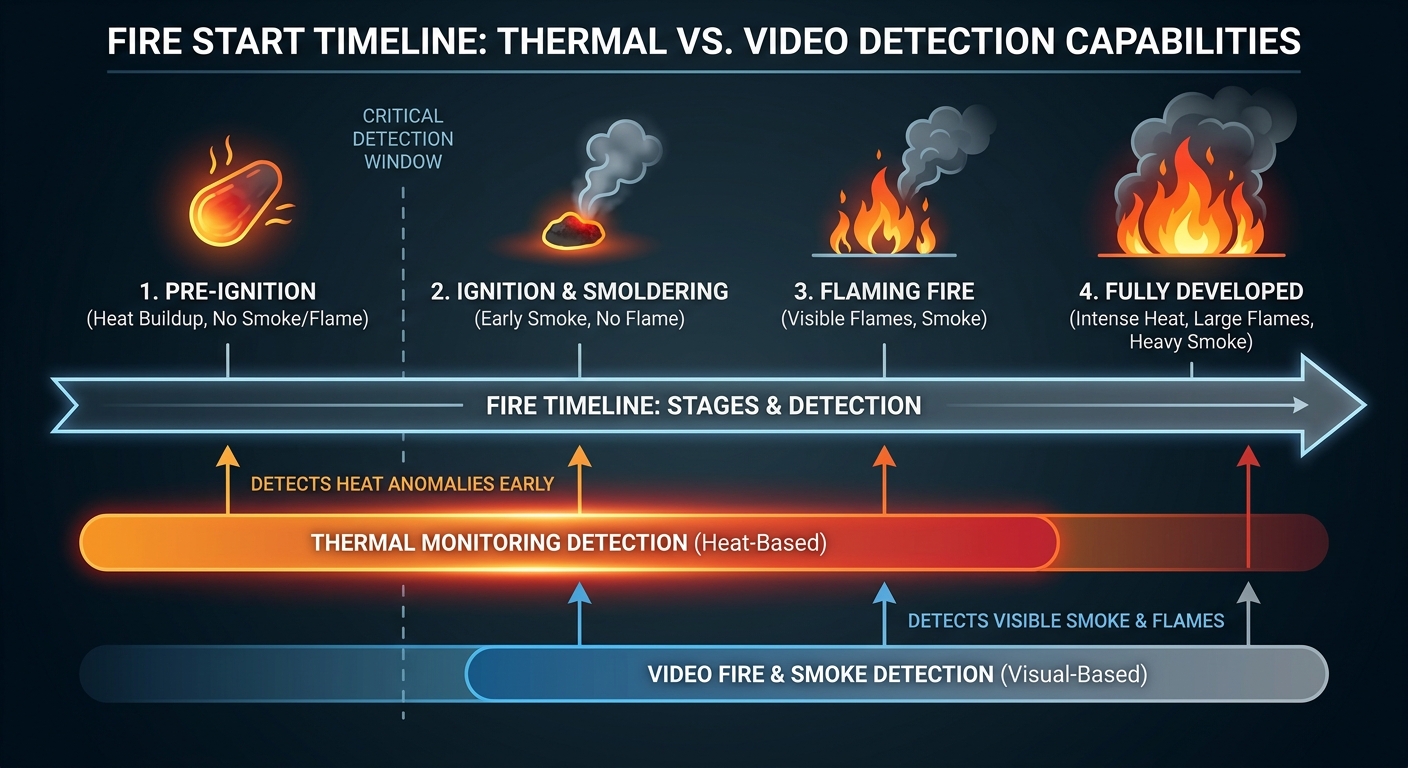
2026-05-10/Drew Hanover
Fire Alarm Camera vs. Thermal Monitoring Camera: What's the Difference?
A fire alarm camera is usually a camera-based detection system that looks for visible signs of fire. It watches for smoke, flame, or both, then sends an alarm when the software decides the scene looks like a real fire event.
A thermal monitoring camera works differently. It measures heat. Instead of waiting for smoke or flame to become visible, it watches the temperature of equipment, materials, panels, conveyors, ducts, piles, and other assets that can run hot before a fire starts.
That difference matters in industrial facilities.
Video fire detection can catch smoke or flame faster than ceiling-mounted detectors in large, dusty, drafty, or high-ceiling spaces. Thermal monitoring can catch the abnormal heat that often comes before smoke or flame.
The best answer is rarely one camera type for every risk. In many plants, video fire detection and thermal monitoring solve different parts of the same fire prevention problem.
The Short Answer
If you are searching for a fire alarm camera, you are probably looking for one of two things:
- A video fire detection camera that identifies visible smoke or flame.
- A thermal fire prevention camera that detects abnormal heat before ignition or visible fire.
The practical difference:
| Question | Video fire detection camera | Thermal monitoring camera |
|---|---|---|
| Primary signal | Visible smoke, flame, flicker, movement, or plume behavior | Surface temperature and abnormal heat patterns |
| Earliest useful stage | When smoke or flame is visible in the camera view | When equipment or material starts heating abnormally |
| Best fit | Large spaces, high ceilings, existing CCTV coverage, visual verification | Bearings, motors, panels, conveyors, ductwork, piles, batteries, combustible material |
| Main limitation | Needs visual evidence of smoke or flame | Needs line of sight to the hot surface |
| Operational value | Faster fire awareness and visual confirmation | Fire prevention plus condition-based monitoring |
| Typical role | Early fire detection layer | Heat-first prevention and asset monitoring layer |
Video fire detection is about seeing a fire event quickly.
Thermal monitoring is about seeing the conditions that can lead to one.
What Is a Fire Alarm Camera?
"Fire alarm camera" is not always a precise technical term. It can describe several camera-based fire detection systems:
- AI software running on existing visible-light CCTV.
- A dedicated video fire detection camera.
- A flame detection camera.
- A smoke detection camera.
- A thermal camera with temperature alarms.
- A combined system using visible and thermal data.
The common idea is simple: use a camera to detect a fire-related event earlier, with more context than a conventional detector alone can provide.
Traditional smoke detectors wait for smoke to reach the detector. Heat detectors wait for enough heat at the detector location. Sprinklers wait for a local temperature threshold at the sprinkler head.
A camera can watch the source area directly.
That is why camera-based fire detection is attractive in industrial spaces with high ceilings, open airflow, dust, variable lighting, tall racking, conveyors, process equipment, or combustible material storage.
How Video Fire Detection Cameras Work
A video fire detection camera uses visible-light imaging, infrared illumination, or both to look for smoke and flame patterns in the scene.
Bosch AVIOTEC is a strong example of this category. Bosch describes AVIOTEC 8000i IR as video-based flame and smoke detection that uses AI algorithms, high-resolution imaging, and an infrared illuminator to detect smoke and flames in challenging environments.
That kind of system is useful when:
- Smoke may not reach a ceiling detector quickly.
- The space is too large or open for conventional detectors to respond early.
- Operators need visual confirmation of the event.
- The facility wants detection closer to the source.
- The camera can see the area where smoke or flame will appear.
The key point is that video fire detection is still looking for visual evidence of fire.
It can be much faster than waiting for smoke to drift to a detector. But it generally needs smoke, flame, or a visible fire signature to exist in the camera view.
How Thermal Monitoring Cameras Work
A thermal monitoring camera measures infrared radiation emitted by surfaces and converts it into temperature data.
That makes it useful before there is visible smoke or flame.
In an industrial facility, many fire risks start as heat:
- A bearing begins to run hot from friction.
- A conveyor roller drags under load.
- A belt slips on a pulley.
- A motor overheats under abnormal load.
- An electrical connection heats from resistance.
- Smoldering material moves through ductwork.
- A battery cell trends hotter than its neighbors.
- A pile, hopper, or bunker develops a hot spot.
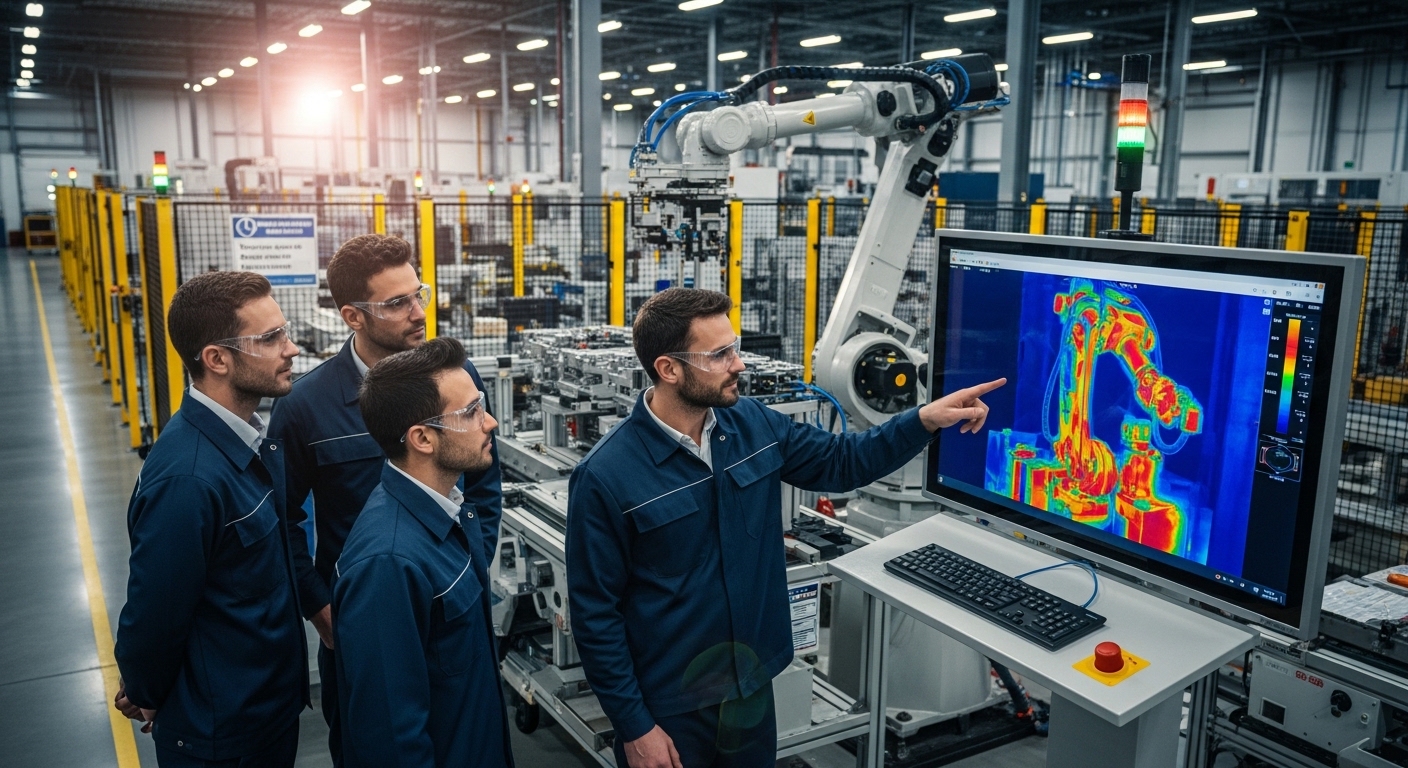
An AVIAN T100 thermal monitoring camera is built for this job. It combines thermal imaging and RGB video, learns normal temperature behavior for monitored assets, filters nuisance triggers, records thermal and visible event footage, and routes alerts to the team or control system.
The camera is not only asking, "Do I see a fire?"
It is asking, "Is this asset hotter than it should be?"
That is a different and often earlier question.
Why Heat-First Detection Changes the Timeline
Fire detection is usually judged by how quickly it catches a fire after smoke or flame appears.
Fire prevention asks a different question: how early can the system catch the condition that may become a fire?
That is where thermal monitoring has an advantage.
Heat often appears before visible smoke or flame. A bearing can run hot for hours or days before failure. A loose electrical connection can overheat long before it arcs. Material can smolder before it produces a visible plume. A belt or roller can generate friction heat before anyone sees smoke.
A video fire detection camera may catch the first visible smoke.
A thermal monitoring camera may catch the hot bearing, hot connection, hot duct, or hot material before smoke appears.
For facilities where the goal is only faster awareness of visible fire, video detection may be enough.
For facilities where the goal is stopping ignition in the first place, thermal monitoring becomes more important.
False Alarm Rejection Is Different for Each System
Every fire detection system has nuisance conditions.
For video fire detection, nuisance sources can include steam, dust, fog, welding, sunlight, reflections, changing shadows, vehicle headlights, or process activity that looks like smoke or flame.
Modern video fire detection systems handle this with AI models, scene rules, and visual verification. They are much better than simple motion detection or pixel-change rules.
Thermal monitoring has a different false alarm problem. It must avoid reacting to harmless heat sources that move through the scene, such as forklifts, loaders, hot work, welding, or warm material that is expected in the process.
AVIAN handles that with scene understanding and smart filtering. The T100 measures heat, but it also uses visible context, zones, learned baselines, and event filtering so the system can stay sensitive to real abnormal heat without paging the team every time a forklift enters the frame.
False alarm rejection is not only about reducing alarms. It is about preserving trust.
If operators stop believing the system, the detection speed no longer matters.
The Condition Monitoring Difference
This is where a thermal monitoring camera moves beyond a fire alarm camera.
A video fire detection camera is mainly a fire detection tool. Its job is to identify smoke or flame and alert someone quickly.
A thermal monitoring camera can also become part of a condition-based monitoring program.
The same temperature data that catches fire risk can also show maintenance issues:
- Bearings drifting above their normal baseline.
- Motors running hotter than peer assets.
- Electrical panels developing hot spots.
- Conveyors creating friction heat.
- Hydraulic systems running hot.
- Dust collection lines showing abnormal heat.
- Batteries or chargers trending outside normal.
That gives the system two jobs:
- Warn the team before fire risk escalates.
- Help maintenance catch equipment problems before downtime.
For industrial plants, those jobs are often connected. The same overheating bearing that can shut down a line can also become an ignition source. The same overloaded motor that needs maintenance can also create a safety event.
Thermal monitoring gives operations, maintenance, and safety teams a shared signal: heat.
Where AVIAN Vision Fits
AVIAN also offers AVIAN Vision, which runs AI smoke and flame detection on existing CCTV cameras.
That matters because not every site needs a new camera everywhere.
If a facility already has good IP camera coverage, AVIAN Vision can watch those visible-light feeds for smoke and flame. It is a broad early-warning layer across the cameras the site already owns.
The T100 solves a different problem. It is a dedicated thermal plus RGB camera for the highest-risk assets and areas where abnormal heat is the signal that matters most.
In practical terms:
- Use AVIAN Vision where existing cameras can see smoke and flame.
- Use AVIAN T100 where you need temperature measurement, hot spot detection, and condition monitoring.
- Use both when you want visible fire detection across the site and heat-first monitoring on the assets most likely to start the fire.
Does a Fire Alarm Camera Replace a Certified Fire Alarm System?
Usually, no.
Camera-based detection should be treated as an early-warning and prevention layer unless it has been specifically designed, listed, approved, and accepted for the code-required fire alarm role in your jurisdiction.
Your certified fire alarm, sprinkler, aspirating, smoke, heat, and suppression systems stay in place.
A camera layer helps because it can see risk earlier, provide visual context, and route alerts to the right people or systems faster. But it should not be casually treated as a one-for-one replacement for code-required life safety systems.
That distinction is important for insurers, authorities having jurisdiction, integrators, and plant safety teams.
Which One Should You Use?
Choose a video fire detection camera when:
- You need fast detection of visible smoke or flame.
- You have large spaces where smoke may not reach detectors quickly.
- You need visual confirmation of fire events.
- The camera has a clear view of the likely source area.
- You want broad coverage across existing CCTV or dedicated fire cameras.
Choose a thermal monitoring camera when:
- Heat is the earliest useful signal.
- You need to monitor bearings, motors, panels, conveyors, ducts, piles, batteries, or process areas.
- You want alerts before visible smoke or flame.
- You want condition-based monitoring and fire prevention from the same system.
- You need asset-specific baselines instead of one generic fire threshold.
Choose both when:
- A fire event would be expensive, dangerous, or hard to control.
- You process combustible material.
- You have high-value equipment and high fire load in the same area.
- You need broad smoke and flame detection plus heat-first monitoring at critical assets.
- You want operations, maintenance, and safety teams working from the same event record.
The Bottom Line
A fire alarm camera and a thermal monitoring camera are not the same thing.
A video fire detection camera watches for visible smoke or flame. It can detect fire faster than conventional detectors in many large or difficult spaces, especially when smoke would take too long to reach a ceiling-mounted device.
A thermal monitoring camera watches heat. It can detect abnormal temperature on equipment and materials before smoke or flame appears, while also supporting condition-based maintenance.
For industrial fire prevention, that earlier heat signal is often the difference.
If you only watch for smoke and flame, you are detecting the fire event.
If you watch for abnormal heat, you may catch the condition that creates the fire.
If you are evaluating fire alarm cameras, video fire detection, or thermal monitoring for an industrial facility, reach out to the AVIAN team. We can help map which areas need visible smoke and flame detection, which assets need thermal monitoring, and where a layered approach makes the most sense.
Drew Hanover
CTO & Co-Founder
Get new AVIAN insights in your inbox
We'll send practical notes on industrial fire prevention, thermal monitoring, and customer learnings. No noise.