The Industrial Fire Watch / Aug 7-13, 2026
The Maintenance Window Is a Fire Window
A weekly Fire Watch briefing on port, terminal, shipyard, and logistics incidents where maintenance, fuel, vessel equipment, and storage areas needed earlier heat visibility.
What To Know
AVIAN tracked 5 non-conflict fire and explosion incidents in ports, terminals, shipyards, and logistics sites from August 7 to August 13, 2026. The focused source set covered 5 countries, with 17 reported injuries and 2 reported fatalities.
The strongest pattern was not a single fuel or asset. It was the operating window around maintenance, response, and remote equipment: pipeline work at a fuel storage terminal, an explosion during shipyard firefighting, a container ship generator-room fire, a diesel tank fire that required cooling adjacent tanks, and a cold-logistics warehouse fire.
For terminal operators, EHS leaders, maintenance teams, insurers, and port authorities, the lesson is response time. A small abnormal heat signal near fuel, a vessel engine room, a tank, a warehouse, or a remote terminal structure can become an injury event, a berth disruption, a tank-cooling operation, or a supply-chain stop before smoke gives teams a useful location.
5
Incidents
5
Countries
17
Injuries
2
Fatalities
Key Incidents
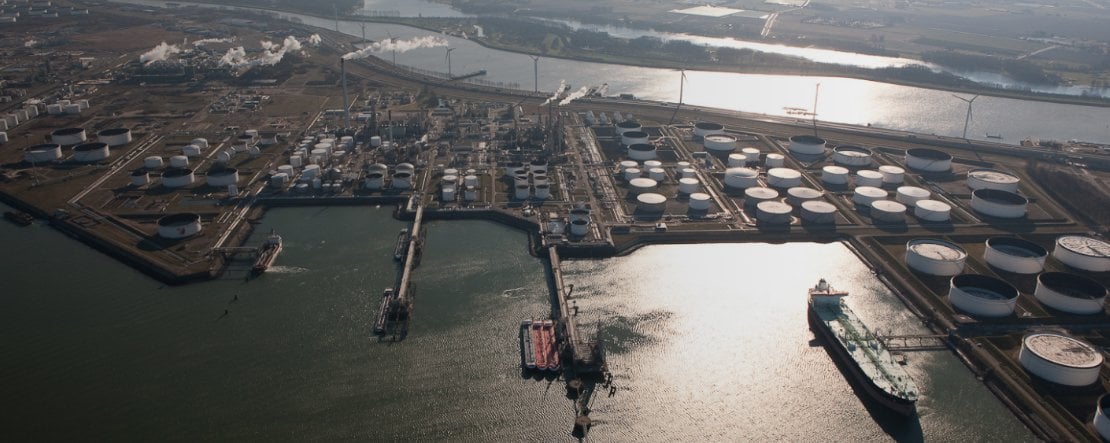
Fuel storage terminal explosion in Rotterdam, Netherlands
- Event
- The Maritime Executive reported that an explosion during maintenance at Gunvor Energy's fuel storage terminal in the Port of Rotterdam killed one worker and injured at least six others. Media reports said a maintenance crew was working on pipelines at the site, and police later said they were treating the incident as an apparent workplace accident while the investigation continued.
- Risk signal
- Pipeline and tank maintenance around fuel systems can combine residual energy, vapor, hot work, electrical equipment, pressure, and confined-access work. The exact cause remained under investigation.
- Business impact
- Worker fatality, multiple injuries, emergency medical response, investigation, temporary area closure, and scrutiny around maintenance authorization, gas testing, isolation, ignition control, and response timing at a critical European energy gateway.
Shipyard fire and explosion in Fuan, China
- Event
- Vision Times, citing local fire-rescue authorities, reported that a fire at Huahai Shipyard in Gantang Township led to an explosion while crews were fighting the blaze. One firefighter was killed and 11 people were injured, including ten emergency responders.
- Risk signal
- The reported cause was not confirmed. The operational pattern is a shipyard fire where hidden fuel load, vessel or fabrication spaces, gases, coatings, electrical systems, and changing fireground conditions can expose responders if the first heat source is not located and controlled quickly.
- Business impact
- Firefighter fatality, responder injuries, shipyard investigation, operational interruption, and likely review of fire watches, hot-work controls, combustible-material separation, and emergency-scene monitoring.
Container ship generator-room fire in Wilmington, Delaware
- Event
- NBC10 Philadelphia reported that fire crews responded to a two-alarm fire in the engine-room generator aboard the 672-foot container ship Dole Columbia while it was at the Port of Wilmington. Crews extinguished the blaze, discharged the ship's CO2 system, and reported no injuries.
- Risk signal
- Engine-room and generator heat can begin inside spaces where access, ventilation, suppression selection, and vessel systems shape the response. The source did not confirm the ignition cause.
- Business impact
- Two-alarm port response, vessel disruption, suppression-system discharge, inspection before return to normal service, and operational review around generator-room monitoring and ship-to-terminal emergency coordination.
Diesel tank fire at Zawia Oil Depot, Libya
- Event
- Libya Herald reported that Brega Petroleum Marketing Company confirmed a fire with heavy smoke at diesel tank No. 402 at the Zawia Oil Depot. Firefighting, safety, and emergency teams cooled adjacent tanks to prevent spread while monitoring the blaze.
- Risk signal
- The cause remained under investigation. The prevention pattern is fuel-tank heat where early detection, tank separation, cooling strategy, vapor awareness, and escalation routing determine whether the incident stays local.
- Business impact
- Emergency response at a petroleum depot, heavy smoke, adjacent-tank cooling, operational uncertainty, and likely inspection of tank condition, monitoring, and ignition-control procedures before full confidence returns.
Field Note
Terminal Heat Needs a Maintenance Map
Ports and terminals are built around movement: ships, tanks, pipes, conveyors, generators, cold rooms, yards, warehouses, and repair areas. The same movement makes heat harder to see. Maintenance may open a system that is normally sealed. A vessel space may hide the first thermal clue. A tank or warehouse may sit far from the people who need to act.
Three Risk Signals
Maintenance changes the risk picture
OSHA shipyard guidance says hot work is only allowed where fire hazards are absent or controlled by isolation, fire watches, or other positive means. Adjacent spaces, fuel gas lines, oxygen hoses, coatings, wiring, and combustible materials all matter.
Marine terminals need controls around heat, sparks, and fuel
OSHA's marine-terminal hot-work rule calls for designated fire-hazard-free locations where possible, atmospheric testing for confined spaces and tanks, suitable extinguishing equipment, and added personnel when ordinary precautions are not enough.
Remote terminal assets stretch response time
Generators, tanks, warehouse corners, cold-logistics areas, transfer points, and vessel spaces can start heating outside the main operator view. If the first clear signal is smoke, crews are already moving in response mode.
Technologies That Close The Gap
- Thermal monitoring over terminal structures, tank-adjacent zones, warehouses, vessel-support areas, generators, conveyors, drives, and remote storage points where abnormal heat can begin outside routine rounds.
- Gas and fire detection layers around fuel, vapor, engine-room, battery, refrigeration, compressed-gas, and confined-access work where heat is one signal inside a wider hazard stack.
- Smart alarm filtering that separates sun, vehicle exhaust, normal machinery, vessel activity, forklifts, and hot maintenance work from persistent or fast-rising abnormal hotspots.
- Escalation workflows for berths, yards, tanks, warehouses, night shifts, and contractor work areas where the first abnormal signal needs to reach operations, maintenance, EHS, and emergency coordinators.
- PLC or equipment-response handoff for high-consequence zones where abnormal heat should trigger operator review, equipment stop, isolation, ventilation, cooling, or suppression readiness.
What To Do Next
Treat maintenance heat like an operating condition.
AVIAN tracks these incidents because the same failure pattern appears across high-risk facilities: **heat usually becomes visible before the emergency becomes obvious.**
AVIAN T100 thermal monitoring watches critical assets, material zones, and high-risk surfaces continuously. It detects abnormal heat, filters routine industrial activity, alerts the right team, and can connect to PLC workflows when a critical threshold needs action.
Prevention Moves
- 1Walk the terminal as a heat, fuel, and response map: tanks, pipelines, pumps, generators, engine rooms, cold-logistics spaces, warehouses, transfer points, conveyors, maintenance zones, contractor areas, and adjacent spaces.
- 2Identify which areas still depend on smell, smoke, a contractor report, or a manual patrol instead of continuous abnormal-heat visibility.
- 3Tie high-consequence zones to a written escalation path so heat, gas, smoke, equipment state, or tank condition reaches the right team before a maintenance task becomes a rescue or shutdown event.
Questions For Your Site
- Which tank, pipe, vessel, warehouse, or terminal-support zones change risk during maintenance or contractor work?
- Where could heat start in a remote structure before operations knows the exact location?
- Which berth, yard, fuel, generator, refrigeration, or storage areas run after hours with limited direct supervision?
- Which alarms do teams discount because they cannot separate normal terminal activity from abnormal heat?
What's your take?
Which terminal heat risk is easiest to miss at your site: tank maintenance, pipeline work, vessel engine rooms, cold-logistics storage, remote yards, conveyors, generators, or after-hours contractor areas?
This Fire Watch edition is based on reviewed public news and registry entries in AVIAN's incident database. It is not a complete record of every industrial fire.