The Industrial Fire Watch / Oct 23-29, 2026
When the Wrong Load Reaches the Recycling Line
A weekly Fire Watch briefing on recycling and waste facilities where hidden cylinders, mixed loads, outdoor piles, and stored recyclables compressed the response window.
What To Know
AVIAN tracked 17 Recycling & Waste fire and explosion incidents from October 23 to October 29, 2026. The focused source set covered 10 countries, with 1 reported injury and 1 reported fatality.
The strongest pattern was the wrong material reaching a high-energy point in the operation: a helium tank explosion at a scrap-metal processor, an explosion that ignited outdoor waste and pallet stock, large fires in recyclable-material piles, renewed hotspots in stored recyclables, e-scrap inside a waste-disposal building, a garbage barge fire, and a No. 3 alarm event that forced more than 900 workers off an island waste facility by boat.
For recycling operators, EHS teams, maintenance leaders, insurers, and municipal partners, the practical question is whether tipping floors, receiving yards, conveyors, balers, piles, barges, and battery-risk zones can show abnormal heat before smoke, explosion, evacuation, or a nine-hour overhaul becomes the first clear signal.
17
Incidents
10
Countries
1
Injuries
1
Fatalities
Key Incidents
Scrap-metal tank explosion in Kajang, Malaysia
- Event
- New Straits Times reported that a 49-year-old worker was killed in a helium tank explosion at a scrap metal processing factory in Sungai Chua, Kajang, on October 23. Police ruled out foul play and said the cause remained under investigation.
- Risk signal
- Pressurized cylinders, tanks, and unknown containers entering a scrap stream can carry stored energy that is not visible from the outside. The source confirmed the explosion but not the initiating failure.
- Business impact
- Worker fatality, police investigation, likely work stoppage, and scrutiny around inbound-load screening, cylinder isolation, cutting or handling procedures, and emergency response time.
Waste and pallet-stock fire in La Llosa de Ranes, Spain
- Event
- Europa Press reported that an explosion sparked an outdoor fire involving waste and pallets at a recycling plant in La Llosa de Ranes on October 26. A 48-year-old worker suffered burns and was airlifted to Hospital La Fe in Valencia.
- Risk signal
- Outdoor waste, pallet stock, unknown load contents, and handling activity can turn a localized ignition or pressure event into a fast exposure problem. The exact initiating cause was not yet confirmed.
- Business impact
- Worker burn injury, helicopter medical transport, fire brigade response, interruption to yard operations, and likely review of pile spacing, load inspection, hot-zone monitoring, and response escalation.
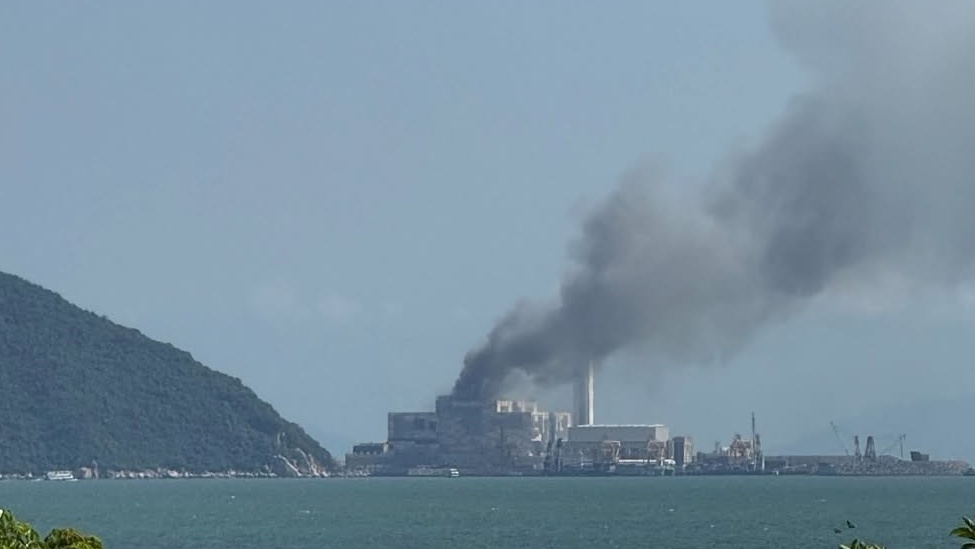
No. 3 alarm fire at I-PARK1 in Hong Kong
- Event
- The Standard reported that a No. 3 alarm fire broke out at the Integrated Waste Management Facilities Phase I on Shek Kwu Chau on October 26. Firefighters deployed hoses and breathing-apparatus teams while more than 900 workers evacuated from the island by boat.
- Risk signal
- Large waste facilities combine material handling, storage, conveyors, energy systems, and limited access. Once smoke is visible and evacuation depends on transport logistics, the response window is already compressed.
- Business impact
- Major emergency response, island-wide worker evacuation, operational disruption, and likely review of detection coverage, evacuation sequencing, marine access, and remote alarm routing.
Nine-hour waste plant fire in Gwangju, South Korea
- Event
- Seoul Economic Daily reported that a waste processing plant fire in Gwangju began in one of five buildings and spread to an adjacent building. Firefighters deployed 51 pieces of equipment and 212 personnel, but piled waste repeatedly reignited before initial containment after roughly nine hours.
- Risk signal
- Stored waste piles can hide deep heat, buried embers, battery fragments, and hot material pockets that are difficult to see from the surface. Reignition is a sign that the hazard may be inside the pile, not only on top of it.
- Business impact
- Extended suppression, public emergency text alerts, traffic detours, multi-building spread, overhaul burden, and likely review of pile size, separation, thermal checks, and overnight monitoring.
Field Note
Wrong Loads Need Early Heat Visibility
Recycling and waste facilities are built to process variation. That is also the hazard. A cylinder, battery, e-scrap load, pallet pile, barge, or mixed recyclables pile can move from routine material flow to stored energy, off-gassing, friction, or deep-seated heat before anyone sees flame.
Three Risk Signals
Inbound material can hide the ignition source
EPA guidance warns that lithium-ion batteries and battery-powered devices should not enter household trash or municipal recycling bins because processing and sorting equipment can crush or damage them and create a fire hazard.
High-contact machinery concentrates the risk
The SWANA, NWRA, and ReMA MRF guidance names waste reception, truck dumping, tipping floors, conveyors, screens, glass breakers, balers, bale storage, loose bins, and secondary fires as areas of concern for lithium-ion battery ignition and hotspots.
Piles and storage extend the event after the first alarm
ReMA fire-prevention guidance treats each recycled-material site as a site-specific fire triangle problem: fuel, ignition, and oxygen. In stored waste, pallets, e-scrap, scrap cars, textiles, and mixed recyclables, heat can stay buried while responders are still opening the pile.
Technologies That Close The Gap
- Thermal monitoring over tipping floors, truck-dump zones, conveyors, balers, bale storage, outdoor piles, e-scrap, scrap-metal handling, barges, and battery-risk areas where abnormal heat may appear before smoke is visible.
- AI thermal anomaly detection for conveyors, motors, bearings, screens, balers, compactors, loaders, and material-transfer points that drift away from normal heat behavior before a fixed threshold alarm feels urgent.
- Smart alarm filtering that separates normal loader engines, forklifts, sunlight, hot exhaust, steam, and process heat from persistent or fast-rising hotspots in busy yards and sorting lines.
- Escalation workflows for nights, weekends, remote yards, barges, island sites, and after-hours storage areas where the first abnormal heat signal needs to reach operators, EHS, maintenance, and emergency coordinators quickly.
- PLC or suppression handoff for zones where abnormal heat should stop a belt, pause a baler, isolate equipment, trigger deluge readiness, or route a targeted inspection before fire moves downstream.
What To Do Next
Find the wrong load before it becomes the whole shift.
AVIAN tracks these incidents because the same failure pattern appears across high-risk facilities: **heat usually becomes visible before the emergency becomes obvious.**
AVIAN T100 thermal monitoring watches critical assets, material zones, and high-risk surfaces continuously. It detects abnormal heat, filters routine industrial activity, alerts the right team, and can connect to PLC workflows when a critical threshold needs action.
Prevention Moves
- 1Walk the recycling process as a heat map from inbound load to final storage: truck dump, tipping floor, cylinder and tank screening, battery-risk zones, conveyors, screens, balers, piles, bale storage, barges, and overnight yards.
- 2Identify which zones still rely on smell, smoke, a loader operator, a passerby, or a fire department call instead of continuous abnormal-heat visibility.
- 3Tie high-consequence zones to response paths so heat can trigger inspection, belt stop, pile breakup, equipment isolation, deluge readiness, evacuation review, or first-responder coordination before the event becomes a facility-wide operation.
Questions For Your Site
- Where can cylinders, tanks, batteries, e-scrap, aerosol cans, hot loads, or incompatible material enter your process without continuous thermal coverage?
- Which conveyors, screens, balers, compactors, loaders, motors, bearings, and electrical panels could heat outside normal operator view?
- Which outdoor piles, bale stacks, barges, trailers, or after-hours storage zones can hold deep heat after the crew leaves?
- Which alarms do teams hesitate to act on because forklifts, loaders, sun, engines, and process heat have trained them to wait?
What's your take?
Which recycling heat risk is easiest to miss at your facility: hidden batteries, cylinders, conveyors, balers, outdoor piles, e-scrap, barges, or after-hours storage?
This Fire Watch edition is based on reviewed public news and registry entries in AVIAN's incident database. It is not a complete record of every industrial fire.