The Industrial Fire Watch / Sep 25-Oct 1, 2026
When Process Materials Stop Behaving Normally
A weekly Fire Watch briefing on process materials, chemical storage, fuel systems, plastics, and production-support spaces where abnormal heat and pressure left little room for a slow response.
What To Know
AVIAN tracked 13 fire and explosion incidents in process-material, chemical, fuel, plastics, and storage sites from September 25 to October 1, 2026. The focused source set covered 8 countries, with 16 reported injuries and 10 reported fatalities.
The strongest pattern was stored energy leaving very little response time once containment, cooling, separation, or material handling failed: a methanol tank explosion during contractor maintenance, a refinery cold-separator rupture, explosions at a chemical and pyrotechnics plant, plastics and packaging fires, magnesium storage, a conveyor roller friction fire, asphalt tankers, paint and chemical stock, and manufacturing spaces where access became part of the emergency.
For plant managers, EHS teams, maintenance leaders, process engineers, and insurers, the practical question is whether tanks, separators, pipe runs, pumps, conveyors, panels, warehouses, and process-support spaces can show abnormal heat or changing conditions before the first visible signal is collapse, flame, smoke, or a multi-agency response.
13
Incidents
8
Countries
16
Injuries
10
Fatalities
Key Incidents
Chemical plant explosion in Krasnozavodsk, Russia
- Event
- The Moscow Times reported that explosions and fire struck the Krasnozavodsk chemical plant in Moscow Oblast on October 1. Preliminary reports said seven workers were killed when workshop No. 4 collapsed, and more than 40 employees were evacuated as emergency crews responded to the ammunition and pyrotechnics facility.
- Risk signal
- Pyrotechnic, ammunition, and chemical manufacturing can combine energetic materials, process equipment, storage rooms, and maintenance or technical faults. The reported technical cause was preliminary, so the exact initiating failure was not yet confirmed.
- Business impact
- Worker fatalities, workshop collapse, employee evacuation, emergency response at a high-hazard facility, and likely investigation of process controls, material separation, maintenance condition, ignition sources, and emergency-warning time.
Methanol tank explosion at Albardón Bio in Puerto General San Martín, Argentina
- Event
- Infobae reported that an explosion and fire at methanol tanks at the Albardón Bio biodiesel plant on Avenida América and Vucetich killed two workers and injured four others. Regional fire crews extinguished the blaze and searched collapsed structures.
- Risk signal
- Methanol, tank work, contractor maintenance, vapor space, ignition control, isolation, and gas testing create a narrow margin. The incident was still under investigation, but the reported hazard was a methanol tank explosion during maintenance.
- Business impact
- Fatalities, injuries, collapsed structures, regional response, production interruption, contractor-safety scrutiny, and likely review of hot-work, gas-monitoring, isolation, and permit controls around flammable-liquid equipment.
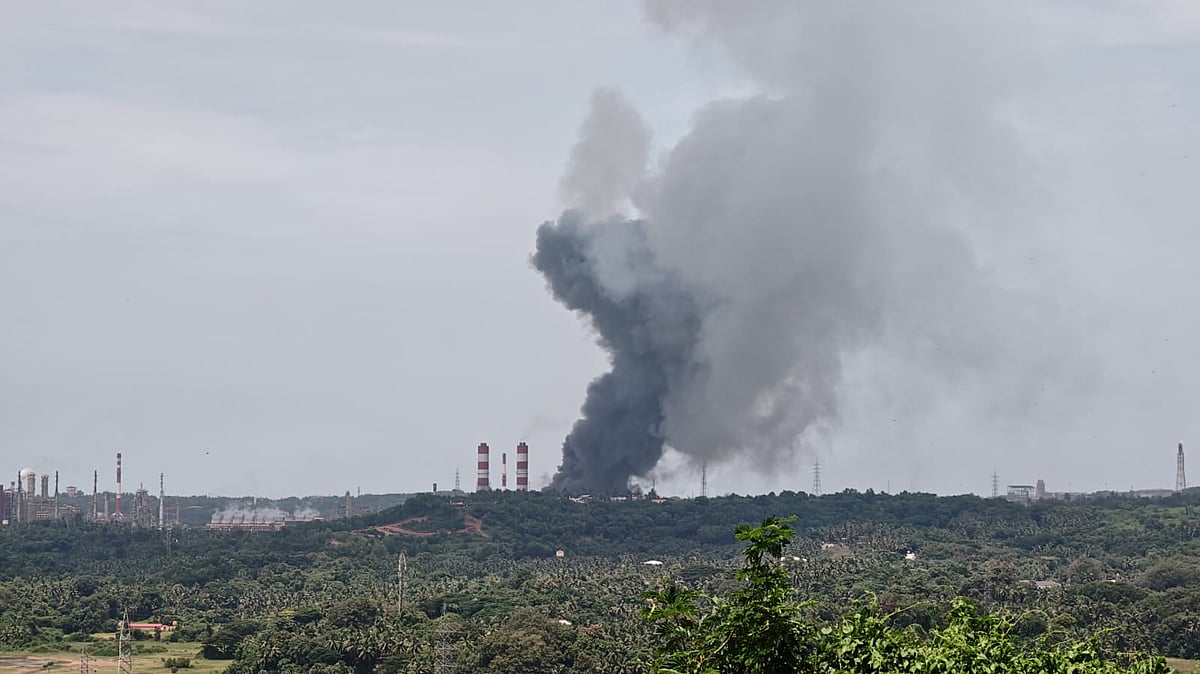
Coker Hydrotreater unit explosion at MRPL in Mangaluru, India
- Event
- The New Indian Express reported that a high-pressure cold separator ruptured at MRPL's Coker Hydrotreater unit in Jokatte, triggering an explosion and fire. One contract worker died and nine others were injured before firefighters brought the blaze under control.
- Risk signal
- Refinery process equipment carries pressure, temperature, hydrocarbon, and mechanical-integrity risk at the same time. In this case, the source identified the failed asset as a cold separator operating around 70 bar.
- Business impact
- One fatality, nine injuries, emergency response, damage around the unit and nearby homes, contractor workforce unrest, restart pressure, and likely review of process-equipment condition, pressure containment, detection, and emergency isolation.
Duraplast factory fire in Accra, Ghana
- Event
- Ghanaian Times reported that a large fire spread into Duraplast Ghana's plastics manufacturing plant in Accra's Avenor North Industrial Area, destroying pipe stock and water storage tanks. Firefighters struggled with access and empty hydrants while bringing the blaze under control.
- Risk signal
- Plastic stock, gas-cylinder reports, dense industrial access, hydrant reliability, and exterior-to-interior fire spread can turn a facility fire into an access and water-supply problem. The cause remained under investigation.
- Business impact
- Major stock and equipment loss, firefighting access constraints, water-supply complications, business interruption, and likely review of yard separation, plastics storage, hydrant readiness, and abnormal-heat coverage in exterior and shipping areas.
Field Note
Stored Energy Needs Earlier Signals
Process-material fires rarely behave like ordinary building fires. The material may be flammable, pressurized, reactive, dusty, hot, or difficult to isolate. Once containment fails or ignition reaches the wrong vapor, pile, tank, conveyor, or warehouse bay, the response window can shrink from minutes to seconds.
Three Risk Signals
Mechanical integrity is not just a maintenance issue
OSHA's process safety material treats inspection, testing, maintenance procedures, deficiency correction, and documentation as core controls for equipment that stores or handles hazardous chemicals.
Hot work and maintenance change the atmosphere
CSB hot-work guidance emphasizes that tanks and nearby spaces need draining, purging, isolation, and combustible-gas monitoring before and during work because flammable vapor can exist where crews do not expect it.
Heat, pressure, and material movement interact
FM Global asset-integrity guidance describes thermographic monitoring as a way to detect overheating electrical and mechanical defects, including friction, loose connections, obstructed cooling, and bearing or motor problems before they become larger fire or explosion scenarios.
Technologies That Close The Gap
- Thermal monitoring over tanks, separators, pumps, conveyors, panels, process-support buildings, loading areas, packaging storage, and chemical-adjacent warehouses where abnormal heat can begin away from routine rounds.
- Gas and fire-layer detection around flammable-liquid, vapor, dust, and process-material zones so thermal, gas, smoke, and flame signals support the same escalation decision.
- AI thermal anomaly detection for motors, bearings, pumps, electrical cabinets, cooling systems, and process assets that drift from normal heat behavior before a fixed high-temperature alarm would feel urgent.
- Smart alarm filtering that separates forklifts, sun, routine process heat, engines, and hot equipment from persistent or fast-rising hotspots in complex production and storage areas.
- PLC or equipment-response handoff for zones where abnormal heat should trigger inspection, equipment stop, isolation, ventilation, cooling, or suppression readiness.
What To Do Next
Look for weak heat signals before stored energy becomes an event.
AVIAN tracks these incidents because the same failure pattern appears across high-risk facilities: **heat usually becomes visible before the emergency becomes obvious.**
AVIAN T100 thermal monitoring watches critical assets, material zones, and high-risk surfaces continuously. It detects abnormal heat, filters routine industrial activity, alerts the right team, and can connect to PLC workflows when a critical threshold needs action.
Prevention Moves
- 1Walk process-material, fuel, chemical, plastics, and support-storage areas as one heat map: tanks, separators, pumps, transfer points, conveyors, warehouses, magnesium or metal storage, packaging stock, paint or chemical rooms, panels, hot-work zones, and exterior yards.
- 2Identify which assets can fail by overheating, friction, pressure, blocked cooling, vapor release, or energized storage before smoke gives people a usable warning.
- 3Tie high-consequence zones to a written response path so abnormal heat can trigger inspection, work pause, isolation, ventilation, cooling, or emergency escalation before collapse, access loss, or worker evacuation becomes the first clear signal.
Questions For Your Site
- Which tanks, separators, pipe runs, pumps, conveyors, or storage bays carry the most stored energy but have the least continuous visibility?
- Where can contractor work, cleaning, repair, or temporary storage change the fire map faster than the permit review catches up?
- Which process-support or warehouse areas would be hard to reach once smoke, pressure release, hydrant limits, or exterior fire spread begin?
- Which alarms would teams ignore because routine process heat, sun, forklifts, engines, or hot equipment have already trained them to hesitate?
What's your take?
Which process-material risk is easiest to miss at your site: tanks, separators, pumps, conveyors, chemical storage, plastic stock, hot work, magnesium or metal storage, or after-hours support areas?
This Fire Watch edition is based on reviewed public news and registry entries in AVIAN's incident database. It is not a complete record of every industrial fire.