Back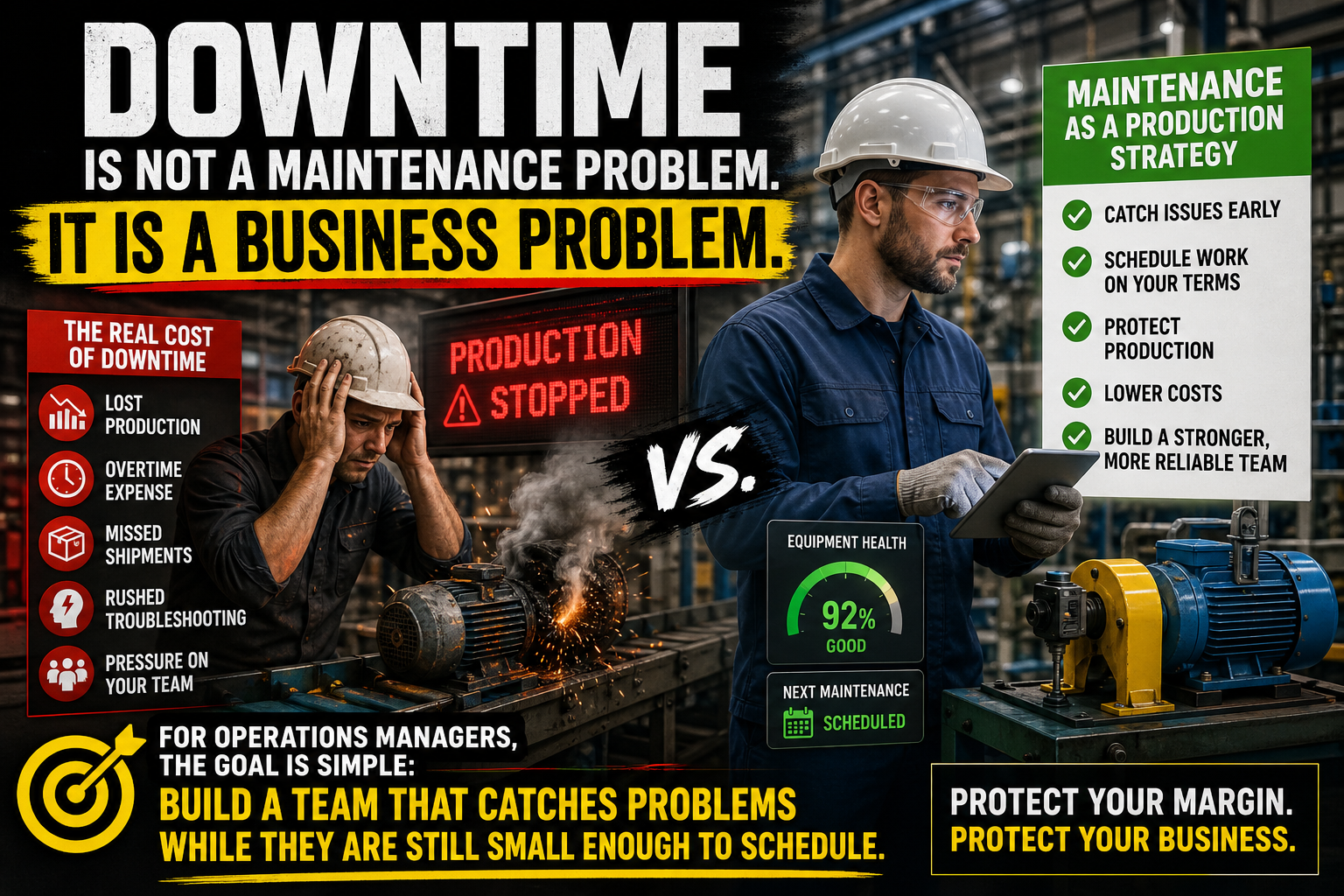
2026-05-12/Drew Hanover
How Proactive Maintenance Culture Protects Your Bottom Line
Downtime is not a maintenance problem. It is a business problem.
When a bearing seizes, a conveyor stops, a motor overheats, or an electrical panel trips, the repair invoice is only the first cost. The bigger hit is lost production, overtime, missed shipments, rushed troubleshooting, and the pressure it puts on the people trying to recover the line.
That is why maintenance culture matters. The facilities that protect their margin do not treat maintenance as a cleanup crew. They treat it as a production strategy.
For operations managers, the goal is simple: build a team that catches problems while they are still small enough to schedule.
Reactive Maintenance Is Expensive by Design
Reactive maintenance feels efficient until the first major failure.
You run the asset until it breaks. Nobody spends time inspecting it. Nobody stops production for a planned repair. On paper, that looks lean.
In real life, it creates the most expensive version of maintenance:
- Emergency labor instead of planned work.
- Expedited parts instead of stocked spares.
- Production loss instead of controlled downtime.
- Safety risk instead of a managed repair.
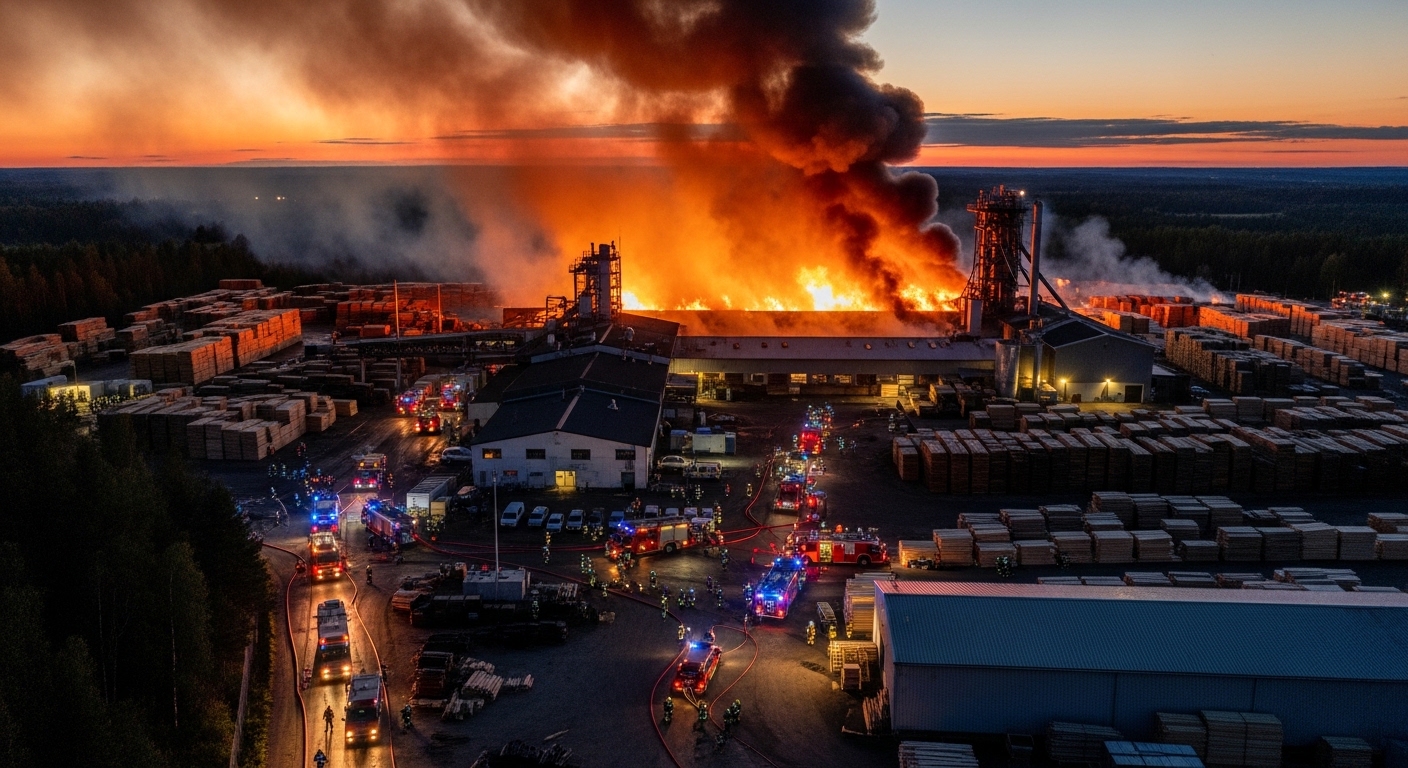
- Fire risk when heat, friction, dust, or electrical faults go unnoticed.
Time is money. In high-throughput environments, a few minutes can cost thousands. A few hours can erase the profit from an entire shift.
Good Maintenance Culture Starts Before Failure
A proactive maintenance culture is not built by asking people to "care more." Most maintenance teams already care. The problem is that they are often asked to cover too much equipment with too little time and incomplete information.
Good culture shows up in the operating rhythm:
- Operators report abnormal sounds, smells, heat, vibration, and process changes early.
- Maintenance work is planned around risk, not just habit.
- Teams track repeat failures instead of fixing the same issue every month.
- Production and maintenance share the same uptime goal.
- Small repairs are respected because everyone understands what happens when they are ignored.
The best teams do not wait for proof that something has failed. They act when the asset starts behaving differently.
That is the practical difference between a reactive facility and a proactive one.
The Labor Market Makes This Harder
The old answer was simple: hire more experienced people.
That answer is getting harder.
Deloitte and The Manufacturing Institute estimate that manufacturing could need 3.8 million net new employees between 2024 and 2033, with 1.9 million roles potentially left unfilled if the talent gap is not addressed.
Maintenance roles are especially exposed. BCG describes the shortage of skilled maintenance technicians as a threat to operational reliability, business continuity, and profitability. The same report notes that senior technicians are retiring, institutional knowledge is leaving with them, and less experienced technicians can take significantly longer to complete routine work.
That changes the maintenance equation.
You cannot build a reliable operation around the assumption that a highly experienced person will always be in the right place at the right time. You need systems that make the team more consistent, especially when the labor market is tight.
Technology Should Reduce Dependence on Heroics
Technology does not replace maintenance culture. It makes the right culture easier to execute.
The wrong technology creates more dashboards, more alarms, and more things for people to ignore. The right technology reduces guesswork and tells the team where attention is actually needed.
For maintenance, that means tools that can:
- Watch critical assets continuously.
- Learn what normal looks like.
- Detect drift before failure.
- Alert the right person when action is needed.
- Help schedule work during planned downtime.
- Preserve event history so the team can improve over time.
This is where condition-based monitoring changes the operating model. Instead of servicing every asset on a fixed interval or waiting for failure, the team uses real equipment condition to decide what needs attention.
Why Thermal Cameras Fit Proactive Maintenance
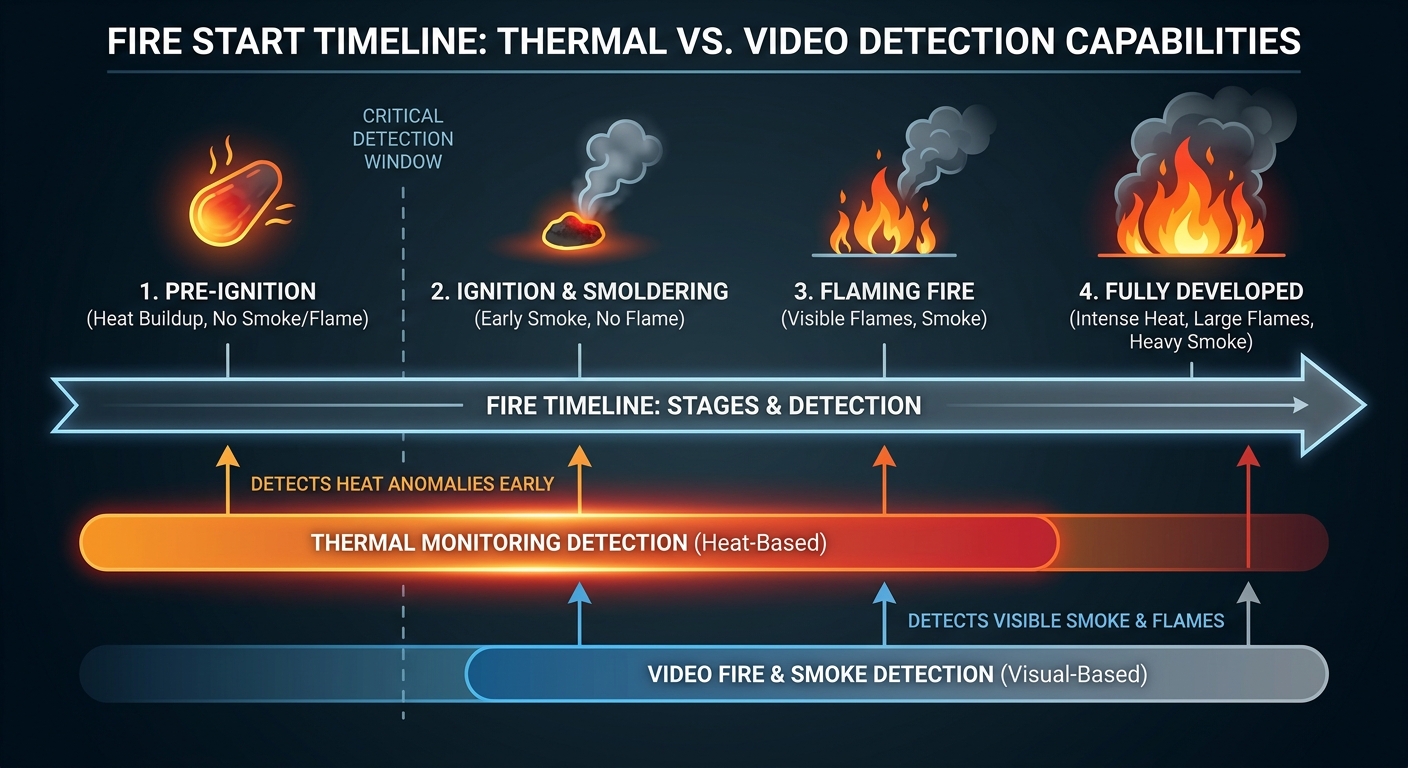
Many industrial failures create heat before they create downtime.
A bearing runs hot before it seizes. A motor heats under abnormal load before it trips. A loose electrical connection warms long before it arcs. A slipping belt creates friction before it stops the conveyor. A dust duct can show abnormal heat before smoke or flame appears.
People cannot watch every asset all the time. Handheld inspections help, but they are still snapshots. A problem can start five minutes after the route is finished.
Fixed thermal cameras close that gap.
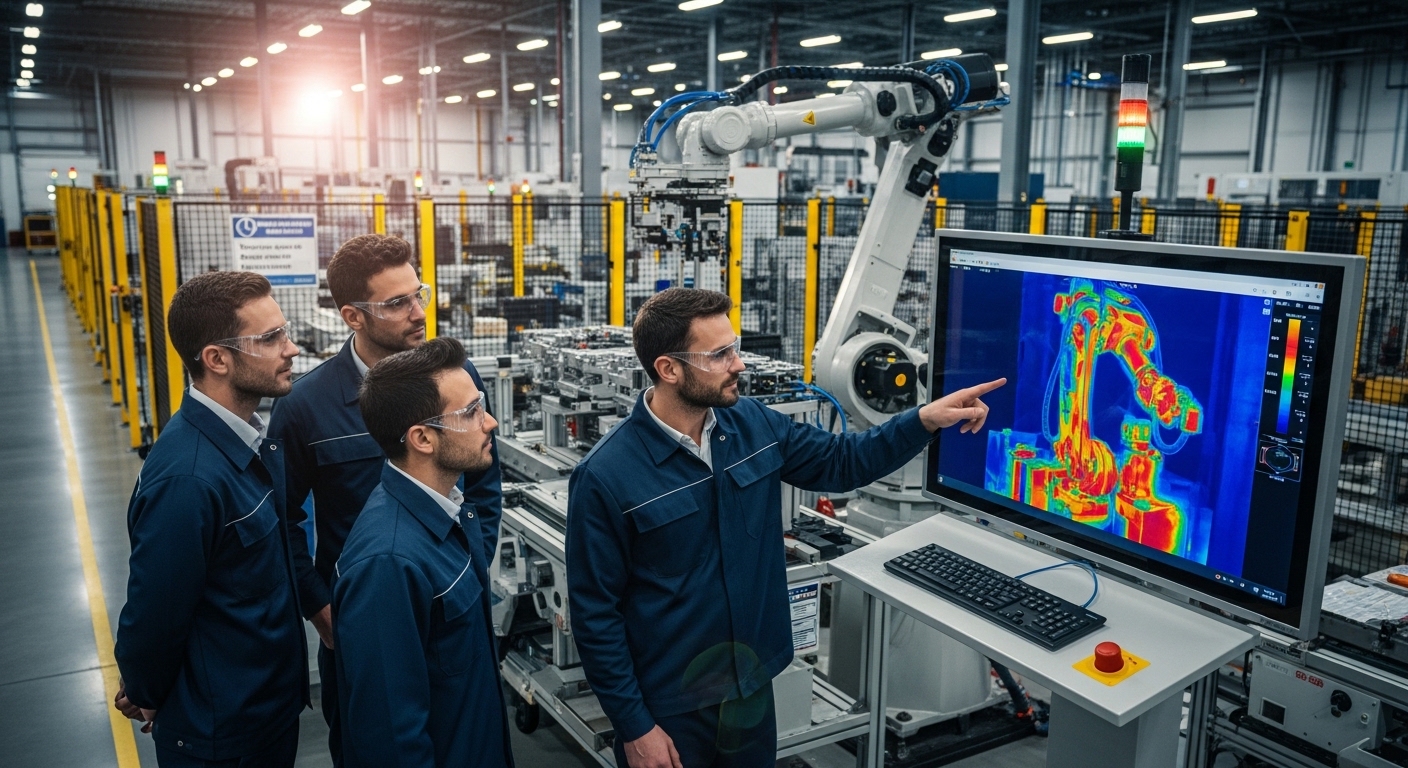
AVIAN thermal cameras monitor equipment continuously and alert the team when something starts running outside its normal thermal behavior. That gives operators and maintenance managers a chance to inspect, plan, and schedule service before a small issue becomes an unplanned shutdown.
The result is not "more technology." It is a better maintenance workflow:
- The camera sees abnormal heat.
- The system filters the event and sends an alert.
- The team checks the asset before failure.
- Maintenance is scheduled during a planned window.
- The event becomes part of the reliability record.
That is how a facility becomes less dependent on one person noticing the right thing at the right moment.
The Bottom Line: Protect the Hours You Already Sold
Operations managers do not get paid for having a busy maintenance department. They get measured on throughput, reliability, safety, cost, and the ability to ship when promised.
A proactive maintenance culture protects those outcomes. It turns maintenance from an emergency response function into a margin-protection function.
The most practical starting point is not a massive transformation program. Start with the assets where one failure hurts:
- Bearings, rollers, motors, and drives on high-throughput lines.
- Electrical panels feeding critical processes.
- Conveyors and transfer points that stop production when they fail.
- Dust collection, ducts, cyclones, and baghouses where heat can become fire risk.
- Battery charging or storage areas.
- Hard-to-reach zones that people cannot inspect often enough.
Then give your team better signals.
People still make the decisions. People still do the repairs. But with continuous thermal monitoring, they do not have to rely on luck, memory, or a monthly route to know when something needs service.
That is the culture shift that matters: from "fix it when it breaks" to "schedule it before it costs us."
If you want to see where proactive maintenance can create the fastest ROI in your operation, reach out to the AVIAN team. We will review your highest-risk assets and show where continuous thermal monitoring can help reduce downtime, support maintenance planning, and protect your bottom line.
Drew Hanover
CTO & Co-Founder
Get new AVIAN insights in your inbox
We'll send practical notes on industrial fire prevention, thermal monitoring, and customer learnings. No noise.