Back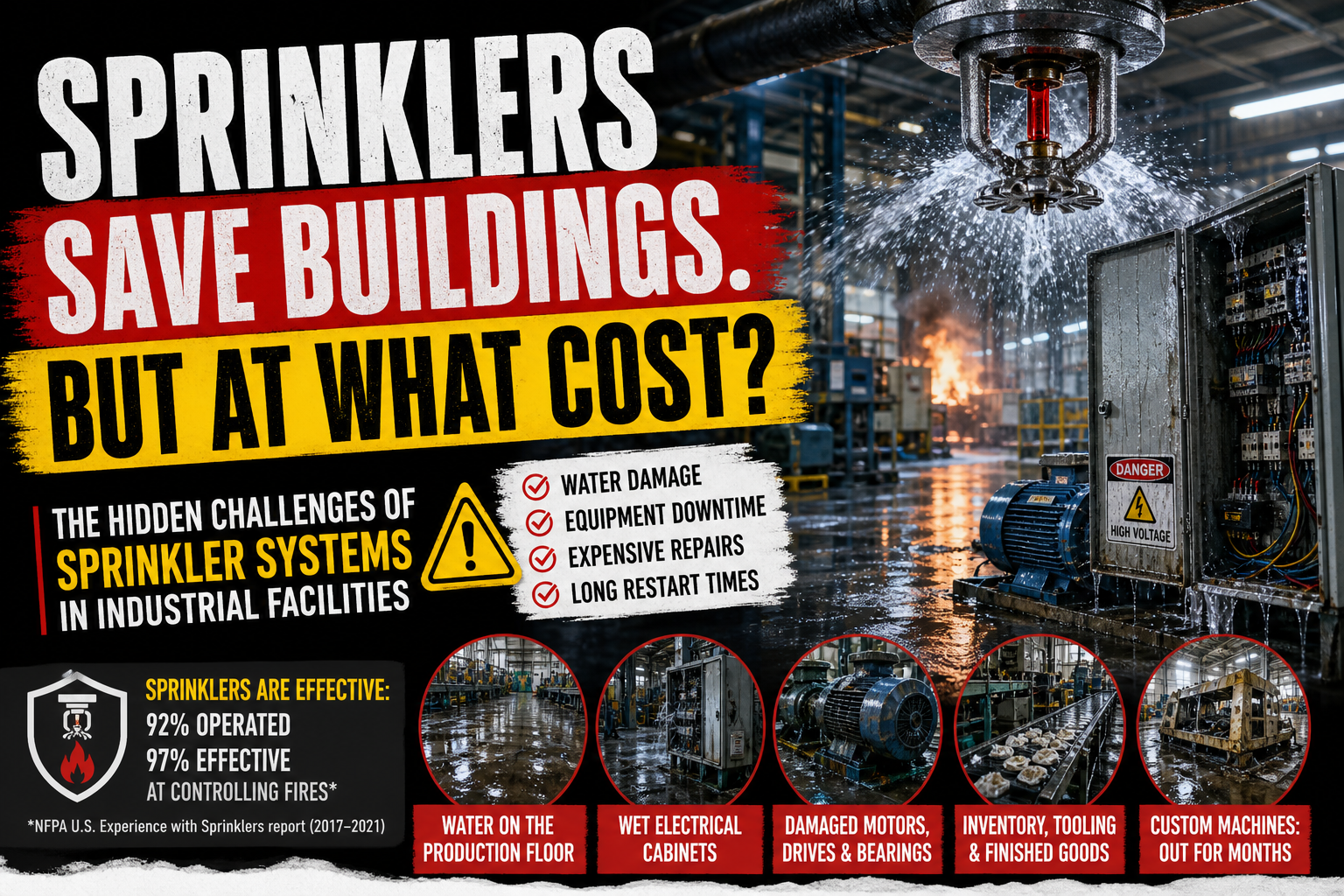
2026-05-10/Drew Hanover
Why Industrial Sprinklers Are a Last Line of Defense, Not a Fire Prevention Plan
Most plant teams do not celebrate when a sprinkler system works.
They are relieved the fire was controlled. Then they start counting the damage.
Water is on the production floor. Electrical cabinets are wet. Motors, bearings, drives, panels, conveyors, inventory, tooling, and finished goods may need inspection before the line can restart. If a custom machine is damaged, replacement may not be measured in days. It may be measured in months.
That is why many industrial operators talk about sprinklers with two thoughts at the same time:
- They know sprinklers can save a building.
- They never want the sprinkler system to activate.
Both thoughts are reasonable.
Sprinklers are one of the most effective fire control tools available. The NFPA U.S. Experience with Sprinklers report found that, from 2017 to 2021, sprinklers operated in 92 percent of structure fires large enough to activate them and were effective at controlling the fire in 97 percent of the fires where they operated.
But that statistic also explains the limitation. A sprinkler operates when a fire has produced enough heat at the sprinkler head. By then, the plant is already in the fire response stage.
For industrial manufacturers, the goal should be simple:
Use sprinklers where the building, code, insurer, and risk profile require them. But do not treat sprinkler activation as the first meaningful warning.
The Short Answer
Sprinklers are built to control a fire after heat from the fire reaches the sprinkler head.
They are not built to detect every overheating bearing, slipping belt, overloaded motor, loose electrical connection, smoldering dust pocket, or hot material condition before ignition.
That creates a business-continuity problem:
| Question | Sprinkler system | Early thermal monitoring |
|---|---|---|
| What it responds to | Heat from a developed fire at the sprinkler head | Abnormal surface heat on assets, material, and process zones |
| Typical stage | Fire response | Pre-ignition warning |
| Main value | Control fire spread and protect life/property | Help teams investigate and act before ignition |
| Main limitation | Activation means water discharge and a fire event has already escalated | Needs line of sight to the surface or zone being monitored |
| Operational concern | Water can damage machines, electrical assets, inventory, and production areas | Alarm design must avoid nuisance alerts and route events to the right team |
A good fire strategy does not ask one layer to do everything.
Sprinklers control fires. Early detection helps you avoid needing them.
How Sprinklers Actually Work
A sprinkler head is not a smoke detector.
It is a heat-operated water discharge device.
The Fire Protection Association explains the two common release mechanisms:
- Glass bulb sprinklers use a heat-sensitive liquid inside a small glass bulb. As temperature rises, the liquid expands until the bulb breaks and releases water.
- Fusible link sprinklers use a metal link designed to melt at a specific temperature. When it melts, the sprinkler opens.
Sprinkler heads operate individually. A fire in one area should not make every sprinkler in the building discharge at once.
That is important because it reduces unnecessary water damage. But it does not remove the problem for the area where water does discharge.
The same FPA guide notes that common sprinkler heads in residential and office settings may activate around 68 degrees C, while industrial locations or areas near heat-producing equipment may use higher temperature ratings, often between 79 degrees C and 141 degrees C or higher for specific risks.
That is the point. Sprinklers wait for heat high enough at the sprinkler head.
They are not watching the bearing, the motor winding, the belt edge, the dust collector inlet, the charger cabinet, or the electrical termination as it drifts from normal to dangerous.
What Sprinkler Design Has to Account For
Industrial sprinkler design is engineering work.
It is not only a matter of putting pipe in the ceiling.
NFPA 13, the Standard for the Installation of Sprinkler Systems, governs sprinkler system design and installation in the United States. Design decisions depend on the occupancy, hazard classification, water supply, ceiling height, storage arrangement, commodity type, sprinkler type, spacing, obstruction rules, and system layout.
Industrial sites add more complexity:
- Combustible dust can change the fire load and the maintenance environment.
- Tall ceilings change how heat collects and how sprinklers operate.
- Rack storage, packaging, plastics, pallets, and stacked goods affect fire growth.
- Freezing areas may require dry pipe or preaction systems instead of simple wet pipe systems.
- Corrosive atmospheres can shorten system life.
- Process changes can invalidate the assumptions behind the original sprinkler design.
- Water supply may require pumps, tanks, underground mains, backflow prevention, and acceptance testing.
Property insurers often go further than minimum code. FM Global data sheets are widely used for property protection and business-continuity-focused sprinkler design. Their guidance considers commodity classification, storage configuration, sprinkler performance, and loss prevention experience.
That is why many industrial customers view sprinklers as expensive and difficult to change. They are not buying a device. They are buying a full engineered water-based fire protection system.
Why Some Industrial Facilities Do Not Have Sprinklers
Some industrial buildings do not have sprinkler coverage in the areas operators worry about most.
The reasons vary.
In some older buildings, sprinklers were never required when the structure was built. In some facilities, the water supply is not adequate without major infrastructure work. In others, the occupancy, storage, production process, insurer requirements, or local authority decision leads to a different fire protection approach.
Cost is also real.
Retrofitting sprinklers into an operating plant can involve engineering, pipe routing, ceiling access, shutdown windows, structural work, pumps, tanks, trenching, freeze protection, permits, inspections, and coordination with production. A simple square-foot estimate can miss the expensive parts of the project.
Maintenance is real too.
NFPA 25, the Standard for the Inspection, Testing, and Maintenance of Water-Based Fire Protection Systems, exists because water-based systems need ongoing inspection, testing, maintenance, records, and impairment management.
And then there is the fear plant managers say out loud:
If the sprinkler system goes off, what happens to the machines?
The Water Damage Problem
Sprinklers are designed to discharge enough water to control a fire.
That is exactly why operators worry about them.
In a production environment, water does not only hit the fire. It can hit:
- Motors and drives.
- Electrical panels and junction boxes.
- Bearings, gearboxes, and precision assemblies.
- Raw material, packaging, and finished goods.
- Sensors, cameras, scanners, PLC cabinets, and networking hardware.
- Conveyors, robotics, CNC equipment, chargers, saw lines, presses, dryers, and custom OEM machinery.
Water damage is not always visible on day one. Corrosion, contamination, insulation breakdown, bearing damage, and electrical reliability problems can appear later. Even when equipment can be saved, it may need lockout, drying, inspection, cleaning, testing, and signoff before production restarts.
Real restoration projects show the scale. In one 170,000 square foot manufacturing facility restoration case study, a fire caused hundreds of sprinkler heads to activate, flooding two large manufacturing buildings and sending soot and smoke odor through the facility. The restoration team worked around the plant's requirement to keep production running.
That is the operational fear behind the customer comment:
"We never want the sprinklers to trigger."
It is not anti-sprinkler. It is pro-uptime.
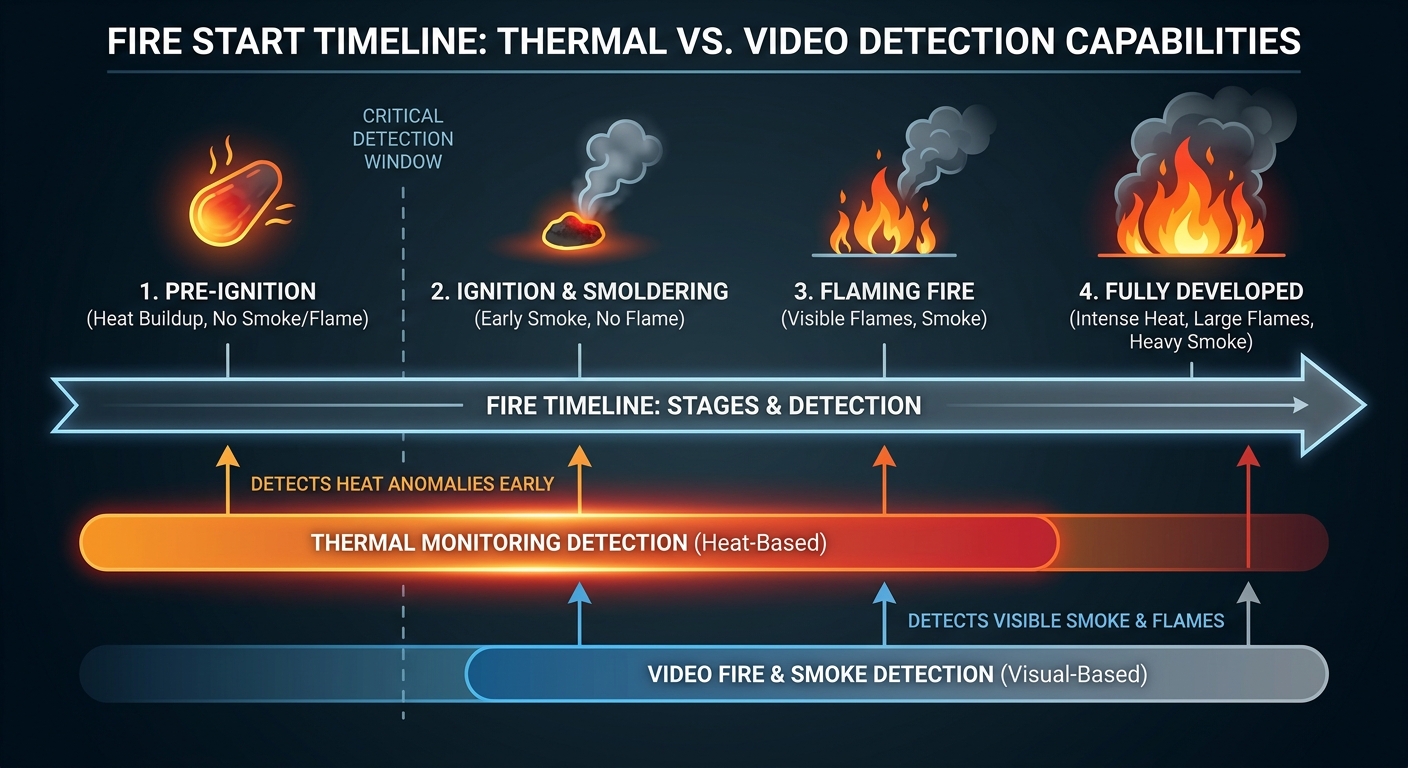
The Real Limitation: Sprinklers Are Late in the Timeline
Most industrial fire risk does not begin as open flame.
It begins earlier:
- A bearing runs hot.
- A conveyor belt drags.
- A roller seizes.
- A motor overloads.
- A panel connection loosens.
- A charger or battery cabinet heats unevenly.
- Dust collects near a hot surface.
- Material smolders inside a duct, bin, hopper, cyclone, or pile.
At that stage, the plant still has options.
An operator can inspect. Maintenance can clean, lubricate, align, tighten, repair, or schedule a stop. A supervisor can isolate the equipment. A PLC can stop a conveyor. A team can remove material before it becomes a fire event.
Once the sprinkler activates, the event has moved into emergency response.
The fire may be controlled. The building may be saved. The system may have done exactly what it was designed to do.
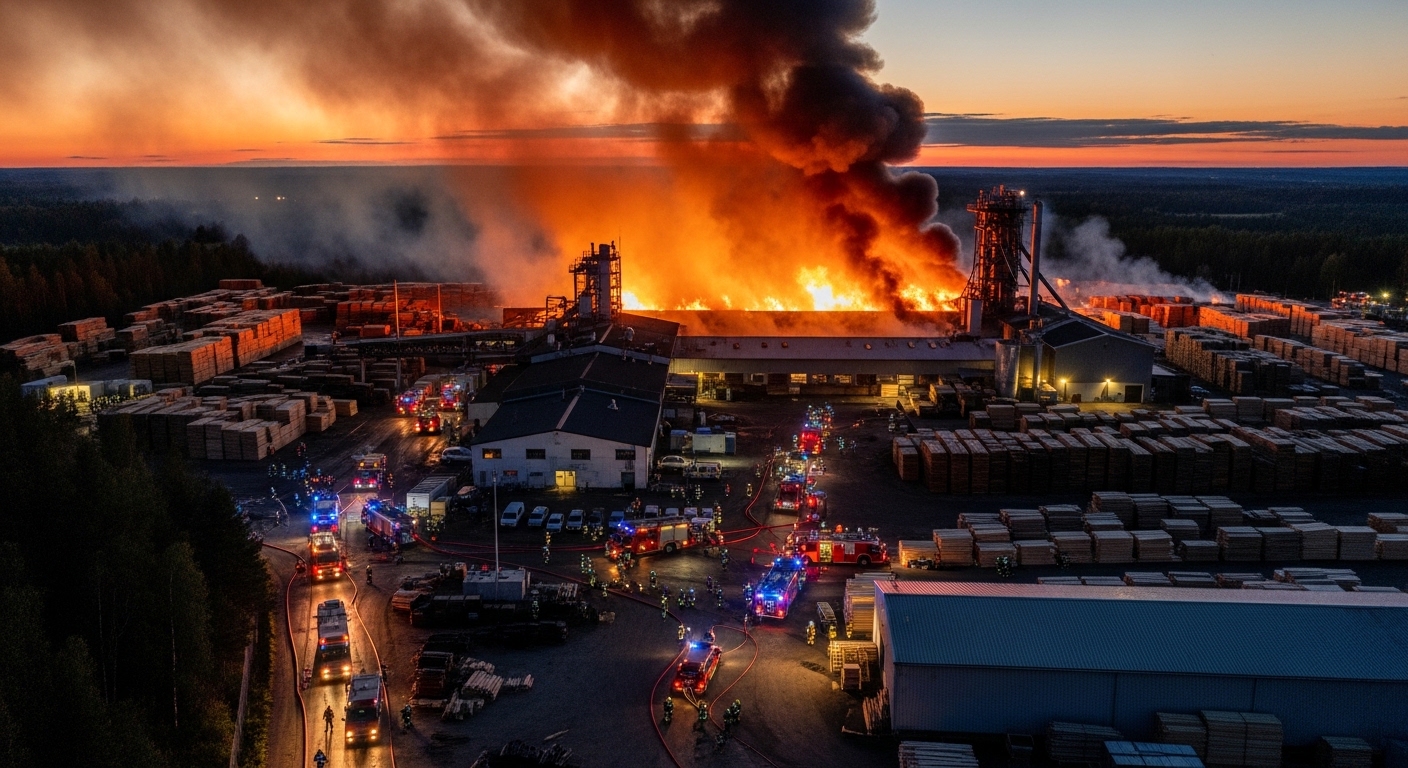
But the plant is now dealing with fire damage, smoke, water, cleanup, insurance, investigation, lost production, and possible equipment replacement.
That is why prevention has to sit earlier than suppression.
Where Early Detection Fits
Early detection does not replace sprinkler systems.
It changes the odds that you will need them.
Fixed thermal monitoring looks for abnormal heat before visible smoke, flame, or sprinkler activation. It is useful in the places where industrial fires often begin:
- Bearings, rollers, and conveyors.
- Motors, drives, gearboxes, and hydraulic units.
- Electrical panels, MCCs, bus ducts, and junction boxes.
- Dust collectors, ducts, cyclones, hoppers, and silos.
- Battery racks, chargers, and power electronics.
- Stockpiles, waste piles, biomass, pellets, grain, and combustible material handling.
The value is not only the temperature reading. The value is the workflow.
A useful early warning system should:
- Watch continuously, including nights, weekends, and shift changes.
- Compare each zone against its normal thermal behavior.
- Filter routine hot objects such as forklifts, hot work, steam, and normal process heat.
- Alert the people who can act.
- Record thermal and visual context for review.
- Support escalation, maintenance handoff, and optional control-system actions.
That is the gap between fire detection and fire prevention.
Detection asks, "Is there a fire?"
Prevention asks, "What is getting hot before it becomes a fire?"
Sprinklers Still Matter
None of this means industrial plants should ignore sprinklers.
They should not.
Sprinklers save lives, control fires, and reduce large-loss potential. NFPA data is clear that working sprinklers are highly effective when fires are large enough to activate them. Insurers, fire protection engineers, authorities having jurisdiction, and internal safety teams have good reasons to require them.
The mistake is treating sprinklers as the whole plan.
In a manufacturing environment, the better question is:
What has to go wrong before water starts flowing?
If the answer is "a fire has already grown enough to activate the sprinkler," then the plant needs an earlier layer.
The AVIAN View
AVIAN is not a sprinkler replacement.
It is an early warning layer for the heat conditions that can lead to fire, downtime, and expensive machine damage.
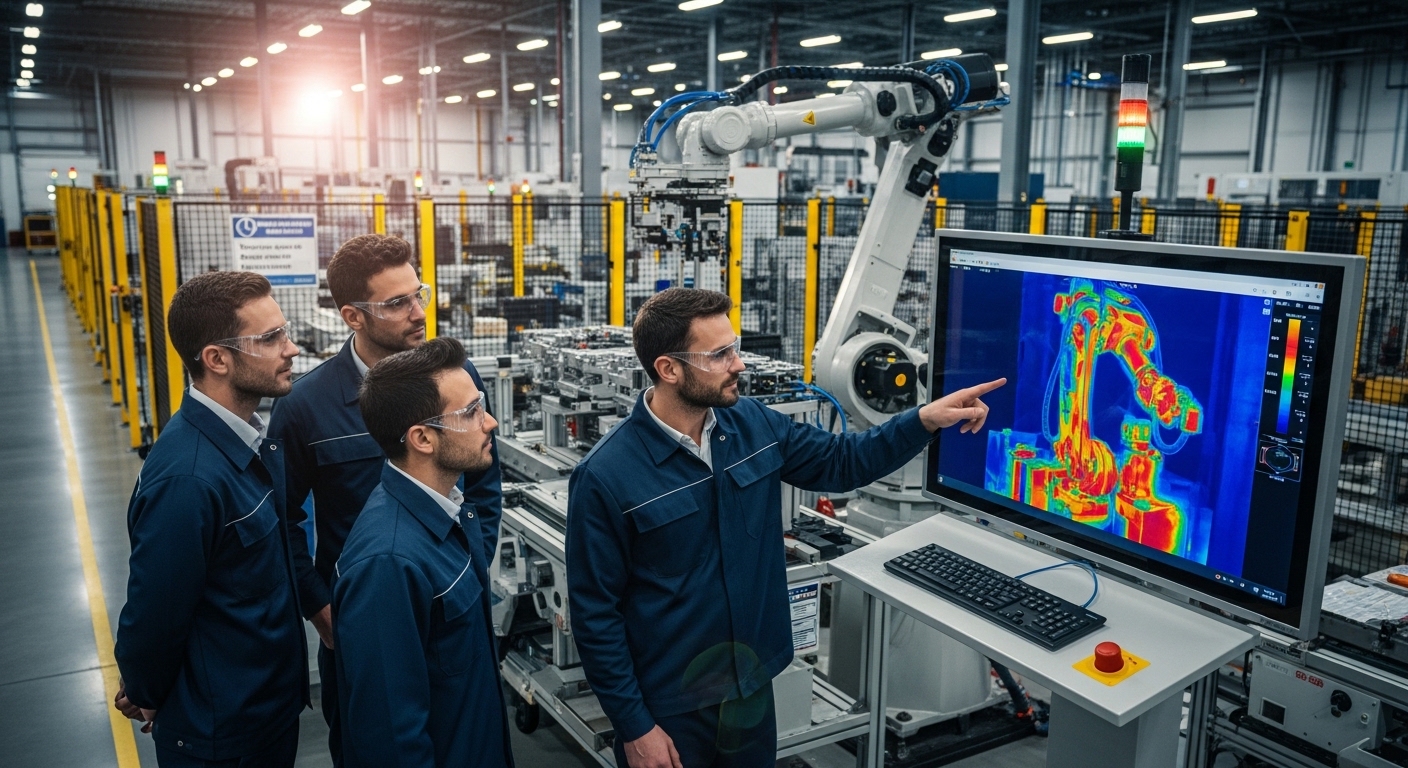
The AVIAN T100 thermal monitoring system watches industrial assets and risk zones continuously. It detects abnormal heat, filters nuisance events, alerts the right team, and records thermal and visible context so operators can act before the event becomes a sprinkler discharge, shutdown, or insurance claim.
For many plants, that is the real goal.
Not proving the sprinkler system works.
Avoiding the day it has to.
Sources
- NFPA: U.S. Experience with Sprinklers
- NFPA 13: Standard for the Installation of Sprinkler Systems
- NFPA 25: Standard for the Inspection, Testing, and Maintenance of Water-Based Fire Protection Systems
- Fire Protection Association: How do fire sprinklers work?
- FM Global Property Loss Prevention Data Sheets
- Werner Restoration: Fire + Water: Restoring a 170,000 Sq. Ft. Manufacturing Facility
Get new AVIAN insights in your inbox
We'll send practical notes on industrial fire prevention, thermal monitoring, and customer learnings. No noise.