Back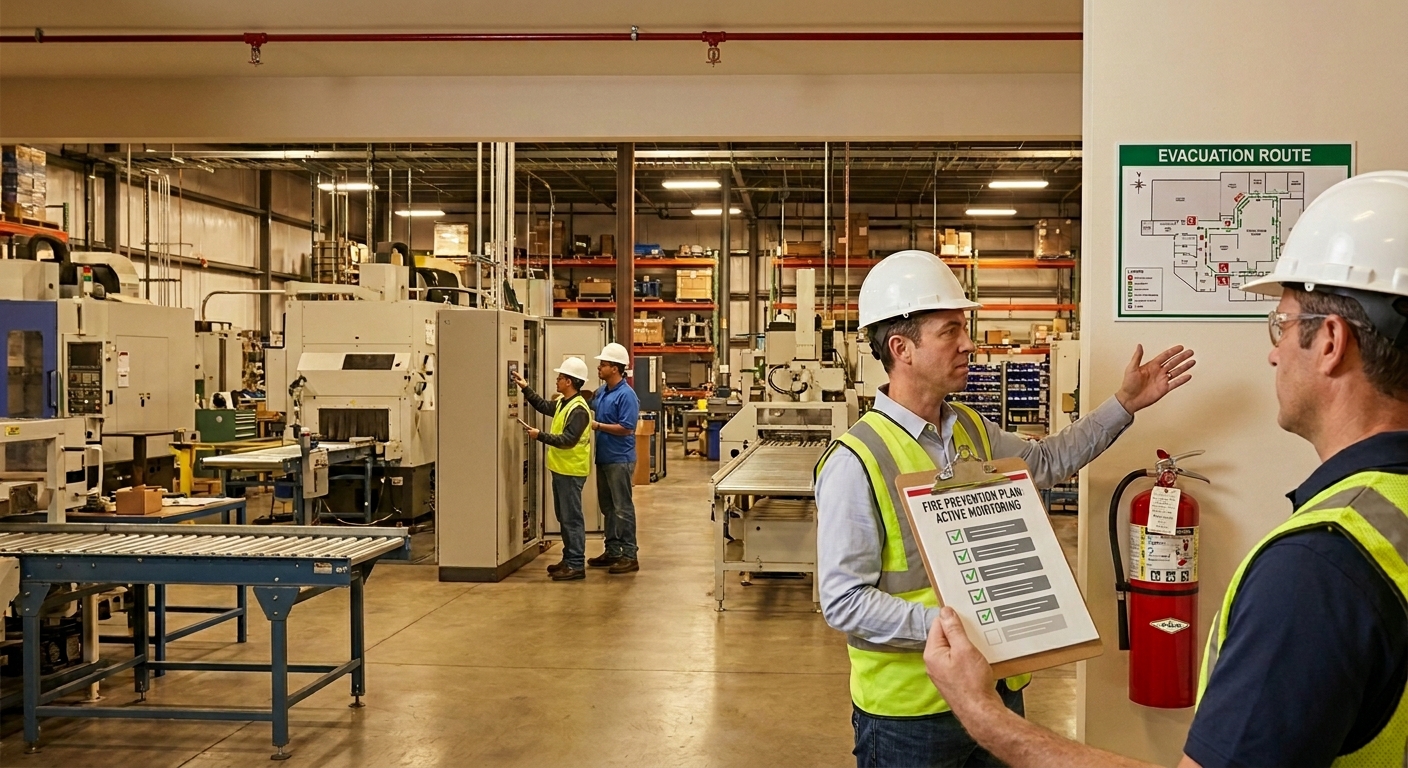
2026-04-29/Drew Hanover
How a Fire Prevention Plan Benefits an Industrial Workplace
A fire prevention plan benefits your workplace by turning fire safety from a reaction into a controlled operating system. It identifies where fires are most likely to start, defines who is responsible for reducing those risks, documents how employees should respond, and gives management a practical way to prove that prevention is happening every day.
In an office, that may mean inspection schedules, evacuation routes, and extinguisher locations. In an industrial workplace, the stakes are different.
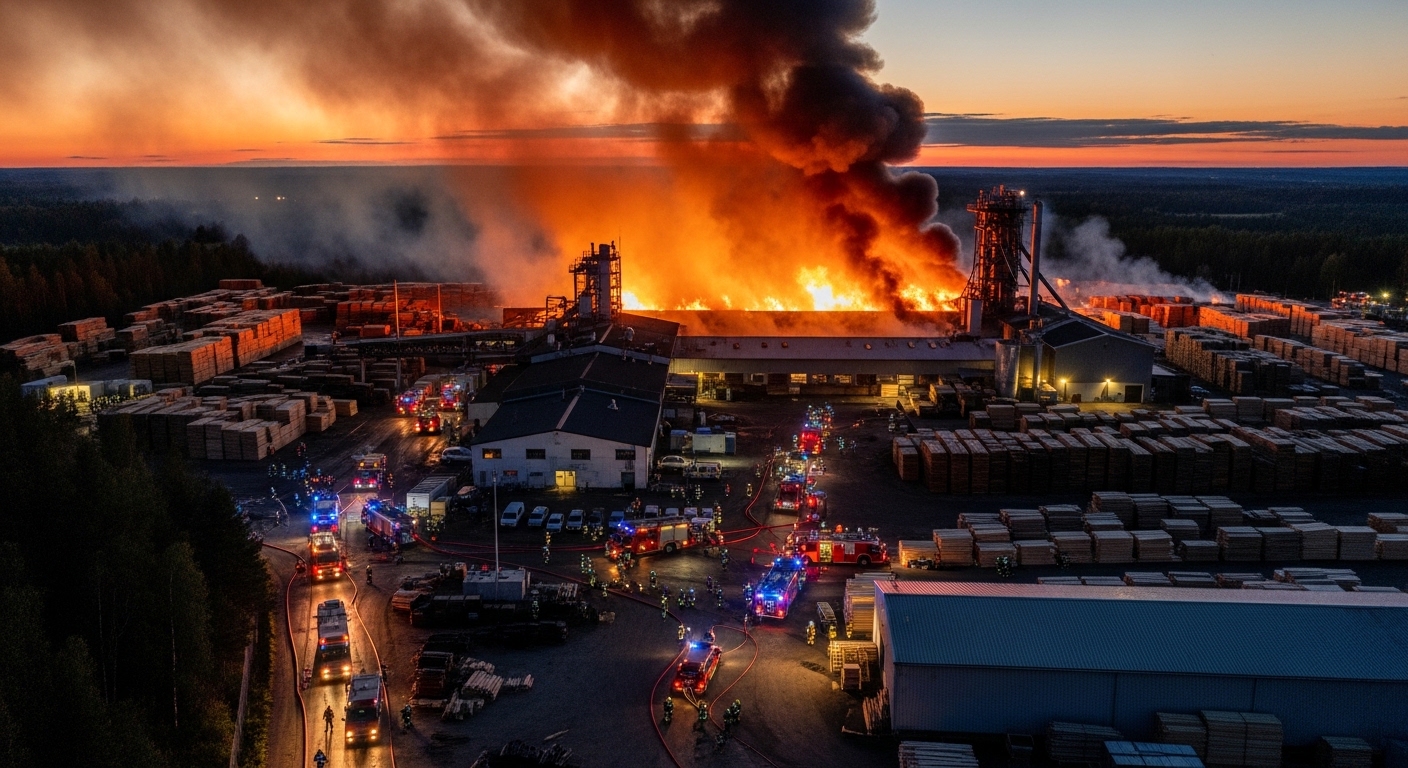
Industrial facilities deal with combustible dust, conveyors, hydraulic systems, electrical cabinets, hot work, charging areas, ovens, dryers, bearings, motors, and storage piles. A small heat source can become a production loss, a workers' compensation event, an insurance claim, or a facility-wide shutdown.
That is why a fire prevention plan should not sit in a binder. It should guide how the plant is inspected, monitored, maintained, cleaned, staffed, and insured.
What Is a Fire Prevention Plan?
A fire prevention plan is a written program that explains how a workplace will reduce the chance of fire. In the United States, OSHA 29 CFR 1910.39 describes the minimum elements for employers that are required to maintain one.
At a practical level, a useful industrial fire prevention plan should answer five questions:
- Where are fires most likely to start?
- What materials, equipment, or processes could feed a fire?
- Who is responsible for preventing, reporting, and responding to fire hazards?
- What controls are in place to detect a problem early?
- How do we prove the plan is being followed?
That last question matters more than many teams realize. A plan without records is hard to defend after an incident. A plan with inspection logs, training records, maintenance history, alarm history, and corrective actions shows that the company is actively managing risk.
The Biggest Benefit: Fewer Small Problems Become Fires
Most industrial fires are not mysterious. They start with a condition that existed before ignition.
A bearing runs hot. A belt slips on a pulley. Dust accumulates where housekeeping is difficult. A motor runs above normal load. A loose electrical connection heats under current. A lithium-ion battery enters a waste stream or charging area already damaged. A spark enters ductwork and travels farther than anyone expects.
A fire prevention plan forces the facility to look for those conditions before they become emergencies.
The best plans start with a risk map. They identify the areas where fuel, heat, oxygen, and mechanical movement are already close together. In a sawmill, that might be a planer, baghouse, cyclone, or conveyor transfer point. In a recycling plant, it may be the tipping floor, battery sorting area, shredder, bale storage, or outdoor pile. In a manufacturing plant, it may be an oven, dryer, hydraulic power unit, electrical room, or dust collection line.
Once those areas are known, the facility can assign controls. Some are procedural, such as hot-work permits, housekeeping rounds, lubrication schedules, and end-of-shift inspections. Others are technical, such as spark detection, suppression, gas detection, smoke detection, and continuous thermal monitoring.
The result is simple: fewer hidden hazards, fewer surprises, and fewer fires that begin from known failure modes.
A Fire Prevention Plan Improves Worker Safety
The safety benefit is not just evacuation. Evacuation is the last step. Prevention is what keeps workers from being placed in danger in the first place.
Industrial fires create hazards that move quickly. Smoke reduces visibility. Dust explosions can create secondary blasts. Burning plastics, solvents, rubber, wood dust, or battery materials can produce toxic conditions. Emergency shutdowns can leave equipment in unsafe states. A fire near a conveyor, hydraulic line, or electrical panel can put operators, mechanics, and firefighters into a dangerous response.
A strong fire prevention plan reduces those exposures by making responsibilities clear before the shift starts.
Employees should know how to report heat, smoke, odor, sparks, abnormal motor noise, dust accumulation, blocked exits, damaged cords, and unusual equipment behavior. Maintenance should know which assets require routine inspection and which temperature, vibration, lubrication, or electrical readings indicate a problem. Supervisors should know when to stop a process instead of waiting for the next scheduled break.
Training is where the plan becomes real. A worker who knows the reporting path can raise a concern early. A supervisor who knows the shutdown authority can prevent debate during an alarm. A maintenance team with clear inspection routes can find the conditions that operators may walk past because they look normal during production.
Insurance Carriers Want Evidence, Not Intentions
Fire prevention is now part of the insurance conversation for many industrial operators. Underwriters are not only asking whether a facility has sprinklers and extinguishers. They want to know how fires are prevented before those systems are needed.
This is especially true in industries with frequent fire losses, such as recycling, wood products, battery handling, bulk storage, and material recovery. We covered this dynamic in more detail in our article on the recycling fire insurance crisis, but the principle applies across heavy industry.
An underwriter may ask:
- Which zones are monitored during nights, weekends, and holidays?
- How are hot work and contractor activity controlled?
- How often are dust collection systems inspected?
- Are thermal events, alarms, and maintenance actions logged?
- Can detection systems shut down equipment automatically?
- What proof exists that employees are trained on the plan?
A fire prevention plan gives your broker and insurer a clear answer. It shows that the business is not relying on luck, memory, or one experienced maintenance manager who knows the plant by heart.
That documentation can matter at renewal. It can support negotiations around premiums, deductibles, exclusions, and coverage terms. It can also protect the company after a claim by showing that prevention was structured, assigned, and recorded.
The Plan Protects Uptime, Not Just Buildings
Fire safety is usually framed as life safety and property protection. Those are the most important outcomes. But in industrial settings, the uptime benefit is also significant.
A fire does not need to destroy a building to be expensive.
A smoldering event in ductwork can shut down a line. A burned conveyor belt can stop material flow. Smoke contamination can damage inventory. Water from suppression can affect controls, motors, and finished goods. A small electrical fire can create days of troubleshooting before production restarts.
A good fire prevention plan helps prevent those secondary losses. It tells the team which assets must be kept clean, which inspections cannot be skipped, which alarms require immediate action, and which systems need planned maintenance before they fail under load.
This is where prevention overlaps with condition-based maintenance. The same heat that indicates fire risk can also indicate mechanical failure. A bearing that is hot enough to concern safety is also a bearing that may be close to failure. A motor that is running hot may point to overload, friction, poor ventilation, or electrical imbalance.
When the plan includes continuous monitoring, the facility gains both fire prevention and maintenance value from the same data.
New Technologies Make Fire Prevention More Practical
The old model of fire prevention relied heavily on human checks. Walk the route. Smell for smoke. Look for dust. Listen for a bad bearing. Check the panel with a handheld thermal camera once a month.
Those practices still matter, but they have gaps. People cannot watch every conveyor, cabinet, duct, pile, charger, and bearing every minute of the day. They also cannot be everywhere at 2AM.
New technologies close that gap.
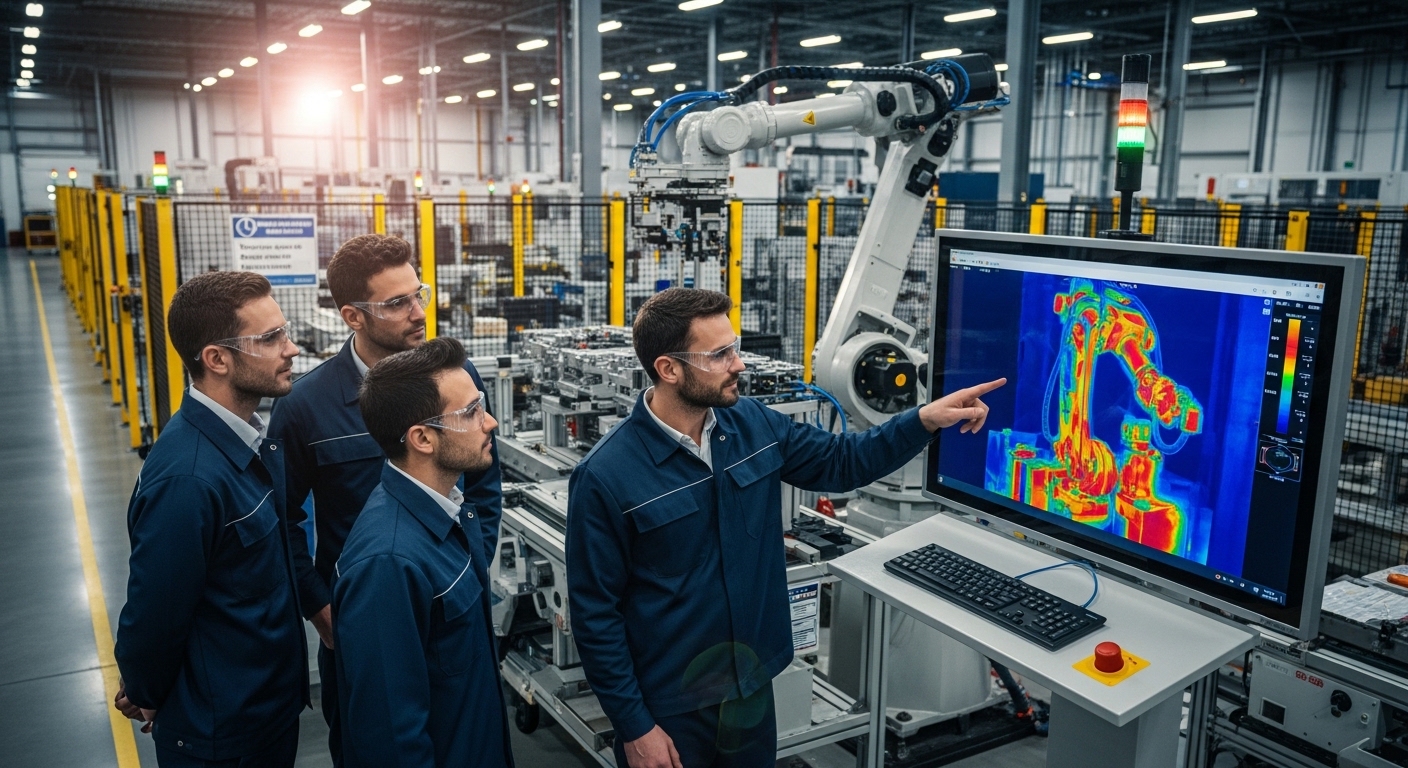
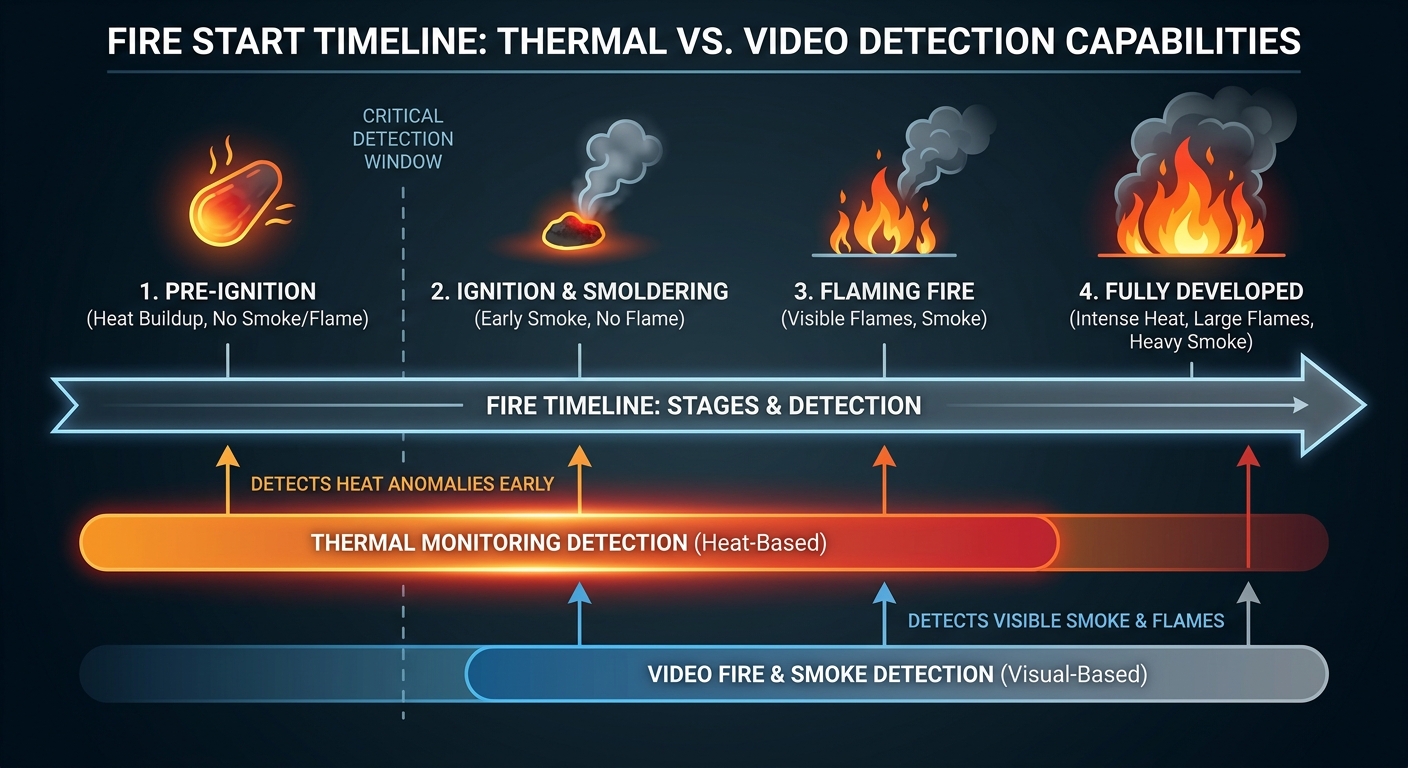
Continuous thermal imaging detects heat before smoke or flame is present. A fixed thermal camera can monitor bearings, motors, electrical panels, conveyors, dust collection equipment, bulk storage, battery areas, and process zones around the clock. We explain the basics in Infrared Monitoring Basics.
AI-based filtering helps separate real fire risks from normal industrial activity. Forklifts, loaders, hot products, steam, sunlight, and welding can all create false triggers if a system is not tuned for the environment.
PLC integration allows alarms to trigger automatic actions. In the right application, a high-temperature event can stop a conveyor, isolate a process, start suppression, activate ventilation, or alert the right team without waiting for someone to notice a screen. We covered this in our post on PLC integration for high-temperature events.
Digital event logs create the documentation insurers and safety teams need. Every alarm, image, timestamp, response, and corrective action becomes part of the record.
Technology does not replace the fire prevention plan. It makes the plan enforceable.
What an Industrial Fire Prevention Plan Should Include
A practical plan should be specific enough for the floor, not just compliant enough for a file.
At minimum, include:
- A map of high-risk fire zones and ignition sources.
- A list of combustible materials, including dust, scrap, packaging, oils, fuels, resins, batteries, and stored product.
- Housekeeping rules and inspection frequencies for each risk area.
- Hot-work permitting requirements.
- Electrical inspection and maintenance expectations.
- Preventive and condition-based maintenance tasks for bearings, motors, conveyors, and dust collection systems.
- Detection, monitoring, alarm, and suppression systems by zone.
- Shutdown procedures and escalation paths.
- Employee training requirements.
- Records that show inspections, alarms, incidents, repairs, and corrective actions.
The plan should also assign ownership. "Maintenance will inspect the dust collector weekly" is better than "dust collectors should be inspected." "The shift supervisor has authority to stop the line during a thermal alarm" is better than "alarms should be investigated."
Specific ownership reduces hesitation during the moment that matters.
Common Mistakes
The most common mistake is treating the fire prevention plan as a compliance document instead of an operating tool.
Another mistake is focusing only on response. Extinguishers, hydrants, sprinklers, and evacuation routes are necessary, but they do not prevent the first ignition source. Prevention starts earlier, with housekeeping, inspection, maintenance, monitoring, and shutdown authority.
A third mistake is relying on manual inspections alone. Manual rounds are useful, but they are snapshots. A bearing can overheat after the route is complete. A pile can begin smoldering overnight. A battery can fail on a weekend. Continuous monitoring covers the hours when people are not looking.
Finally, many plans fail because they are not updated after changes in production. New equipment, new material streams, new contractors, higher throughput, seasonal temperature changes, or a new storage pattern can all change the fire risk profile.
Review the plan whenever the operation changes.
The Bottom Line
So, how does a fire prevention plan benefit your workplace?
It protects people, reduces fire risk, supports insurance discussions, improves maintenance discipline, protects uptime, and gives the company documented proof that fire prevention is part of daily operations.
For an industrial facility, that is not paperwork. It is risk control.
The strongest plans combine clear procedures with continuous visibility. Workers know what to do. Supervisors know when to stop the process. Maintenance knows which assets need attention. Management has records. Insurers see evidence. And the facility catches heat, dust, electrical, and equipment problems before they turn into something larger.
If you want to understand where continuous thermal monitoring fits into your fire prevention plan, reach out to the AVIAN team. We can review your highest-risk zones and show where early heat detection can reduce fire risk, improve uptime, and strengthen your insurance file.
Drew Hanover
CTO & Co-Founder
Get new AVIAN insights in your inbox
We'll send practical notes on industrial fire prevention, thermal monitoring, and customer learnings. No noise.