The Industrial Fire Watch / Jul 24-30, 2026
The Heat Risk Behind the Food Line
A weekly Fire Watch briefing on food and beverage plant fires where process equipment, warehouses, refrigeration, and utility areas turned into production risk.
What To Know
AVIAN tracked 4 Food & Beverage Manufacturing fire and explosion incidents from July 24 to July 30, 2026. The focused source set covered 3 countries, with 5 reported injuries and 1 reported fatality.
The strongest pattern was heat moving through the less visible parts of the food line: a vinegar production tank explosion, a rekindled warehouse fire near snack and frozen-food operations, an early-morning fire at a major meat-processing plant, and a large warehouse fire where investigators were reviewing electrical or refrigeration systems.
For plant managers, EHS teams, maintenance leaders, insurers, and operations executives, the lesson is operational continuity. Food plants run across shifts, cold rooms, packaging zones, conveyors, tanks, compressors, panels, and warehouses. If abnormal heat starts in a utility area, tank, warehouse corner, or refrigeration-adjacent zone, the first useful warning should not be smoke visible from miles away.
4
Incidents
3
Countries
5
Injuries
1
Fatalities
Key Incidents
Vinegar production factory explosion in Examilia, Greece
- Event
- ProtoThema English reported that a powerful explosion and fire destroyed a vinegar production and packaging factory in Examilia, Corinthia. Greece's Fire Service found one worker dead inside the plant, and two other people were treated for minor burns after making their own way to hospital.
- Risk signal
- The reported cause was a vinegar tank explosion, with the arson investigation unit activated. The operational pattern is process-vessel energy, production material, and fast fire growth inside a food manufacturing environment.
- Business impact
- Fatal worker loss, burn injuries, plant destruction, emergency response, forensic investigation, and restart scrutiny around tank, process, and fire-protection controls.
Strauss and Tapugan factory fire in Sderot, Israel
- Event
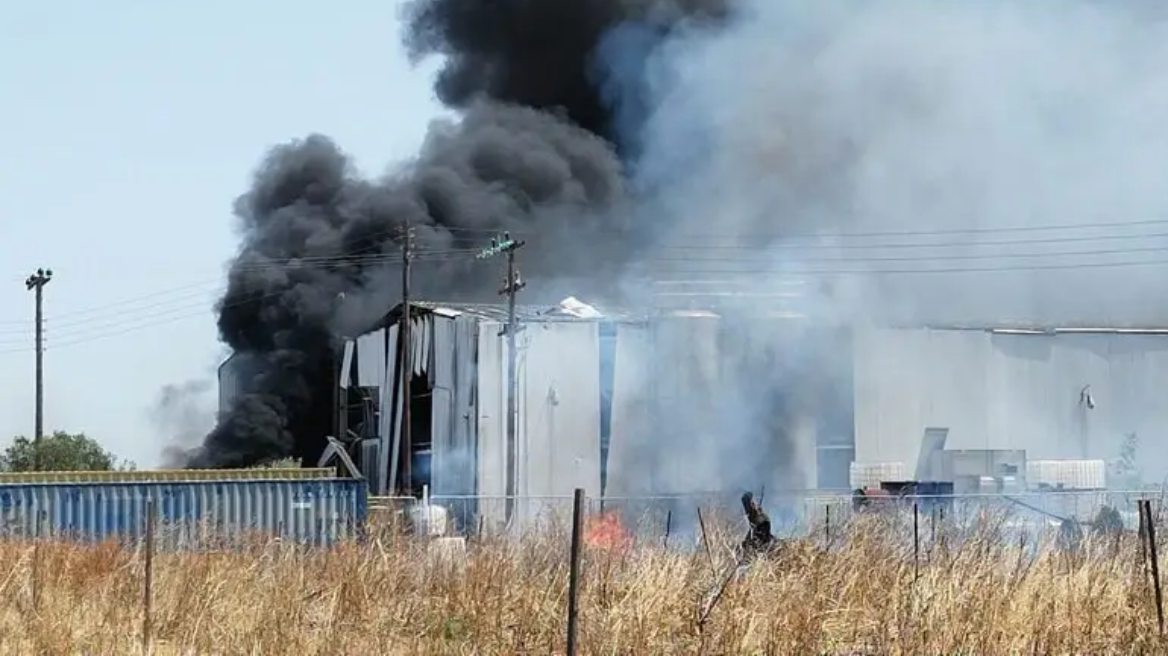
- The Jerusalem Post reported that a major fire engulfed factory and warehouse areas in the Shaar Negev industrial area near Sderot, affecting sites linked to Strauss and Tapugan. Two firefighters and one bystander were lightly injured, nearby residents were told to remain indoors, and officials later ruled out a hazardous chemical leak.
- Risk signal
- The source did not confirm the ignition cause. The prevention pattern is warehouse or factory heat near food operations where ammonia, cold-storage, packaging, and production continuity concerns can become part of the emergency response even when a leak is later ruled out.
- Business impact
- Firefighter and bystander injuries, shelter-in-place guidance, road and rail disruption, dozens of fire crews, aircraft support, and operational uncertainty around one of the region's food manufacturing clusters.
Agri Star meat-processing plant fire in Postville, Iowa
- Event
- KCRG reported that fire crews responded around 3:56 a.m. to a fire at the Agri Star Meat and Poultry plant in Postville. Officials reported no injuries, but smoke was visible for miles, the city asked residents to conserve water, and workforce support was arranged for affected employees.
- Risk signal
- The cause was not yet confirmed in the source report. The operational pattern is after-hours or early-shift heat in a high-throughput food plant where smoke, water demand, and uncertainty can affect the whole community.
- Business impact
- Potential interruption at the community's largest employer, public smoke advisory, water conservation request, worker support response, and business-continuity pressure after previous fire and explosion history at the facility.
Harry and David warehouse fire in Hebron, Ohio
- Event
- ABC6/WSYX reported that dozens of firefighters battled a three-alarm fire at a large Harry and David warehouse in Hebron after an early-morning security call. Crews worked for hours in the multi-story facility, and no injuries were reported.
- Risk signal
- Investigators said the fire may have been related to electrical or refrigeration systems, though the cause remained under investigation and the fire happened outside the refrigerator unit. Food warehouses need visibility into heat around panels, compressors, utility rooms, and high-rack or multi-level spaces.
- Business impact
- Multi-alarm emergency response, prolonged interior firefighting, heat exposure for crews, investigation, and likely inspection of refrigeration, electrical, and warehouse utility systems before normal operations resume.
Field Note
Food Plants Depend on Utility Heat Staying Boring
Food and beverage plants are built around controlled energy: tanks, compressors, conveyors, mixers, cookers, freezers, electrical rooms, dust collectors, and packaging lines. The risk is not only the obvious production asset. It is the moment when normal heat in a utility or process area drifts into abnormal heat and no one sees it until smoke, shutdown, evacuation, or product loss is already in motion.
Three Risk Signals
Dry ingredients and dust change the ignition picture
OSHA combustible-dust guidance points to hot surfaces, mechanical friction, electrical equipment, static discharge, self-heating, dust collectors, ducts, and housekeeping as practical fire and explosion controls. Food powders, grain, sugar, starch, and residues can turn an ordinary heat source into a larger event.
Refrigeration and utility rooms need their own response path
EPA guidance for ammonia refrigeration operators emphasizes process safety, recognized engineering practices, emergency procedures, mechanical integrity, shutdown planning, and operator training. Even when a reported food-plant incident does not become a confirmed leak, the possibility affects evacuation, isolation, and public messaging.
Warehouse heat can become a production problem
Packaging, cold-storage equipment, high-rack inventory, panels, chargers, and roof or mezzanine spaces may sit outside the main operator view. If the first signal is a security call or visible smoke, teams are already behind the event curve.
Technologies That Close The Gap
- Thermal monitoring over motors, bearings, conveyors, tanks, compressors, refrigeration support areas, electrical rooms, dry-ingredient handling, and warehouse utility zones where abnormal heat can start quietly.
- AI thermal anomaly detection that separates expected process heat from a motor, panel, compressor, bearing, or tank area drifting away from its normal thermal baseline.
- Gas and fire detection layers for ammonia refrigeration, solvent, fuel, vapor, dust, smoke, and flame hazards where heat is one signal inside a wider safety stack.
- PLC or equipment-response handoff for high-consequence zones where abnormal heat should trigger operator review, equipment stop, ventilation changes, isolation, suppression readiness, or maintenance handoff.
What To Do Next
Find abnormal heat before it becomes a line stop.
AVIAN tracks these incidents because the same failure pattern appears across high-risk facilities: **heat usually becomes visible before the emergency becomes obvious.**
AVIAN T100 thermal monitoring watches critical assets, material zones, and high-risk surfaces continuously. It detects abnormal heat, filters routine industrial activity, alerts the right team, and can connect to PLC workflows when a critical threshold needs action.
Prevention Moves
- 1Walk the food plant as a heat-and-continuity map: tanks, mixers, motors, conveyors, panels, compressors, refrigeration rooms, dry-ingredient handling, packaging storage, cold rooms, and warehouse utility areas.
- 2Identify which zones are still discovered by smell, smoke, a guard call, or manual rounds rather than continuous abnormal-heat visibility.
- 3Tie high-consequence zones to a written escalation path so abnormal heat reaches operations, maintenance, EHS, and controls teams before evacuation or shutdown becomes the only response.
Questions For Your Site
- Which production or warehouse areas combine combustible packaging, food residue, dust, or inventory with equipment that can overheat?
- Where could refrigeration, electrical, compressor, or utility-room heat start outside the normal operator view?
- Which early-morning, night, weekend, or low-staffed zones depend on someone nearby noticing smoke?
- Which alarms are easy to ignore because they do not separate routine process heat from abnormal heat?
What's your take?
Which food-plant heat risk is easiest to miss at your facility: tanks, refrigeration rooms, electrical panels, conveyors, dust paths, packaging storage, cold rooms, or after-hours warehouses?
This Fire Watch edition is based on reviewed public news and registry entries in AVIAN's incident database. It is not a complete record of every industrial fire.