Back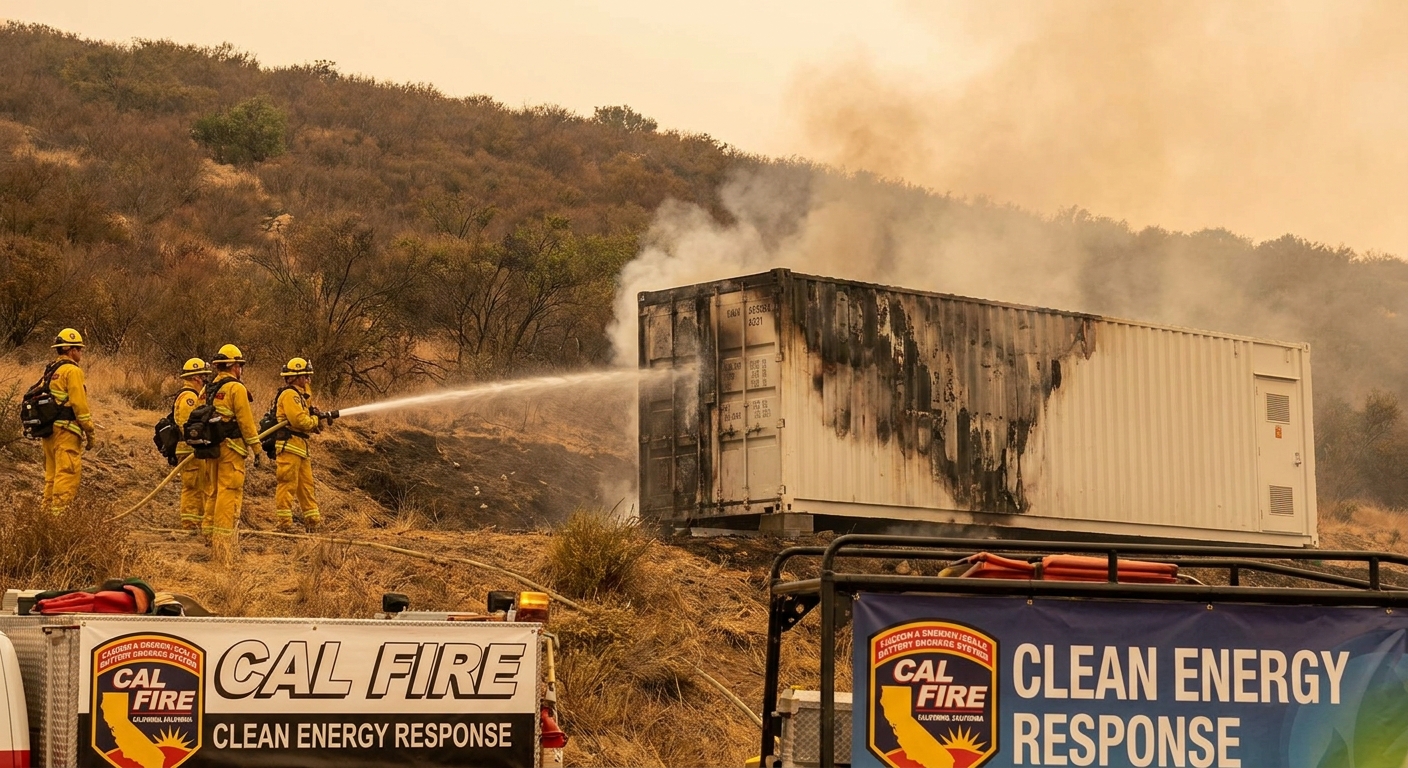
2026-05-03/Drew Hanover
How to Monitor Battery Energy Storage Systems (BESS) with Infrared Cameras
Battery energy storage systems are built to hold a lot of energy in a small footprint. That is what makes them useful. It is also what makes monitoring important.
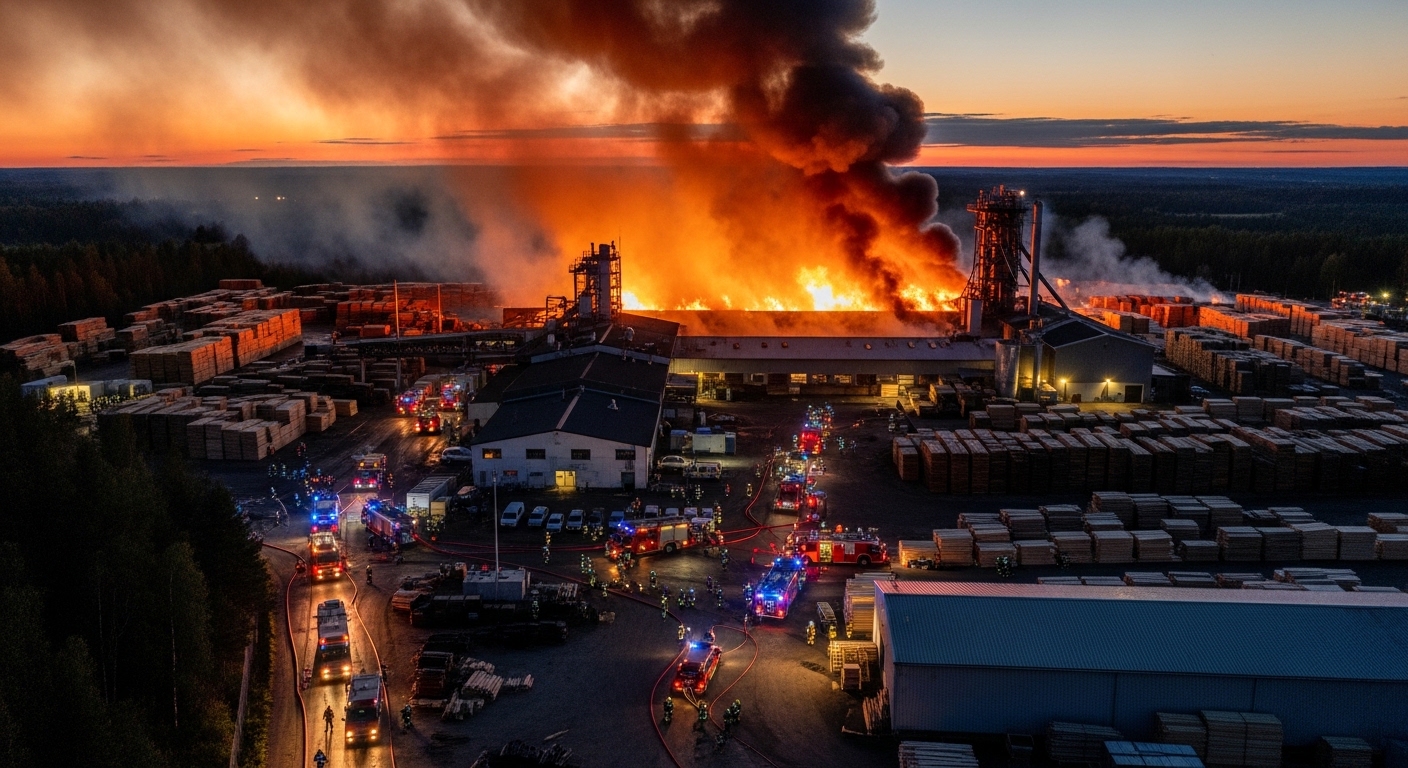
A BESS fire is rarely a simple flame event. A cell can fail internally. A module can overheat. Off-gas can accumulate. A clean agent system can discharge and still fail to stop thermal runaway propagation. A fire can appear to be controlled, then flare up again.
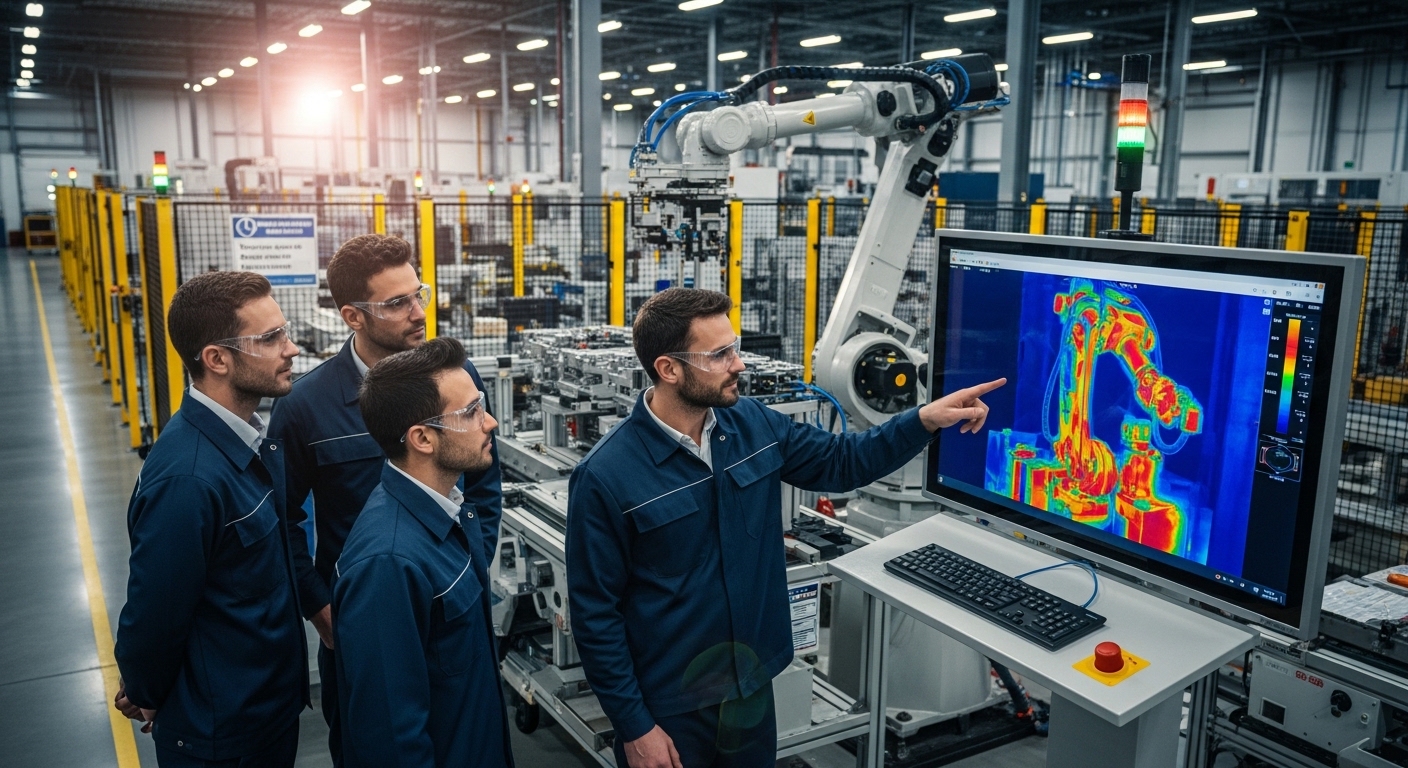
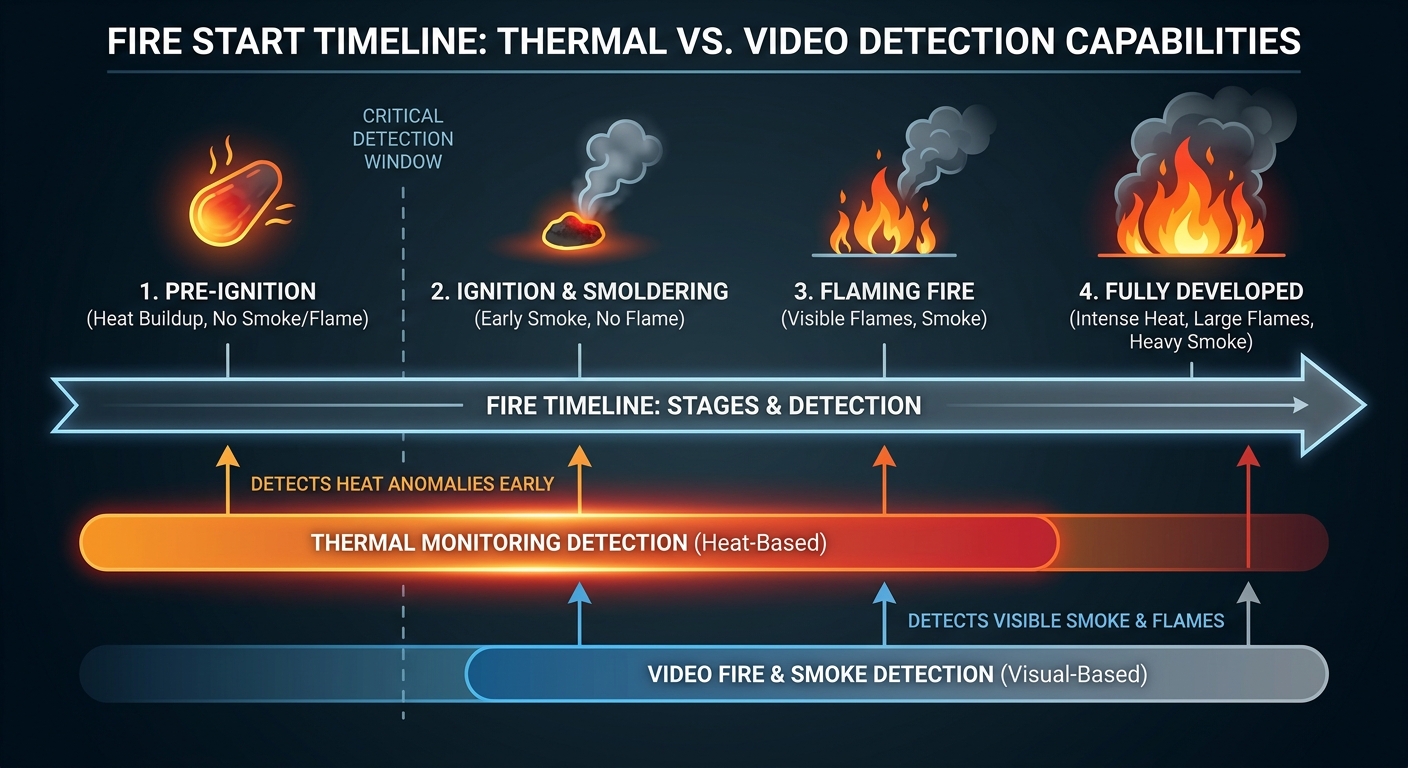
Infrared cameras help because they watch heat directly. A fixed thermal camera can monitor racks, cabinets, busbars, cable terminations, HVAC equipment, inverters, transformers, and exterior container surfaces continuously. It can catch abnormal surface temperature before smoke or flame is visible.
But an infrared camera should not be treated as the only safety layer for a BESS. It works best alongside the battery management system, gas detection, smoke detection, ventilation, suppression, electrical protection, SCADA, and a written emergency response plan.
The Short Answer
Use infrared cameras for BESS monitoring when you need continuous visibility into abnormal heat.
They are especially useful for:
- Rack or cabinet surfaces that are hotter than neighboring equipment.
- DC busbars, cable lugs, contactors, fuses, and combiner areas.
- HVAC failures that create hot zones inside a container or battery room.
- PCS, inverter, transformer, and switchgear hot spots.
- Exterior monitoring when personnel should not approach an enclosure.
- Post-incident watch, where reignition or residual heat is a concern.
Their main limitation is line of sight.
A thermal camera measures the temperature of surfaces it can see. It does not see inside a sealed cell. It does not directly measure electrolyte vapor, hydrogen, carbon monoxide, or hydrogen fluoride. It cannot replace the BMS, off-gas detection, or code-required fire protection.
The practical goal is not to make infrared do every job. The goal is to give operators a heat signal that other systems do not provide.
Why BESS Fires Need Layered Monitoring
Lithium-ion battery failures can move through several stages:
- A cell, module, electrical connection, cooling component, or power electronics component becomes abnormal.
- Temperature rises locally.
- The battery begins to vent gas or smoke.
- Thermal runaway begins.
- Heat and gas propagate to nearby cells, modules, racks, or containers.
- Flammable gases, smoke, fire, or explosion hazards become response problems.
The order is not always neat. Some failures begin internally and only show surface heat late. Some produce off-gas before a major temperature change is visible. Some involve power electronics, cooling leaks, water intrusion, or installation defects rather than a simple cell failure.
That is why a BESS should not depend on one alarm type.
The EPRI BESS Failure Incident Database was created to track stationary BESS failures with public safety or equipment risk. The pattern across major incidents is clear: the problem is not only fire detection. It is early abnormal-condition detection, propagation control, gas management, first responder safety, and operational response.
BESS Fire Incidents Worth Studying
Several real incidents show why monitoring needs to cover heat, gas, smoke, electrical faults, and response procedures.
APS McMicken, Surprise, Arizona, 2019. The APS McMicken investigation and final technical report describe an internal cell failure that triggered cascading thermal runaway in a lithium-ion BESS. The clean-agent suppression system operated, but it could not stop thermal runaway propagation. Flammable gas accumulated inside the container. When firefighters opened the door several hours later, an explosion injured first responders.
Beijing Fengtai, China, 2021. Chinese state media summarized the official investigation into the Fengtai energy storage station fire and explosion. The report found that an internal short circuit in a lithium iron phosphate cell led to thermal runaway and fire in the south battery room. Flammable gases moved through a cable trench into the north energy storage room, mixed with air, and exploded when ignited by an electrical spark. One site worker and two firefighters were killed, and one firefighter was injured.
Victorian Big Battery, Geelong, Australia, 2021. The independent report on the Victorian Big Battery fire found that one Tesla Megapack caught fire during commissioning and the fire spread to one neighboring Megapack. The likely root cause was a liquid cooling system leak that caused arcing and heating. The event happened while the unit was offline in a service mode that affected monitoring and protection functions. No injuries were reported, and the fire damaged two of 212 Megapacks.
Gateway Energy Storage, Otay Mesa, California, 2024. The U.S. EPA reported that a lithium-ion battery fire broke out at the Gateway Energy Storage facility on May 15, 2024, with periodic flare-ups until May 28. The facility contained about 14,796 nickel-manganese-cobalt lithium-ion batteries. EPA required environmental monitoring, safe removal and disposal of impacted battery packs, and cleanup reporting because fire-damaged batteries can pose ongoing fire, explosion, and chemical release risks.
Moss Landing, California, 2025. The EPA site profile says the Moss Landing 300 MW battery energy storage system caught fire on January 16, 2025, and that about 55 percent of the batteries were damaged. Vistra's Moss Landing response site says the fire was contained to the Moss 300 building and that about 1,200 nearby residents were evacuated as a precaution.
These incidents do not all have the same root cause. That is the point. BESS risk is a system problem, not a single-sensor problem.
Where Infrared Cameras Help
Infrared cameras are useful because many BESS problems create heat somewhere in the system.
A fixed thermal camera can watch for:
- A battery rack face running hotter than adjacent racks.
- A cabinet door or vent area warming above its normal profile.
- A DC connection, fuse, breaker, or contactor heating from resistance.
- A cable tray or cable entry point showing localized heat.
- HVAC supply or return problems that create uneven cooling.
- PCS or inverter equipment trending above its baseline.
- Transformer, switchgear, or auxiliary equipment hot spots.
- Exterior container surfaces that show abnormal heat during an event.
The advantage is coverage. A point temperature sensor tells you what is happening at one location. A thermal image gives you a temperature map across the scene.
That matters in BESS rooms and containers because the problem area may not be exactly where a point sensor sits. A loose lug, blocked airflow path, hot cabinet, or failing auxiliary component can be visible in a thermal image before it is obvious in the room-level alarm data.
What Infrared Cameras Cannot Do
Infrared is not magic.
An infrared camera cannot see through closed metal cabinets, opaque battery housings, or solid barriers. If a cell fails internally and the heat has not reached a visible surface, the camera may not see the earliest stage.
It also does not detect off-gas. Off-gas detection is a separate layer. Products such as Li-ion Tamer are designed to detect electrolyte solvent vapors that can occur before thermal runaway. Gas detection systems may also monitor hydrogen, carbon monoxide, hydrogen fluoride, or other gases depending on the design and hazard analysis.
Infrared also does not replace code compliance. NFPA 855 addresses stationary energy storage system installation requirements, including fire detection, suppression, explosion control, exhaust ventilation, gas detection, and thermal runaway considerations. UL 9540A is used to evaluate thermal runaway fire propagation behavior at cell, module, unit, and installation levels.
The right question is not whether infrared replaces those systems.
The right question is where heat visibility improves the safety case.
Where to Place Infrared Cameras in a BESS
Camera placement depends on the enclosure, rack layout, access rules, and approval from the authority having jurisdiction. In general, look for views that give the camera useful surface temperature data without creating maintenance or compliance problems.
Good monitoring targets include:
- Rack faces and module zones with clear line of sight.
- DC combiner cabinets and battery disconnect areas.
- Cable termination areas and busbar compartments where visible.
- HVAC discharge and return paths.
- PCS, inverter, transformer, and switchgear equipment.
- Container exteriors where interior access may be unsafe during an incident.
- Adjacent exposures, especially if one container can heat another.
Avoid relying on one wide view that sees everything poorly. BESS monitoring usually works better with defined thermal zones. Each zone should have a normal temperature range, peer comparison, and response rule.
Also watch the basics. Reflective metal can distort readings. Dirty windows reduce accuracy. Airflow, sun load, state of charge, charge rate, discharge rate, and ambient temperature all change normal behavior. A good system accounts for those conditions instead of using one generic alarm threshold everywhere.
Alarm Logic That Actually Helps Operators
A useful infrared monitoring program should do more than alarm at one fixed temperature.
Better alarm logic combines:
- Absolute thresholds: alert when a surface exceeds a defined safety limit.
- Delta alarms: alert when one rack, cabinet, or connection is hotter than comparable assets.
- Rate-of-rise alarms: alert when temperature increases quickly, even before it reaches a high absolute value.
- Baseline alarms: alert when an asset is hotter than its own normal behavior under similar conditions.
- Zone-based alarms: separate battery racks, auxiliary systems, HVAC, PCS, and exterior views.
- Visual confirmation: pair thermal data with RGB video so operators can understand the scene quickly.
The response workflow matters as much as the alarm.
An advisory alarm might create a maintenance work order. A warning alarm might trigger inspection, load reduction, cooling checks, or isolation steps. A critical alarm, especially if combined with gas or smoke detection, may require evacuation, remote shutdown, emergency response, and no-entry rules until the site is assessed.
Infrared data should feed the same operational path as other BESS safety signals. That usually means integration with SCADA, the energy management system, the BMS, or the site alarm platform.
Other Technologies Commonly Used in BESS Monitoring
Infrared cameras are one layer. Most serious BESS installations use several of the following technologies.
Battery management system. The BMS monitors cell, module, or rack voltage, current, temperature, state of charge, state of health, insulation faults, and protection states. It is the primary internal monitoring layer.
Contact temperature sensors. Thermistors, RTDs, or fiber optic temperature sensors can monitor specific cells, modules, busbars, coolant lines, or hot spots that cameras cannot see.
Off-gas detection. Off-gas sensors detect electrolyte vapor or early venting products. This can provide warning before smoke or flame appears, especially when sensors are close to the battery modules.
Gas detection. Gas systems may monitor hydrogen, carbon monoxide, hydrogen fluoride, volatile organic compounds, or lower flammable limit conditions. The exact gases and alarm setpoints should come from the hazard analysis and UL 9540A data.
Smoke and aspirating detection. Smoke detection and air sampling systems help detect smoke in battery rooms, containers, or buildings. Aspirating systems can be useful when early smoke detection is important.
Flame, radiant energy, and video fire detection. These systems detect visible flame, radiant energy, smoke patterns, or other visual signs of fire. They are response layers, not substitutes for internal BMS data.
HVAC and ventilation monitoring. Cooling performance, airflow, filter condition, fan status, pressure, and ventilation interlocks matter because thermal stress and gas accumulation can make an event worse.
Fire suppression and cooling. Suppression systems may include sprinklers, water mist, clean agent, aerosol, or other designs. The McMicken incident showed why suppression alone should not be assumed to stop thermal runaway propagation.
Electrical protection. Fuses, breakers, contactors, isolation monitoring, ground fault detection, arc detection, and emergency shutdown systems limit fault energy and help isolate failing equipment.
SCADA, EMS, and event historians. Operators need one timeline. Thermal alarms, BMS alarms, gas readings, smoke alarms, HVAC status, and electrical events should be recorded together so the team can diagnose and respond.
Emergency response planning. A BESS safety system is incomplete without response procedures. First responders need pre-incident plans, site maps, isolation points, contact information, gas and thermal data access, and clear no-entry guidance.
A Practical Monitoring Architecture
For most BESS sites, a strong monitoring architecture looks layered:
- Inside the battery: BMS data, module temperature, voltage, current, insulation, and protection state.
- Near the battery: off-gas detection, contact temperature sensors, smoke or aspirating detection.
- Across the room or enclosure: infrared cameras, RGB video, gas detection, HVAC and ventilation monitoring.
- At the equipment level: PCS, inverter, transformer, switchgear, DC combiner, and auxiliary system monitoring.
- At the site level: SCADA, alarms, historian, emergency response plan, access control, and incident command handoff.
Infrared cameras fit mainly in layers three and four. They can also support layer five by giving responders remote visual and thermal context.
That is valuable. During a suspected BESS event, sending someone close to the container or room to "take a look" can be dangerous. A fixed thermal camera can show whether a surface is cooling, heating, spreading, or stable without putting a person in the hazard area.
The Bottom Line
Infrared cameras are a strong tool for BESS monitoring because heat is one of the most useful early warning signals.
They can show abnormal rack temperatures, hot electrical connections, cooling problems, auxiliary equipment failures, exterior container heating, and post-incident hot spots. They give operators a temperature map, not just a single point reading.
But they should be part of a layered safety system. A BESS also needs BMS data, off-gas detection, gas detection, smoke or aspirating detection, ventilation, suppression, electrical protection, SCADA integration, standards-based design, and a response plan that first responders can actually use.
The lesson from McMicken, Beijing, Victorian Big Battery, Gateway, and Moss Landing is not that one sensor would have solved every event.
The lesson is that BESS safety depends on seeing abnormal conditions early, understanding which hazard is developing, and giving operators and responders enough time and context to act safely.
If you are evaluating infrared cameras for a battery energy storage system, reach out to the AVIAN team. We can help map where thermal monitoring adds useful visibility, where other detection layers are needed, and how to turn alarms into a practical response workflow.
Drew Hanover
CTO & Co-Founder
Get new AVIAN insights in your inbox
We'll send practical notes on industrial fire prevention, thermal monitoring, and customer learnings. No noise.