The Industrial Fire Watch / May 30-Jun 5, 2026
When Support Spaces Become the Fire Line
A weekly Fire Watch briefing on propellant testing, gas rooms, warehouses, and support-space fire risk.
What To Know
AVIAN tracked 24 fire and explosion incidents in mixed industrial storage, maintenance, process, and test areas from May 30 to June 5, 2026. The focused source set included 48 reported injuries and 6 reported fatalities across 11 countries.
The common pattern was not one industry. It was location: cleaning rooms, gas rooms, warehouses, chemical storage, textile storage, and small manufacturing support areas became the places where weak signals turned into injuries, evacuation, or fatal loss.
For plant managers, EHS teams, maintenance leaders, and insurers, the practical question is whether the spaces around production get the same early-warning discipline as the main line. Support rooms can hold the fuel, gas, ignition source, or stored material that turns a local abnormal condition into a site emergency.
24
Incidents
11
Countries
48
Injuries
6
Fatalities
Key Incidents
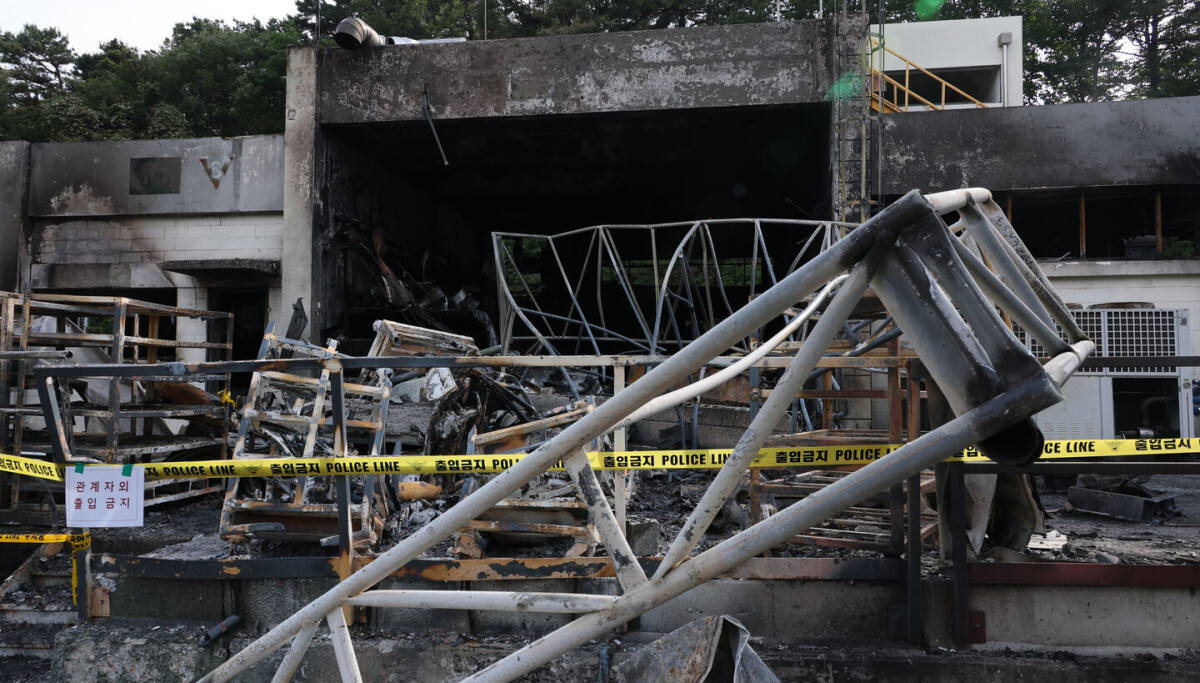
Propellant testing facility explosion in Daejeon, South Korea
- Event
- Korea JoongAng Daily reported that an explosion and fire at Hanwha Aerospace's Daejeon propellant testing facility killed five workers and injured two others during explosives-related cleaning work in Building 56. The cleaning room was almost completely destroyed.
- Risk signal
- The exact cause had not been confirmed. The operational lesson is that cleaning, testing, and support work around propellant materials can become high-consequence before ordinary visual confirmation is useful.
- Business impact
- Fatal worker loss, serious injury, destroyed process space, forensic investigation, political scrutiny, and major interruption around a critical aerospace manufacturing site.
Firecracker manufacturing unit explosion in Pudukottai, India
- Event
- The Hindu reported that a sudden fire ignited firecrackers and stored materials at a country firecracker manufacturing unit near Thirumayam, killing the owner, severely injuring one worker, and leaving two customers with minor injuries.
- Risk signal
- Explosive materials and stored inventory created a fast escalation path. The source described a sudden fire, but the deeper risk is the short time between heat, ignition, blast, and injury in small production spaces.
- Business impact
- Fatality, severe injury, emergency response, police investigation, community panic, and scrutiny of licensed explosive-material operations.
Textile warehouse fire in Embilipitiya, Sri Lanka
- Event
- Ada Derana reported that a fire broke out in a warehouse at a textile factory near Sudupala Bridge in Embilipitiya, hospitalizing about 22 workers with burn injuries or smoke inhalation.
- Risk signal
- The cause was not yet determined. Warehouses with textile, packaging, or other combustible material can create heavy smoke and worker exposure before the event looks large from outside the building.
- Business impact
- Mass worker injuries, hospitalizations, active firefighting response, production disruption, and likely recovery work around stored material.
Semiconductor gas-room fire in Cheongju, South Korea
- Event
- Korea JoongAng Daily reported that a fire started in a sixth-floor gas room at SK hynix's Cheongju Technopolis plant, triggering sprinkler activation, a hydrogen fluoride leak above the local ceiling exposure limit, evacuation of about 3,600 employees, and medical checks for seven workers.
- Risk signal
- A gas room is not just a utility space. Heat, pipe work, toxic gas, ventilation, sensors, and evacuation logic all need to work together when a small event changes the atmosphere.
- Business impact
- Worker exposure concerns, large-scale evacuation, hazardous-material response, production uncertainty, and review of gas-room controls.
Field Note
Support Spaces Need Main-Line Visibility
The weekly pattern points to a familiar blind spot: the room beside the process can carry the highest consequence. Cleaning rooms, gas cabinets, storage aisles, maintenance bays, electrical closets, and warehouse corners may not look like the main production asset, but they can hold the materials and conditions that decide how fast an incident grows.
Three Risk Signals
Temporary work changes the hazard
OSHA's process-safety rule treats operating procedures, safe work practices, contractor work, hot work permits, emergency shutdown, detection, alarms, and interlocks as connected controls. A cleaning or maintenance task can change the risk profile even when production is not the visible activity.
Gas and chemical rooms need layered warning
OSHA highlights detection methodologies that provide early warning of releases, while CSB hot-work guidance calls for effective gas monitoring before and during work around flammable materials. The lesson is broader than hot work: atmosphere, heat, ventilation, and response all need to be visible.
Stored material can turn small heat into worker exposure
Textile, packaging, foam, plastics, fireworks, chemicals, and mixed warehouse inventory can change fire behavior quickly. If detection waits for smoke in an occupied space, the first alarm may already be an evacuation problem.
Technologies That Close The Gap
- Thermal monitoring across support rooms, storage aisles, chemical-adjacent zones, electrical cabinets, motors, and machinery surfaces where abnormal heat can appear before smoke.
- Gas and fire detection layers for toxic, flammable, solvent, battery, refrigeration, or process-gas areas where the first dangerous signal may be atmospheric.
- Escalation workflows for cleaning, maintenance, nights, weekends, and warehouse zones where the right responder may not be standing near the first hot spot.
- PLC or equipment-response handoff for ventilation, shutdown, isolation, suppression, or operator workflows when a critical threshold needs action.
What To Do Next
Give support rooms the same visibility as production.
AVIAN tracks these incidents because the same failure pattern appears across high-risk facilities: heat usually becomes visible before the emergency becomes obvious.
AVIAN T100 thermal monitoring watches critical assets, material zones, and high-risk surfaces continuously. It detects abnormal heat, filters routine industrial activity, alerts the right team, and can connect to PLC workflows when a critical threshold needs action.
Prevention Moves
- 1Map the rooms and support zones where people enter only during checks, cleaning, maintenance, setup, or storage moves: gas rooms, chemical rooms, warehouses, electrical rooms, compressor areas, test cells, and loading spaces.
- 2Treat abnormal heat, gas, and smoke as one response workflow. The useful signal is not only that something is wrong; it is where the event is, who owns the response, and what equipment or area may need isolation.
- 3Review whether the highest-consequence spaces are covered during the times when staffing, visibility, and supervision are weakest.
Questions For Your Site
- Which support rooms or storage zones are not watched continuously?
- Where can cleaning, maintenance, or contractor work create a new heat or gas exposure?
- Which chemicals, textiles, packaging, batteries, electrical cabinets, or process gases can create danger before smoke is obvious?
- Which alarms are noisy enough that teams wait to confirm them before acting?
What's your take?
Which support-space heat risk is easiest to miss at your site: gas rooms, chemical storage, warehouses, electrical cabinets, test cells, or after-hours maintenance?
This Fire Watch edition is based on reviewed public news and registry entries in AVIAN's incident database. It is not a complete record of every industrial fire.