The Industrial Fire Watch / May 9-15, 2026
When Stored Fuel Turns a Work Area Into a Major Loss
A weekly Fire Watch briefing on high-consequence industrial fires where storage, maintenance, process heat, and ignition control shaped the outcome.
What To Know
AVIAN tracked 26 high-impact mixed industrial storage, maintenance, and process-site fires and explosions from May 9 to May 15, 2026. The focused source set included 59 reported injuries and all 3 reported fatalities.
The highest-impact events came from mixed industrial storage, maintenance, and process sites. Together, those incidents included 59 injuries and all 3 reported fatalities, cutting across storage yards, warehouses, process maintenance, textiles, plastics, refineries, factories, and mixed industrial sites.
For facility leaders, EHS teams, maintenance groups, and insurers, the practical question is whether stored fuel, hot work, hazardous material, electrical equipment, and emergency response paths are visible enough before one work area becomes a mass-casualty or multi-asset loss.
26
Incidents
16
Countries
59
Injuries
3
Fatalities
Key Incidents
Firecracker factory explosion in Tonk Kalan, India
- Event
- The Times of India reported that an explosion and fire at an alleged illegal firecracker factory in Tonk Kalan killed at least three workers and injured 23 others. Reports said the blast occurred in a small room where workers were handling gunpowder-related work.
- Risk signal
- The exact cause was still under assessment, but the incident involved energetic material handling, extreme heat concerns, and reported questions about fire safety controls. This is the kind of work area where ignition control, housekeeping, ventilation, and response readiness cannot be informal.
- Business impact
- Fatalities, critical injuries, emergency response, investigation, and likely enforcement scrutiny around fire-safety practices and hazardous-material handling.
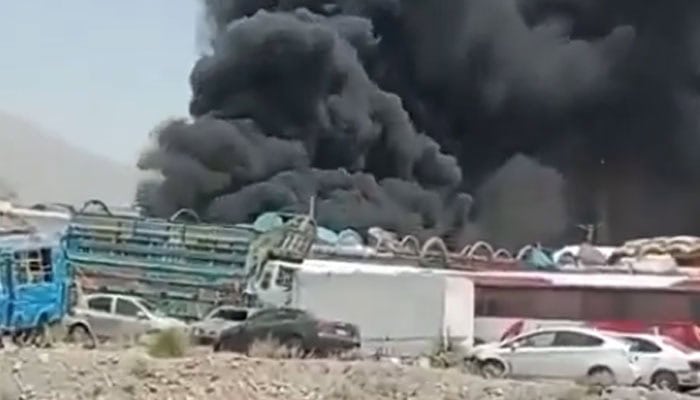
Customs warehouse fire near Lakpass, Pakistan
- Event
- Daily Pakistan reported that a fire at a Pakistan Customs warehouse near Lakpass injured 35 people and destroyed more than 100 vehicles. The warehouse stored LPG cylinders, fuel, chemicals, tires, dried fruit, clothes, and other materials, and multiple explosions occurred as the fire developed.
- Risk signal
- The fire shows how mixed storage can turn one incident into several hazards at once: cylinders, fuel, chemicals, rubber, vehicles, and combustible goods all change the response profile.
- Business impact
- Dozens injured, more than 100 vehicles destroyed, prolonged firefighting, temporary highway disruption, and major asset loss in a storage environment.
Maintenance explosion at Teisseire in Crolles, France
- Event
- France 3 reported that a truck carrying hazardous materials exploded during maintenance at the Teisseire syrup production site in Crolles. Ten people were injured, including two seriously, and 74 firefighters were deployed, including chemical-risk and decontamination units.
- Risk signal
- Maintenance work can temporarily change the risk profile of a site. A task that is not part of normal production may bring different materials, contractors, vehicles, isolation steps, and ignition sources into the same zone.
- Business impact
- Serious injuries, road closures, specialist emergency response, site disruption, and renewed attention on maintenance controls around hazardous materials.
Lithium battery explosion in McDonald, Tennessee
- Event
- NewsChannel 9 reported that two workers suffered severe burns after a lithium battery explosion at the Amaero Advanced Materials & Manufacturing plant on Innovation Drive in Bradley County.
- Risk signal
- Battery-related work brings concentrated energy into production and material-handling areas. When cells, packs, or battery materials fail, the event can escalate quickly and demand a different response than ordinary combustibles.
- Business impact
- Severe worker injuries, emergency medical response, investigation, and operational scrutiny around battery handling and process safeguards.
Field Note
Impact Often Comes From What Is Stored Beside the Work
The May 9-15 window was not one-industry story. It was a layout and control story. The most severe incidents came from places where hazardous material, stored goods, vehicles, maintenance work, process equipment, or energetic material were close enough for one event to multiply.
Three Risk Signals
Mixed storage changes the fire
LPG cylinders, fuel, tires, vehicles, textiles, plastics, packaging, and chemicals do not behave like one fuel package. A site inventory should tell responders what can burn, explode, off-gas, or block access.
Maintenance changes normal controls
OSHA fire-prevention planning requires identifying major fire hazards, hazardous-material handling and storage procedures, ignition-source controls, and safeguards on heat-producing equipment. Maintenance work often rearranges those assumptions.
Small heat can become a response problem
A hot production element, electrical fault, battery event, or equipment fire can be manageable early. It becomes harder when it reaches stored material, roof structures, vehicles, or process areas before anyone sees it.
Technologies That Close The Gap
- Thermal monitoring over storage zones, loading areas, process equipment, electrical cabinets, and high-value assets.
- Smart alarm filtering that separates normal process heat, vehicles, sunlight, and maintenance activity from abnormal hot spots.
- Escalation workflows that route after-hours and maintenance-period alarms to the right team before smoke or explosions drive the response.
- PLC or control-system handoff for equipment zones where abnormal heat should trigger shutdown, isolation, or a defined operator response.
What To Do Next
Find the fuel beside the heat source.
Heat becomes measurable before smoke becomes obvious.
AVIAN T100 watches critical assets and material zones continuously, filters routine industrial activity, and alerts the right team when abnormal heat needs action.
Prevention Moves
- 1Walk the site by hazard adjacency, not only by department. Identify where hot work, electrical equipment, process heat, vehicles, pallets, chemicals, cylinders, batteries, tires, packaging, or textiles sit close together.
- 2Treat maintenance windows as temporary risk states. Confirm who owns isolation, monitoring, alarm routing, and stop-work authority when the normal process layout changes.
- 3Review whether emergency responders would know what is stored in each high-risk zone before they arrive, not after the first explosion or smoke warning.
Questions For Your Site
- Which storage or maintenance areas combine heat sources with high fuel load?
- Which assets would turn a small equipment fire into a multi-building or multi-vehicle loss?
- Where can abnormal heat build after hours without anyone seeing it?
- Which alarms are specific enough to tell your team what zone is heating and what action is expected?
What's your take?
Which hidden adjacency creates the highest fire risk at your site: hot work, electrical equipment, stored goods, batteries, vehicles, chemicals, or after-hours maintenance?
This Fire Watch edition is based on reviewed public news and registry entries in AVIAN's incident database. It is not a complete record of every industrial fire.