The Industrial Fire Watch / May 12-18, 2026
Can Your Site See Heat Before the Smoke Reaches the City?
A field report focused on hidden heat risk in recycling and waste operations.
What To Know
AVIAN tracked 13 Recycling & Waste fire and explosion incidents from May 12 to May 18, 2026. The focused source set included 5 reported injuries and no reported fatalities.
The clearest pattern was Recycling & Waste, with 13 incidents involving scrap yards, plastics recycling, e-scrap, salvage operations, and mixed material streams.
For facility managers, EHS leaders, maintenance teams, and insurers, the question is simple: can your site see abnormal heat early enough to act before smoke, evacuation, or a full emergency response?
13
Incidents
7
Countries
5
Injuries
Key Incidents
Recycling & Waste facility fire in Cordoba, Spain
- Event
- A fire broke out at a plastics recycling plant in the Las Quemadas industrial estate. Five people were treated for smoke inhalation, and the fire affected the roof and machinery.
- Risk signal
- Reported cause not confirmed. The risk category is mixed-material recycling exposure, where plastics, batteries, residue, equipment heat, and storage conditions can combine quickly.
- Business impact
- Worker health impact, machinery damage, roof damage, and operational disruption.
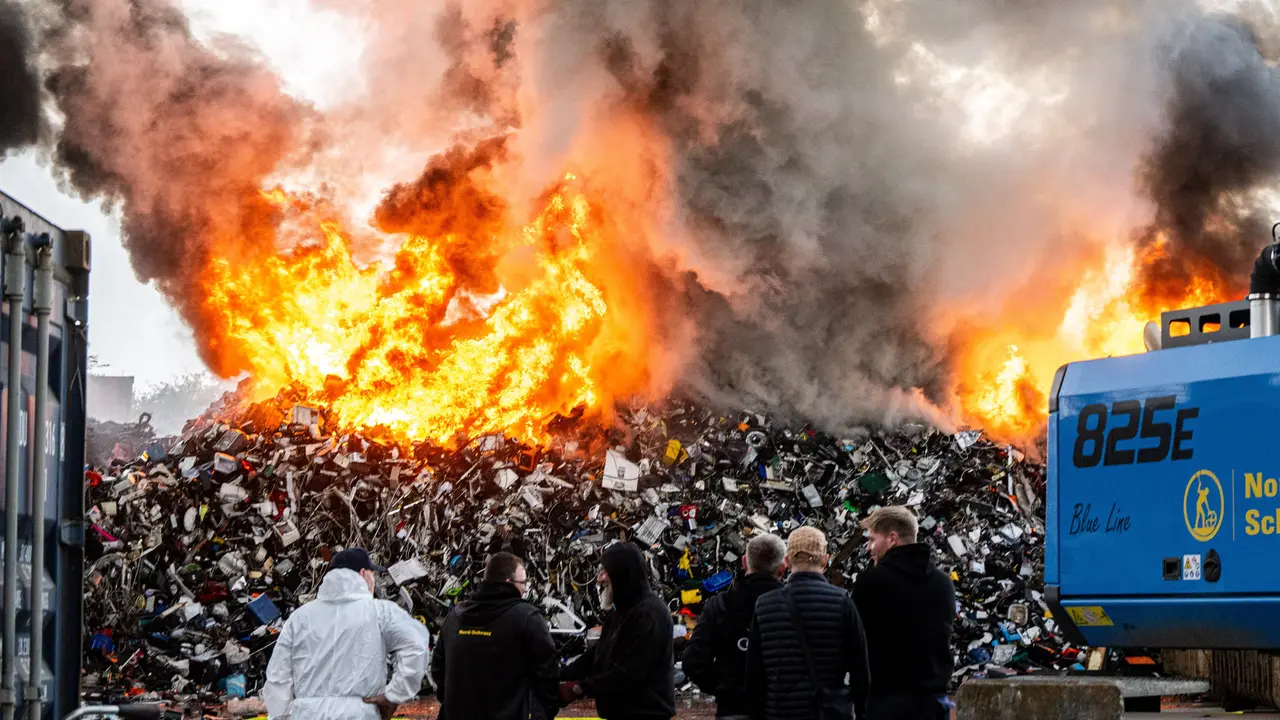
Recycling & Waste fire in Flensburg, Germany
- Event
- About 100 firefighters responded after an electronic scrap pile burned at Nord-Schrott, creating a visible smoke column and odor across the city.
- Risk signal
- E-scrap pile heat or battery/material contamination risk. The reported cause was not confirmed, but the material stream itself is a known hidden-heat concern.
- Business impact
- Major emergency response, public smoke impact, and site disruption.
Paper-processing fire at Bongaerts Recycling in Belgium
- Event
- A heavy fire broke out in a paper storage and processing hall at Bongaerts Recycling, requiring firefighters to remove about 100 tons of paper to extinguish the fire.
- Risk signal
- Stored paper and processing-hall heat exposure. Dense recyclable material can hold heat, limit access, and extend overhaul even when the first visible flame is contained.
- Business impact
- Major fire response, prolonged removal work, damaged storage or processing space, and likely interruption to paper handling.
Landfill fire near Ladybank, Scotland
- Event
- A huge fire burned through the night at the Lower Melville Wood Landfill Site, drawing twelve fire engines and specialist resources while residents were advised to keep windows and doors closed.
- Risk signal
- Landfill and waste-pile heat exposure. Deep-seated material fires can stay active after surface flames are reduced and can create smoke risk beyond the site boundary.
- Business impact
- Overnight emergency response, public smoke advisory, specialist equipment deployment, and disruption to waste-site operations.
Field Note
Recycling & Waste: The Hidden Heat Problem
Recycling fires are rarely caused by one clean failure mode. Mixed material, batteries, e-scrap, hot loads, equipment heat, and outdoor storage can all create heat before anyone sees smoke.
Three Risk Signals
Mixed streams change risk every hour
A load that looked normal at intake can contain batteries, damaged electronics, hot scrap, or contaminated material. The risk profile changes as material is tipped, moved, shredded, baled, or stored.
Piles and conveyors need continuous coverage
The useful warning is often a small heat rise in a pile, conveyor zone, bearing, motor, or processing area. Manual rounds can miss it, especially after hours or when the material is still shifting internally.
False alarms train teams to wait
Forklifts, loaders, welding, sunlight, and hot engines are normal sources of heat in recycling yards. Detection only helps if it can filter routine activity and escalate the abnormal heat that needs action.
Technologies That Close The Gap
- Thermal monitoring over tipping floors, storage piles, conveyors, battery-risk zones, and e-scrap areas.
- Smart filtering that ignores normal forklift and loader heat without becoming blind to real hotspots.
- Escalation schedules for nights, weekends, and unattended storage areas.
- PLC or suppression handoff for zones where the response needs to be immediate.
What To Do Next
Find heat before it becomes smoke.
Heat becomes measurable before smoke becomes obvious.
AVIAN T100 watches critical assets and material zones continuously, filters routine heat, and alerts the right team when action is needed.
Prevention Moves
- 1Changing recycling streams hide heat. Scrap, e-waste, plastics, batteries, tires, bales, and outdoor piles can all carry a developing event.
- 2Measure heat where material sits, moves, or gets processed. Waiting for smoke is waiting too long.
- 3Detection needs a response path: filter normal equipment heat, escalate after hours, and hand off abnormal heat clearly.
What's your take?
Which recycling heat risk is easiest to miss in your facility: e-scrap, batteries, outdoor piles, conveyors, bales, or after-hours storage?
This Fire Watch edition is based on reviewed public news and registry entries in AVIAN's incident database. It is not a complete record of every industrial fire.