Back
2026-02-26/Drew Hanover
The Hidden ROI of Thermal Monitoring: How Mills Recover Their Investment in 90 Days
Every mill manager knows downtime is expensive. But most underestimate just how expensive.
We've worked with dozens of facilities across North America and Europe. The pattern is always the same. A bearing seizes. A motor overheats. A fire breaks out in a dust collector at 2AM. Production stops. The real costs start piling up.
And they pile up fast.
The Real Cost of Unplanned Downtime
When a planer goes down unexpectedly, the direct costs are obvious. Repair parts. Emergency labor. Lost board feet.
But the indirect costs are where the damage multiplies.
- Overtime wages to make up lost production
- Missed shipments that erode customer trust
- Rushed repairs that create new problems
- Insurance premium increases after fire incidents
- Regulatory scrutiny following safety events
Our customers report an average of $30,000 saved for each hour of downtime prevented. That's not a theoretical number. That's real money from real mills running real production schedules.
One hour. Thirty thousand dollars. And most unplanned shutdowns last far longer than an hour.
The 3-Month Payback
Here's what surprises most people: thermal monitoring doesn't take years to justify. It takes weeks.
Across our customer base, the average payback period is 3 months. Some mills see it faster. One customer in British Columbia prevented a catastrophic dust shed fire in their first week of installation. That single event would have cost more than 10 years of monitoring.
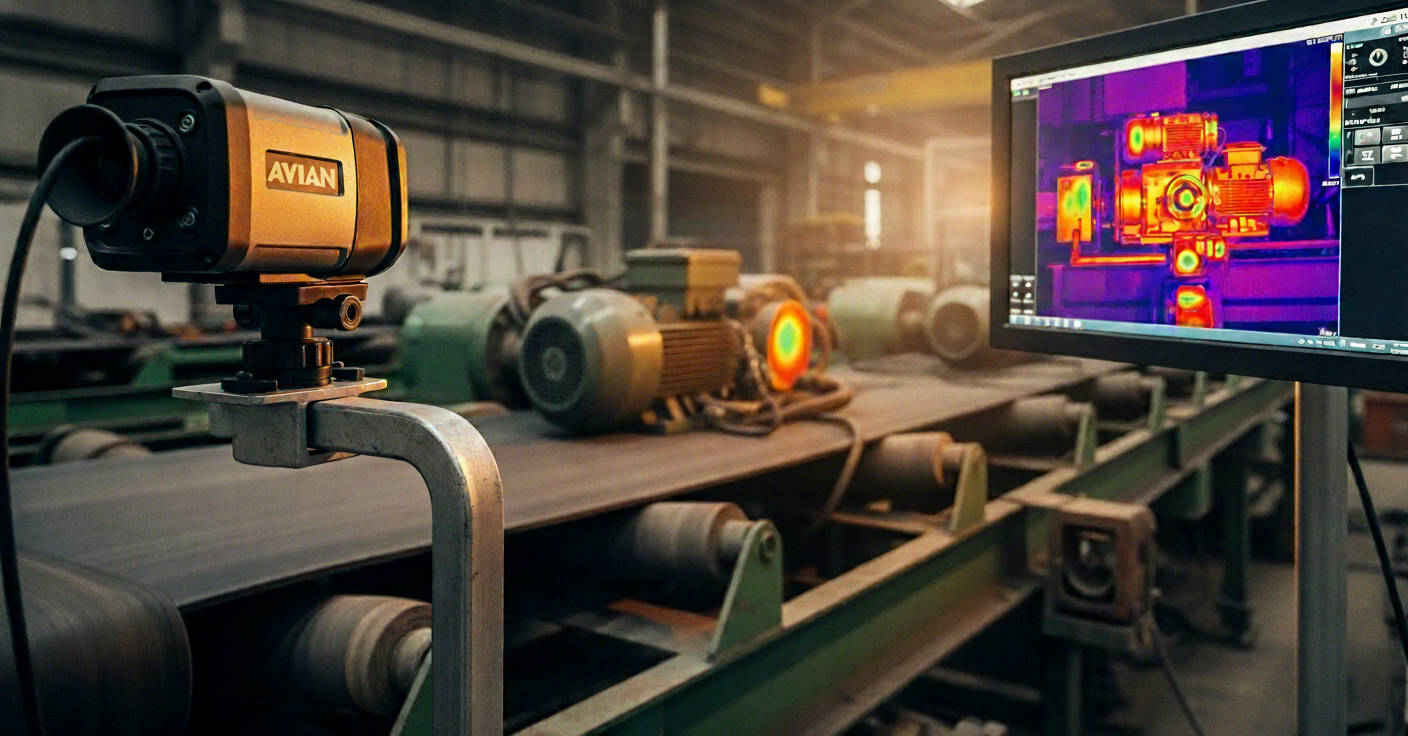
The math is straightforward. A single AVIAN camera monitors an entire production zone. It runs 24/7. It doesn't take breaks. It doesn't miss the subtle temperature rise on a roller bearing at 3AM that a night-shift operator would never notice.
When that camera catches one failure before it becomes catastrophic, the system has already paid for itself.
What "Prevention" Actually Looks Like in Dollars
Let's break this down with real scenarios from our installations.
Scenario 1: Bearing failure on a planer feed roller.
A bearing starts running hot on a Tuesday afternoon. Without monitoring, it seizes overnight. Morning crew arrives to a locked-up roller, damaged shaft, and a 6-hour repair.
Cost without AVIAN: ~$15,000 in parts and lost production.
Cost with AVIAN: A $200 bearing replacement during a scheduled break. Zero downtime.
Scenario 2: Ember in a dust extraction system.
A stuck board creates friction. An ember enters the ductwork. Without monitoring, it smolders until ignition. Fire suppression activates — if you're lucky.
Cost without AVIAN: $50,000 to $500,000+ depending on severity. Potential total facility loss.
Cost with AVIAN: An alert, an inspection, and a 10-minute cleanup. Zero downtime.
Scenario 3: Motor degradation on a conveyor.
A drive motor slowly overheats over two weeks. Traditional maintenance schedules wouldn't catch it until the next quarterly inspection — by which point the motor is destroyed and the conveyor is offline for days.
Cost without AVIAN: $8,000+ for motor replacement plus 12+ hours of unplanned downtime.
Cost with AVIAN: A planned motor swap during the next scheduled maintenance window. Minimal impact.
The Insurance Angle Most People Miss
Here's something we don't talk about enough: insurance.
Fire insurance premiums for sawmills and wood processing facilities have skyrocketed over the past decade. Many facilities are seeing 20-40% annual increases. Some are struggling to get coverage at all.
Our system changes that conversation.
We've seen insurance providers in Switzerland, France, and across North America become significantly more receptive to negotiations when AVIAN is installed. Some have fully approved our solution for fire prevention and risk minimization. That's not just peace of mind. That's a direct, measurable reduction in your annual operating costs.
When you factor in potential insurance savings alongside prevented downtime, the ROI calculation becomes almost absurd in how quickly it pays off.
80% of Customers Save 1+ Hours of Downtime in Their First 2 Months
That's not a marketing number we invented. It's what actually happens.
Within the first 60 days, 80% of our customers have already prevented at least one hour of unplanned downtime. Many prevent significantly more.
Why so fast? Because most facilities have problems they don't even know about. Hidden hotspots. Gradual bearing degradation. Misaligned belts creating friction. Motors running hotter than they should.
When we install cameras and start monitoring, customers are often shocked at what we find. Not because their facilities are poorly run — but because these issues are invisible to the human eye.
That's our tagline for a reason: See what others can't.
The Cost of Waiting
The biggest cost isn't the system. It's the time you spend without it.
Every week without monitoring is another week where a $200 bearing failure can become a $15,000 emergency. Another week where an ember can travel through your ductwork undetected. Another week where your insurance premiums keep climbing without the data to push back.
We've made the decision easy. Our system installs in minutes — one cable, plug it in, and you're live. No complex integration. No weeks of downtime for installation.
The ROI starts the moment the camera powers on.
If you're running a mill, a recycling facility, or any operation with heat-critical equipment, the question isn't whether thermal monitoring will pay for itself.
It's how much you're losing every day without it.
Interested in seeing the numbers for your specific operation? Reach out to our team and we'll walk you through a tailored ROI analysis.
Drew Hanover
CTO & Co-Founder