Back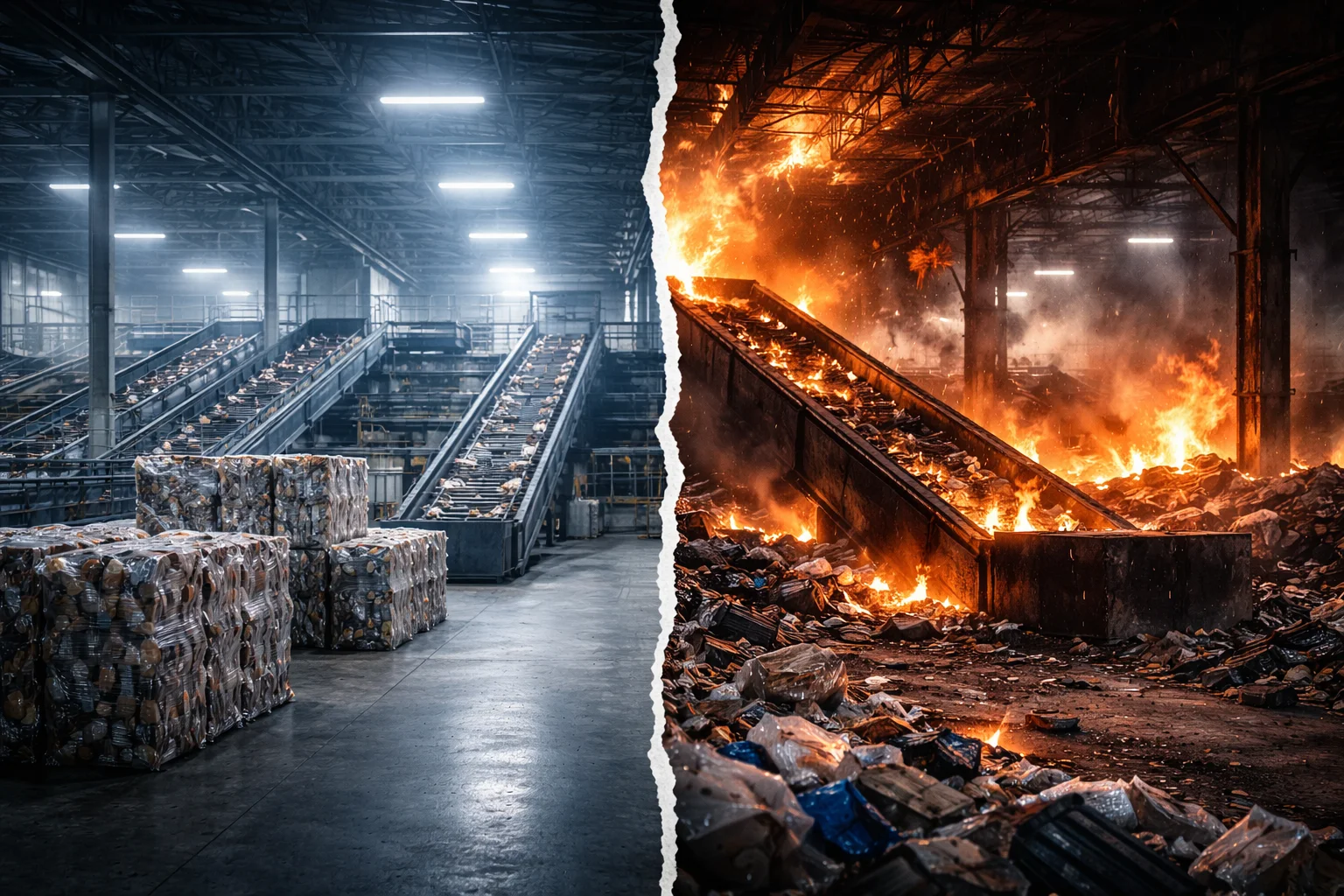
2026-02-24/Dom knull
The Recycling Insurance Crisis: Why Your Next Fire Could Cost You More Than Your Facility
If you run a recycling or waste processing facility, your insurance renewal letter has probably given you a heart attack recently.
Premiums for MRFs have increased 10 to 50 times over the past several years. Facilities that once paid $0.15 per hundred dollars of insured value are now seeing rates as high as $10 per hundred. Some operators have been dropped entirely. Others can't find a carrier willing to write a policy at any price.
This isn't a market fluctuation. It's a structural shift. And the facilities that don't adapt are going to find themselves uninsurable.
What Changed
The math changed. It's that simple.
From 2016 to 2024, publicly reported fires at recycling and waste facilities jumped 58%, from 272 to 430. The average MRF experiences over 18 fires per year. More than 1% of MRFs suffer a catastrophic loss annually, averaging $22 million in damage per event.
Insurers aren't charities. When one in a hundred facilities burns catastrophically every year, premiums go up. When the frequency keeps climbing, carriers start leaving the market altogether.
The root cause is well documented: lithium-ion batteries entering waste streams. Disposable vapes, old electronics, damaged battery packs — they get crushed and punctured during processing, triggering thermal runaway in facilities packed with paper, cardboard, and plastic. It's an ignition source inside a tinderbox, and it arrives on every truck.
But here's what matters for your insurance conversation: carriers don't care why facilities are burning. They care whether yours has the controls to prevent it.
The New Requirements
Insurance underwriters have fundamentally changed how they evaluate recycling facilities. It's no longer about your loss history and your square footage. It's about your fire prevention infrastructure.
Here's what carriers now want to see before they'll write or renew a policy:
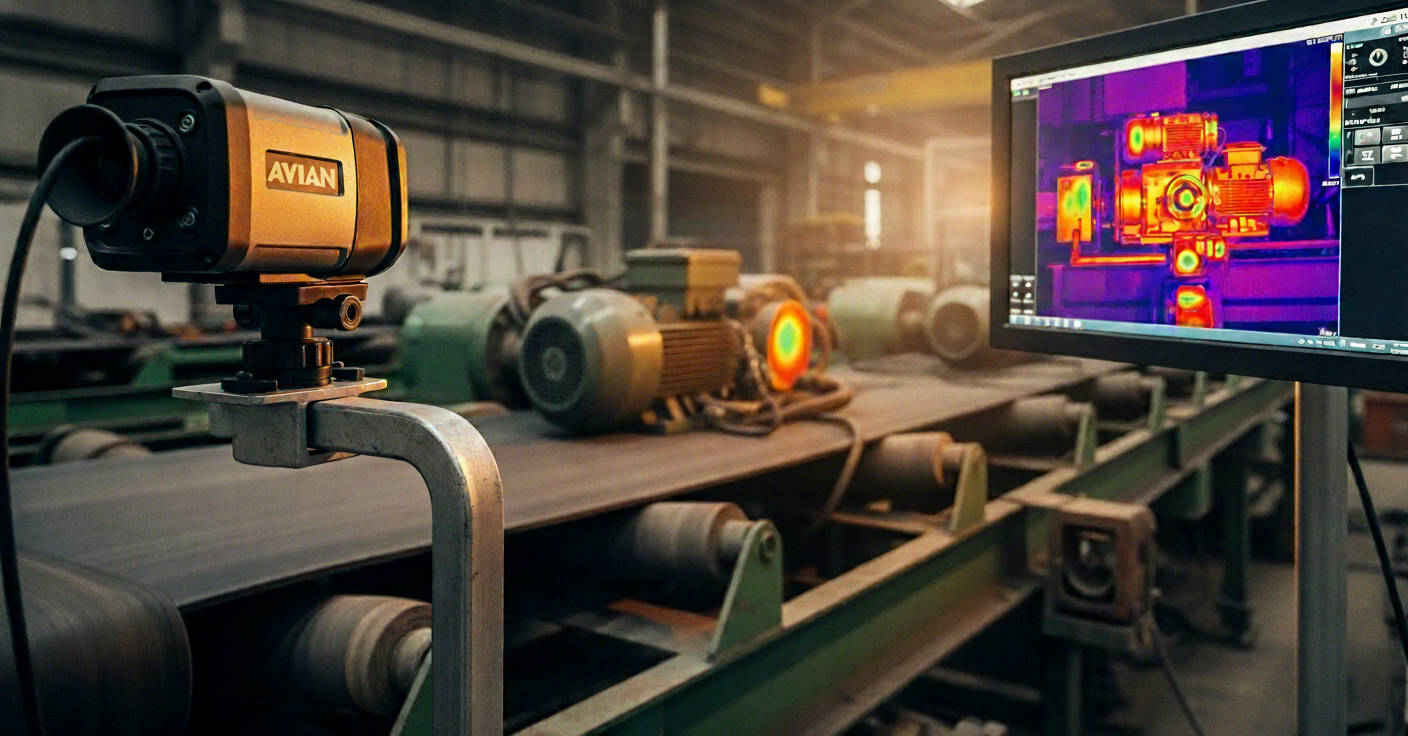
Engineered fire detection systems. Not just smoke detectors and sprinklers — those are table stakes. Insurers want early detection technology that identifies fire risks before ignition. Thermal imaging, AI-powered monitoring, and automated alerting systems are increasingly expected, not optional.
Automated suppression integration. Detection systems need to connect to response systems. Can your fire detection trigger sprinklers, conveyor shutdowns, or diversion gates automatically? If the answer is "no, someone has to notice and respond manually," that's a gap underwriters will flag.
Documented protocols. Written fire response plans. Staff training records. Incident logs showing that events were detected, responded to, and resolved. Insurers want evidence that your facility operates with discipline, not just equipment.
Proof of monitoring coverage. Which zones are monitored? What's the response time? Is there 24/7 coverage, or do gaps exist during nights and weekends? Unmonitored hours are uninsured hours in an underwriter's eyes.
The Facilities That Are Winning
Not everyone is struggling. Some recycling operators have turned fire prevention from a cost center into a negotiating advantage.
We've seen it firsthand with our customers. When AVIAN is installed and operational, the insurance conversation changes from defensive to proactive.
Here's why: our system gives underwriters exactly what they're asking for.
Continuous thermal monitoring. Every zone covered by an AVIAN camera is monitored 24/7/365. That includes nights, weekends, and holidays — the periods underwriters worry about most. There are no gaps.
Pre-ignition detection. AVIAN doesn't wait for smoke or flames. Our thermal cameras detect the heat signature of thermal runaway, smoldering material, and equipment overheating before combustion begins. That's a fundamentally different risk profile than a facility relying on smoke detectors.
Automated response. Our system integrates with PLCs to trigger conveyor shutdowns, diversion gates, and suppression systems automatically. No human delay. No reliance on someone being near a monitor at 3AM.
Complete event documentation. Every thermal event AVIAN detects is logged with timestamps, thermal imagery, alert records, and response actions. When your insurance renewal comes around, you have a documented track record of fire prevention — not just a promise that your systems work.
Some operators who have invested in detection and suppression technology have negotiated premium reductions worth up to five times the cost of their fire prevention systems. The system pays for itself before it prevents a single fire — just through insurance savings.
The Cost of Inaction
Let's be direct about what happens to facilities that don't invest in fire prevention technology.
Premiums keep climbing. Without engineered controls, your facility falls into the highest risk category. Expect 15-20% annual increases at minimum, and significantly more if you've had any claims.
Coverage gets restricted. Higher deductibles. More exclusions. Lower coverage limits. Your policy might technically exist, but it may not cover what you actually need when a fire occurs.
Coverage gets denied. This is already happening. Carriers are leaving the recycling market. Facilities without fire prevention infrastructure are the first to lose coverage. Operating without insurance isn't just risky — in many jurisdictions, it's not an option.
A fire becomes existential. When a catastrophic fire hits an uninsured or underinsured facility, the business may not survive. $22 million in damage doesn't just destroy a building. It destroys companies.
Prevention as a Business Strategy
We talk to a lot of recycling operators who think of fire prevention as a safety expense. It is. But it's also one of the highest-ROI investments you can make in your business.
The math works like this:
An AVIAN thermal monitoring system covers your critical zones — tipping floor, sorting lines, conveyors, bale storage, outdoor yards. It costs a fraction of what a single catastrophic fire would cost. It operates continuously without additional staffing.
That system does three things simultaneously:
-
Prevents fires.Thermal runaway, smoldering material, and equipment failures are detected and addressed before ignition. This is the obvious one.
-
Reduces insurance costs.Documented, engineered fire prevention gives your broker and underwriter concrete evidence that your facility is a better risk. Premium reductions often exceed the cost of the system.
-
Protects insurability.In a market where carriers are leaving and requirements are tightening, having thermal monitoring isn't just about getting a better rate. It's about getting a policy at all.
What We've Seen Work
We've deployed AVIAN across recycling facilities with drastically different layouts and material streams. There's no standard configuration — we build the monitoring plan around your operation.
What's consistent is the result. Facilities that install continuous thermal monitoring shift from reactive to proactive. They catch issues before they become fires. They walk into insurance renewals with data instead of hope. And they sleep better at night — literally — because the cameras don't go home at 5PM.
If your insurance situation is getting uncomfortable, it's not going to get better on its own. The fire frequency is still climbing. The requirements are still tightening. The carriers who remain want proof that you've invested in prevention.
The question isn't whether you can afford thermal monitoring. It's whether you can afford another renewal without it.
Want to understand how AVIAN can impact your insurance situation? Contact our team for a facility assessment and we'll help you build the case for your underwriter.
Neb Brennan