Back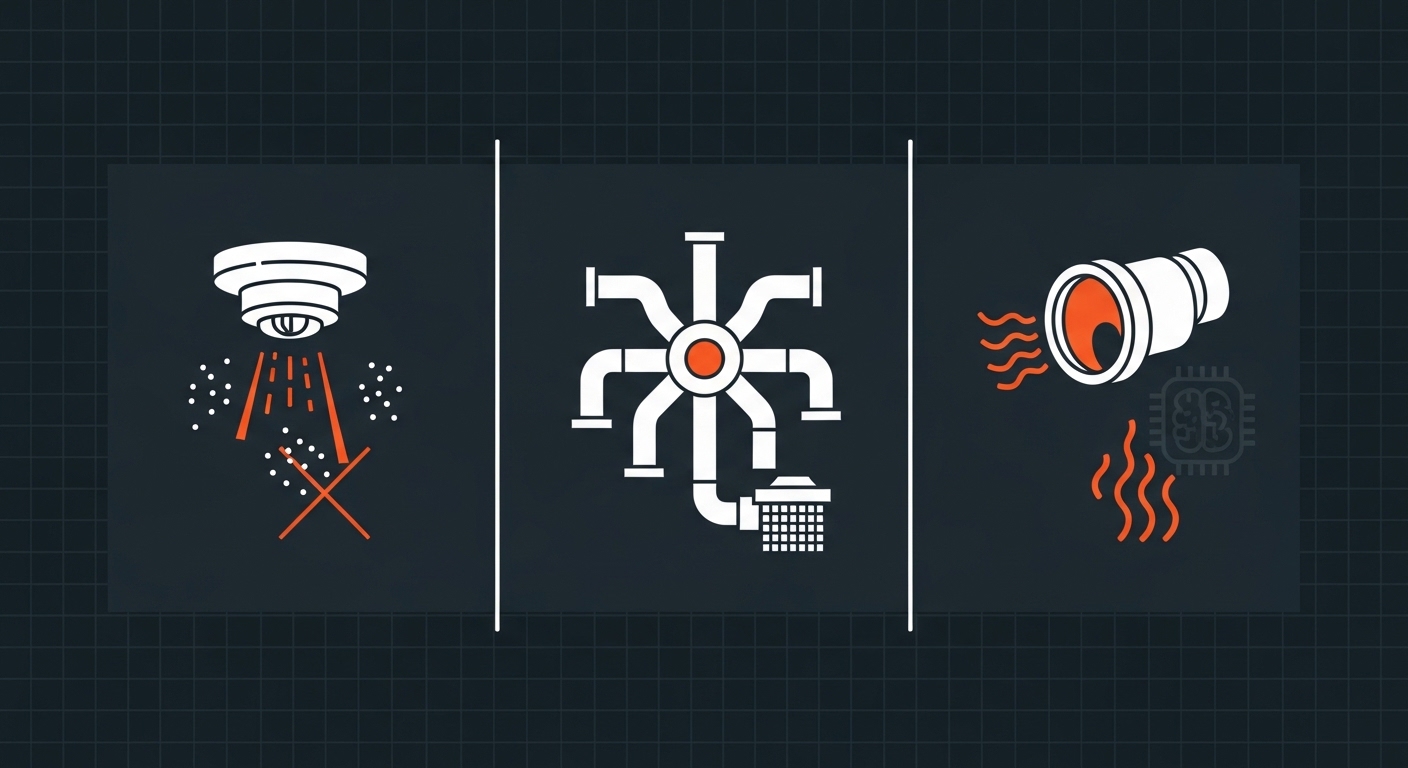
2026-02-17/Drew Hanover
When Dust Fights Your Smoke Detection — and What Infrared Monitoring Changes
Smoke detectors save lives. In a clean office, they do exactly what you expect.
In a dusty plant, the story gets harder.
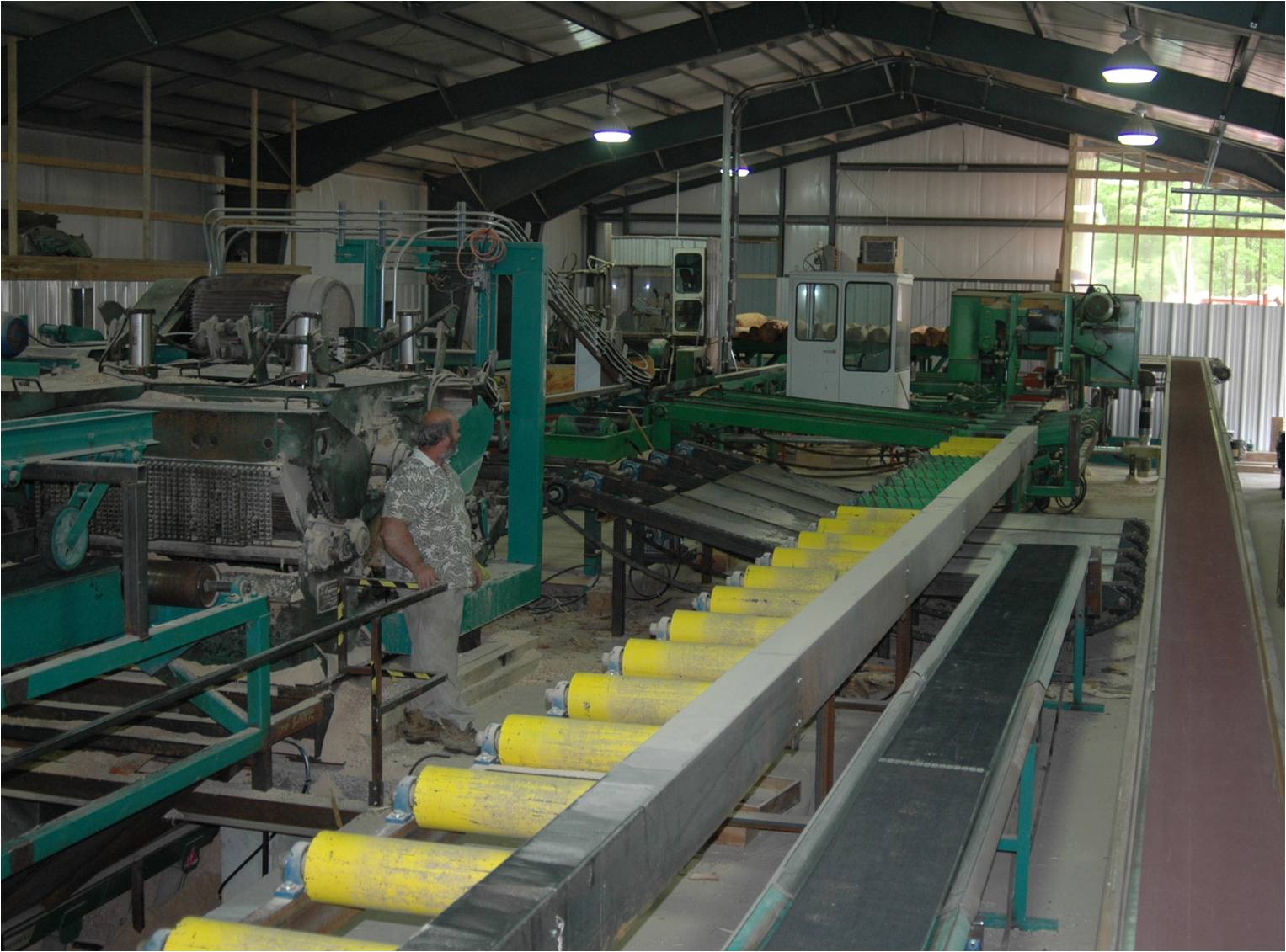
Sawmills, recycling lines, grain handling, and bulk material plants all share the same problem: the air is not empty. Fine particles float, settle, and get kicked back into suspension every time a conveyor runs or a door opens. That environment stresses every system that tries to “see” smoke by sampling air or scattering light through it.
Why smoke and aspirating systems struggle in dust
Point smoke detectors and beam detectors both depend on a clear signal path. Dust loads the air. It can scatter light and trigger nuisance alarms. It can also coat optics and chambers until sensitivity drifts. Maintenance teams respond with cleaning schedules, covers, and careful placement. Those fixes help. They do not remove the underlying conflict: the detector is trying to spot a small change in particle behavior inside an already particle-heavy space.
Aspirating systems add sophistication. They pull air through a pipe network to a central detector. Filters and algorithms separate some nuisance sources. In heavy dust, the cost still shows up: filter loading, pipe deposition, more frequent service, and tuning that balances false trips against slower response. The system is better than a single spot device. It is still fighting the same medium.
None of this means you should rip out code-compliant fire detection. It means you should be honest about what each technology is built to catch — and what it is built to tolerate.
A different physics: heat before smoke
Many industrial fires start as slow thermal events: a hot bearing, a misaligned belt, friction on a roller, material buildup near a motor. In those cases, temperature moves first. Visible smoke may arrive later — or not in a way that reaches a ceiling detector quickly in a tall, turbulent space.
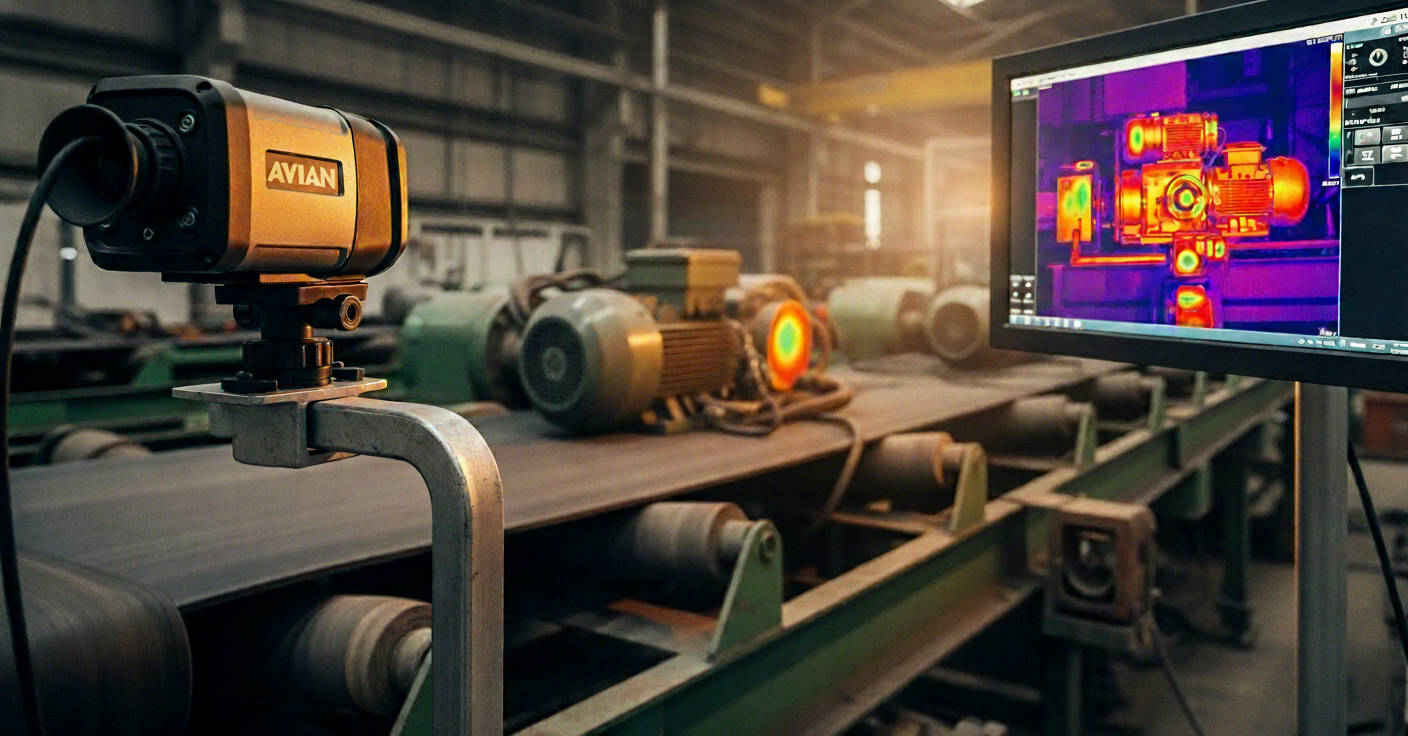
Fixed infrared monitoring watches surface temperature over time. It is not trying to classify dust as smoke. It is looking for sustained abnormal heat in places where mechanical failure turns into ignition risk.
That matters in dust for three practical reasons.
Dust does not blind a thermal camera the way it blinds an optical smoke path. Particles in the air are still a problem for people and equipment, but the dominant failure mode is different. You are measuring radiated heat from solid surfaces, not asking a light beam to prove a clean line of sight through the plenum.
Coverage is continuous. Instead of a point sample at the ceiling or a routed pipe run, you can watch entire machine zones. You choose regions of interest — bearings, motors, hydraulic packs — and track them on every frame.
Software can separate signal from noise. Raw temperature numbers are not enough in a busy plant. Models trained on real industrial scenes learn the difference between a forklift passing through the frame and a bearing that keeps climbing across shifts. The goal is the same as with aspirating filtration: fewer false trips without hiding real risk.
Layered safety, not a replacement narrative
The point is not to replace smoke detection with cameras. Codes, insurers, and your own emergency plans still expect established fire alarm strategies.
The point is to add an early layer that matches how fires actually start in process environments — and to reduce the blind spots that dust creates for systems that depend on clean air and clear optics.
If your plant lives with perpetual dust, ask a blunt question: where are you discovering heat today — before smoke, or after?
At AVIAN, we build fixed thermal monitoring with analytics meant for real floors: forklifts, steam, seasonal changes, and equipment that runs hot by design. When the air is thick and the ceiling is far, that is often the difference between catching a thermal precursor and reading about it in an incident report.
Regards,
Drew Hanover
CTO & Co-Founder