Back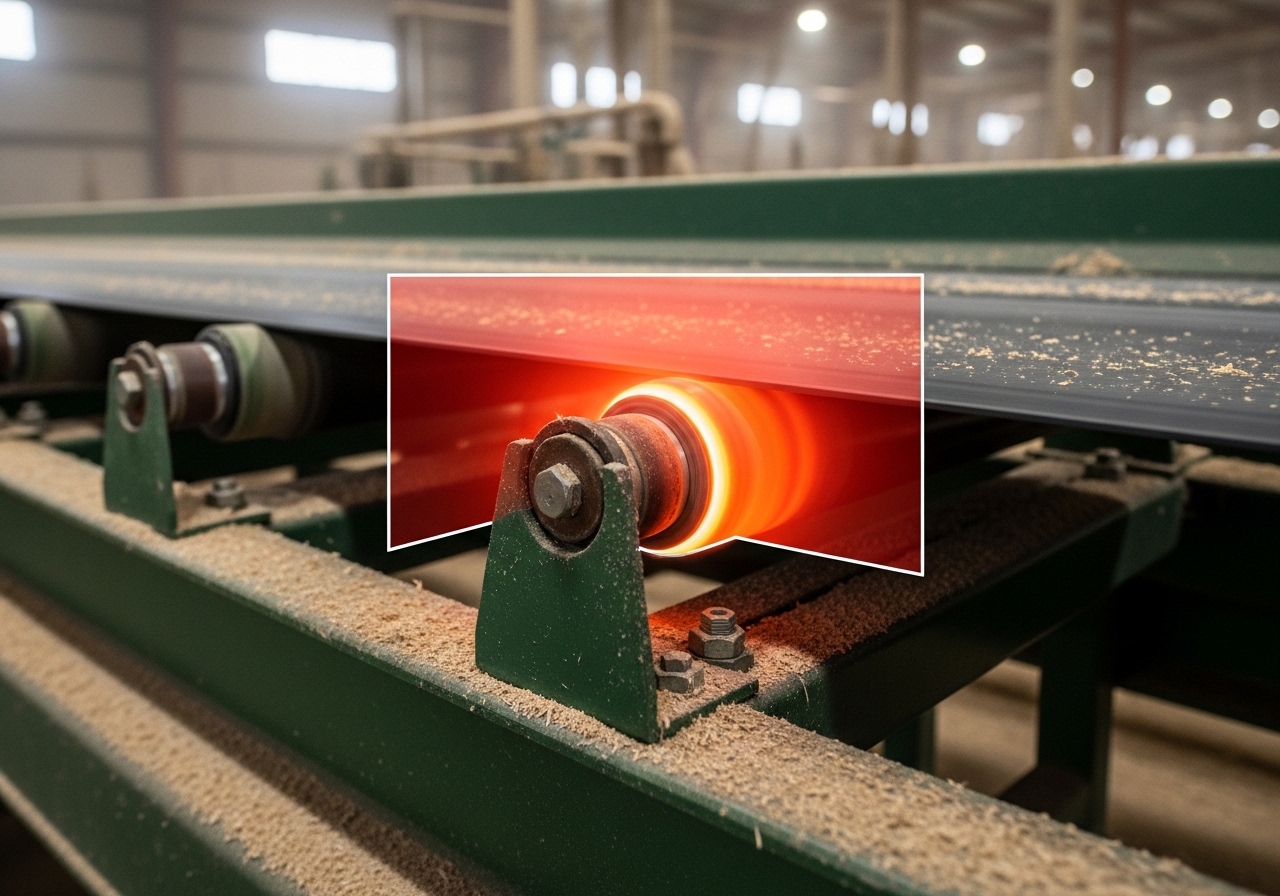
2026-04-07/Drew Hanover
Misaligned Belts Cost Thousands. Infrared Monitoring Catches Rubbing Early
A belt that walks off-center does not fail all at once. It rubs. Idlers run hot. The edge wears. Then you are buying new belting, paying overtime, and explaining lost output to the people upstairs.
The good news is that friction shows up as heat before it shows up as a torn belt. And heat is exactly what infrared cameras are built to see.
What belting actually costs
There is no single sticker price for conveyor belting. Width, ply count, oil resistance, heat rating, and splice work all change the number. A 2025 market overview from ELASN puts the range roughly like this:
- Standard rubber belts: $8 to $20 per meter
- Oil-resistant grades: $12 to $28 per meter
- Heavy-duty industrial belts: $25 to $60 per meter
Those are material costs only. One and Done Prep's per-foot breakdown shows that total installed cost climbs fast once you add the structure, drives, and labor on a long run.
A long mainline conveyor in a sawmill or recycling plant is not one belt. It is thousands of dollars in rubber before you count the weekend crew and the lost shift.
The failure pattern everyone recognizes too late
Belt misalignment does not announce itself. The sequence is usually the same:
- Belt starts tracking slightly to one side
- The edge contacts a skirt board or idler flange
- Friction builds heat at the contact point
- The edge degrades, then splits
- The belt stops running or requires emergency splicing
By step four, the problem has been burning for hours or days. A walk-down inspection would have to be perfectly timed to catch it early.
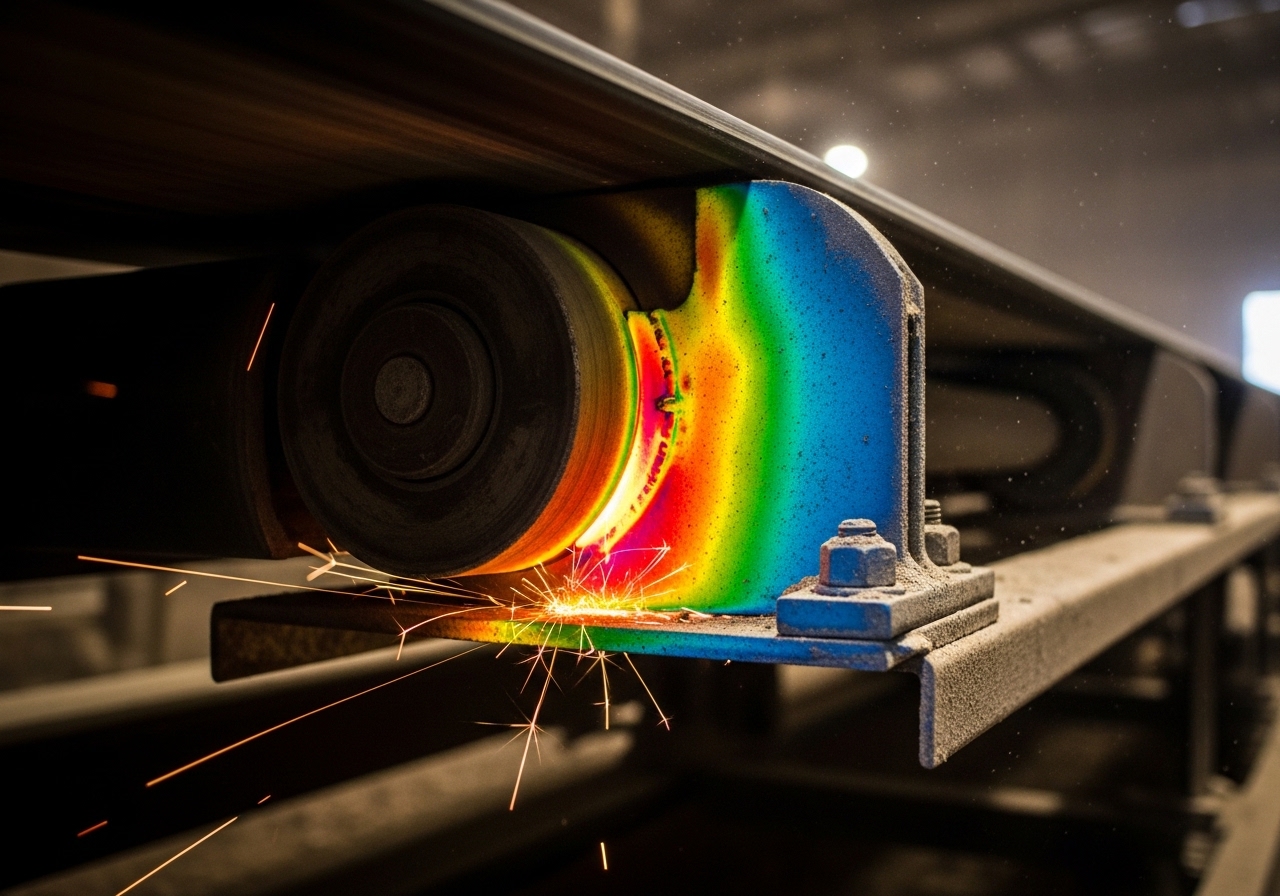
Infrared view of a dragging idler. The heat signature at the belt edge shows up long before there is visible damage.
Why infrared works here
When a belt rubs a skirt or an idler starts to drag, mechanical energy becomes heat. That is physics. Infrared cameras read that heat continuously.
A 2024 open-access study in PLOS ONE used thermal infrared imaging to detect roller and idler faults in coal mine conveyors. The researchers found that bearing drag and sticking idlers produced clear thermal signatures well before mechanical failure. Similar work published in MDPI Applied Sciences confirmed the approach on mining conveyors.
You can bolt on alignment switches. You can walk the line with a flashlight every shift. Neither gives you a continuous picture of what is happening at the belt edge during the hours no one is watching.
What 24/7 monitoring changes
With always-on thermal monitoring, you catch the first sustained temperature rise at the contact zone. That gives your team time to retension, realign, and fix on a scheduled stop.
Without it, the first time you know about the problem is when the belt is already damaged or the line is already down.
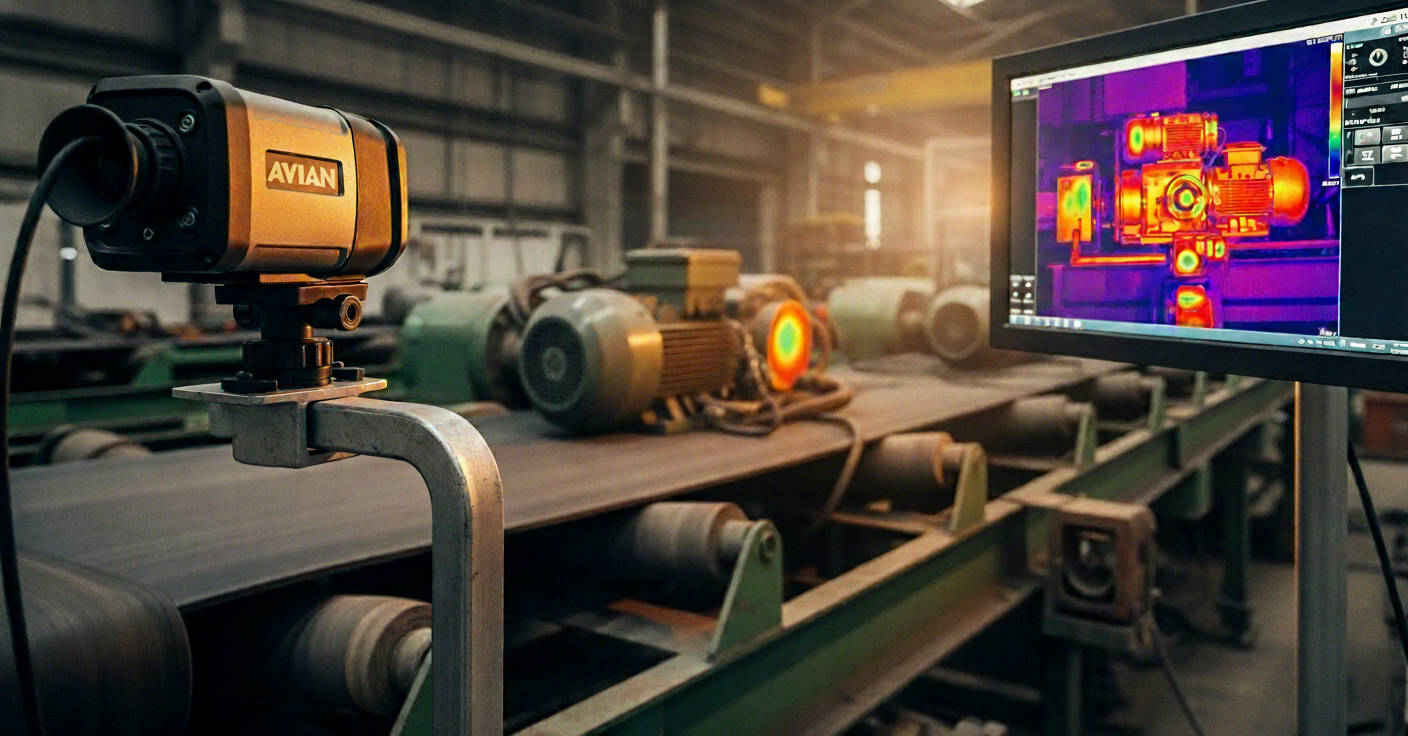
At AVIAN, we point one camera at the zone where edge contact shows up first. The system learns the normal thermal baseline and fires an alert when it sees a trend building. No one needs to walk the line at 2 AM to find out the belt has been rubbing for six hours.
If you run belts hard and downtime is expensive, talk to us. We will help you figure out where to point the camera.